George E. Thornburg: Lifelong Depot Agent

George E. Thornburg: Lifelong Depot Agent

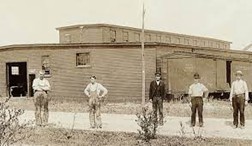
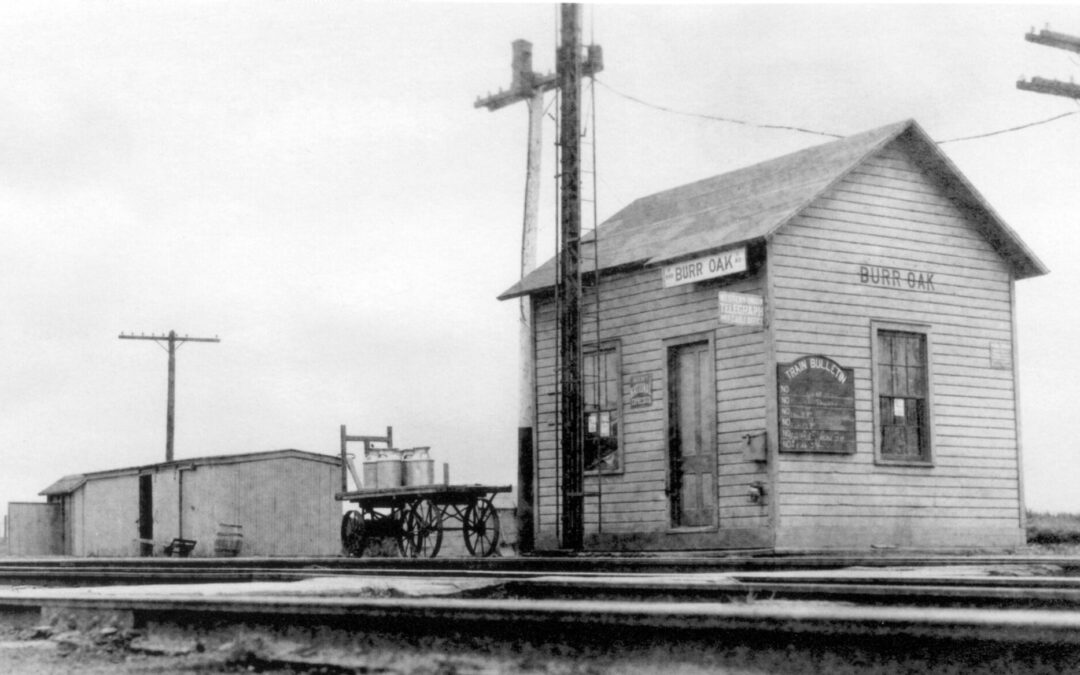
Burr Oak Depot, undated.

The information below comes from the Indianapolis Star Magazine, November 18, 1956, and the Culver Citizen of September 18 and 25, 1957.

Early Life of George Thornburg

George Edgar Thornburg was born at Stillwell, IN on April 3, 1891, one of four children of William Henry and Malinda (Kaser) Thornburg.  By the time George was 9 years old, the family was living in the LaPaz area.

He married Amanda Lodema Strang on May 17, 1910, and they made their home in Burr Oak.  They had five daughters, Opal, Elwyn, Kathryn, Mary Jane and Ramona.  All five daughters grew to adulthood, married and lived in Marshall County.

A Career In Railroading

Thornburg went into “railroading” in 1910 and would have a 47-year career.  Since telegraphy was the up and coming thing, he started by watching the telegraph key at the local junction in LaPaz.  After George had mastered the code, he and his cousin rigged a line between their houses and practiced sending messages.

After a brief interval as a streetcar conductor in South Bend, he came back to the steam locomotives.  ‘There’s something about a railroad,” he stated.  So many people at that time felt the pull of the railroads.

At the time employees of the railroad worked nine hours, seven days a week.  If the freight loads were heavy, the shift might stretch to 12 hours.  Trains were dispatched by orders telegraphed ahead to each station.  Thornburg would receive the orders, fasten them to a hook at the end of a long pole and hand them up to the engineer.  If the train was not scheduled to stop at the station, he had to move fast, for the train’s speed would not slacken as the locomotive thundered past.  Sometimes the orders involved two engineers, and he would have to get the orders to both.

Thornburg was employed by the Nickel Plate Railroad as an agent first at Ober, then Hibbard, then Burr Oak.  In 1954 he was transferred to Hibbard again.

Memorable Days On the Railroad

In 1917 he said he saw a derailment, “and it was plenty for a lifetime.”  A wreck occurred on August 30 of that year, described in the Bremen Enquirer of September 6, 1917.   An arch bar broke under a car in a long line of cars going about 30 miles an hour.  Fifteen freight cars were smashed to pieces and piled up along the south side of the B & O track near the bridge over the Yellow River a mile and a half west of Bremen.  Oats, sugar, agricultural implements and various freight were all mixed up.  Fortunately, no one was hurt.  It was several days before the wreckage was cleaned up.

Thornburg did get to meet a celebrity, the well-known opera singer Mme. Schumann-Heink, whose son attended Culver Military Academy.  George said she “had a nice way, pleasant and not a bit put on.”  Tycoons then often travelled by private railroad car, and Thornburg would occasionally be the recipient of some delicious food shared by their chefs.  On occasion a hobo would sneak in for a nap on a bench in the waiting room.

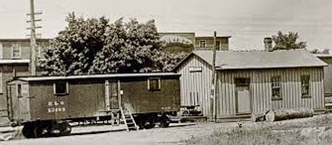
In the 1950s some Culver Military Academy students still used the Nickel Plate Railway station at the Hibbard depot, which was a flag stop.  He would have to handle the luggage and make sure no items were left behind by the boys.

George Thornburg's Everyday Duties

Eventually the telephone and automatic signals replaced the skills of telegraphy and teletyping.  But Thornburg still had to sell tickets and keep up with paperwork for baggage and freight.  He had to receive the mail from trains that did not stop.  He was sometimes helped in this by “a youthful assistant, Bobby Albert.”  Bob Albert would grow up to work for the railroad and as a lifelong train enthusiast, still volunteers at the railroad museum.

Thornburg also had the regular duties of keeping the station swept, the waiting room benches dusted and the potbellied stove ready for a fire.  A phone call would tell him if the train was on schedule.  If a taxi was requested, he would call a cab company in Culver.  When passengers wanted to board the train, Thornburg would put on his billed railroad cap and step out well ahead of the train to flag for a stop.  He also figured tickets and helped plan trips.  The longest ticket he ever sold was a 13-coupon ticket to Vancouver.  He said he prided himself on being a good consultant and had a flair for scenic routes.

An important duty for Thornburg was that he had to closely inspect every passing wheel for “hotboxes,” an axle bearing that became excessively hot due to friction.  If one got hot enough to burn out a journal bearing (a plain bearing without rolling elements), or a journal box, which housed the journal bearing, it could cause a wreck.

A Tragic Ending

On Monday, September 16, 1957, Thornburg said he called the Culver Citizen with a heavy heart to report bad news.  He had received a telegram: “On and after September 24 all business in the Hibbard and Burr Oak stations will be handled at Knox.  Tuesday, September 23 will be the last day that the Hibbard station will be open to the public.”  This was perhaps the saddest disappointment of his long life of service.

But he never had to see the closing of the Hibbard station.  A week before it was scheduled to close, he passed away of coronary thrombosis while sitting in a chair in his home at Burr Oak on the morning of September 18, 1957.  Can a person die of a broken heart?  If so, perhaps George Thornburg did. George Thornburg was faithful to his job working for the railroad for 47 years.  He was a true railroad devotee.

Marshall County’s history is full of great stories about the people and events that shaped our area. The Marshall County Historical Society & Museum offers the opportunity to research and learn about our forebears. We are open from 10:00 until 4:00, Tuesday through Saturday, at 123 N. Michigan St., Plymouth. Call us at 574-936-2306.

Archelaus Hunt: Founder of LaPaz

Archelaus Hunt: Founder of LaPaz

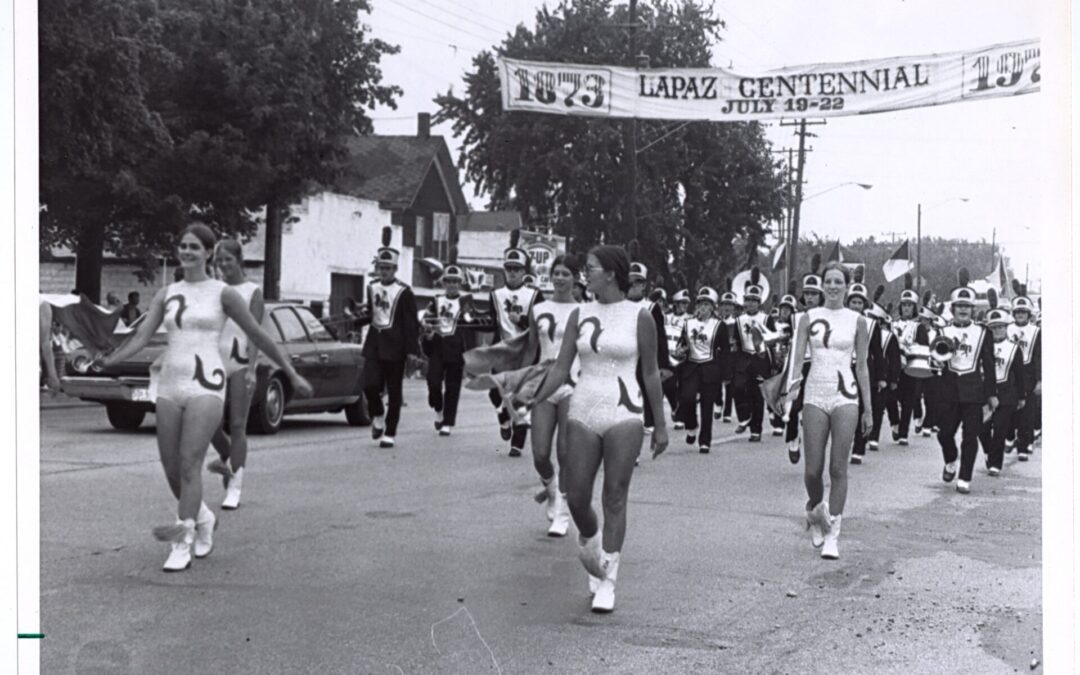
Feature Image. Parade celebrating the LaPaz Centennial in 1973.

The Baltimore and Ohio Railroad was built through Marshall County in 1873.  Archelaus Hunt came back from South America following its completion. Like so many other towns, its location was determined by the fact that the railroad was there. Hunt wanted to lay out a town called “LaPaz” in honor of LaPaz, Bolivia. Archelaus had mined silver in Bolivia. He purchased 18.48 acres, Section 5 of the Michigan Road lands, which were surveyed, platted into 121 lots and recorded on August 9, 1873.

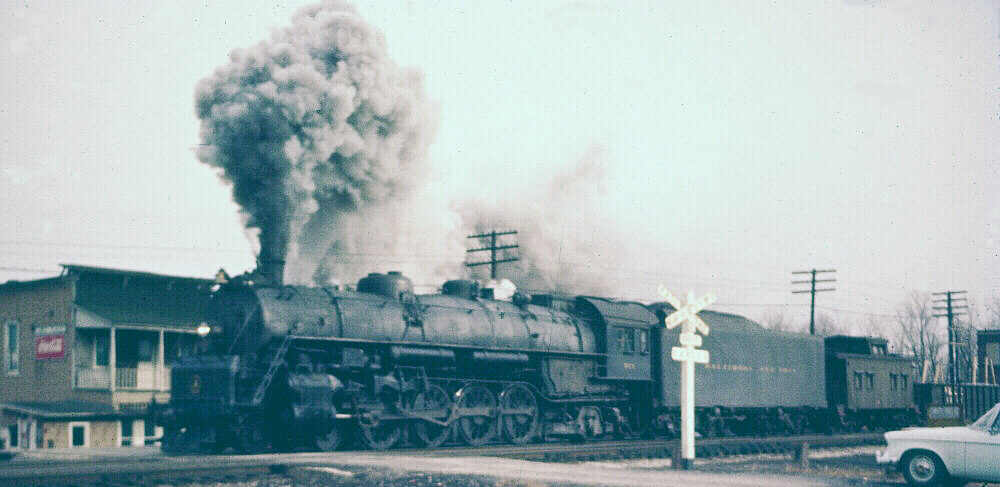
LaPaz Junction, Baltimore & Ohio 731 passing store.

A Life Cut Short

Archelaus was engaged to marry Sarah A. Schilt of Bremen. He recorded the plat of LaPaz on August 9, 1873, and took out a marriage license with Sarah five days later. Sadly, that marriage would never take place.

On Monday, October 27, 1873, Archelaus was leading his horse to water when the horse became playful and he gave it the full extent of the rein. According to the newspaper account, Archelaus was exercising his horse, which was said to be gentle. “Archelaus would give the horse the length of his halter and let him run around him. The horse playfully kicked up its heels and accidentally struck Archelaus in the chest. Archelaus walked a few steps along Michigan Road and then fell, expiring immediately. “

There is a notation in the marriage records at the bottom of the marriage license: “The above license was never used. Hunt dead.”

Researching Archelaus Hunt

Archelaus Hunt’s story came to the forefront this year when a researcher contacted the museum trying to find out about him and where he was buried. The researcher had made inquiries, and no one seemed to know where Archelaus was buried. A reference card in the Museum led to an older cemetery reading of the Bremen Municipal Cemetery dated 1934 that listed Archelaus’ name. The reading of his tombstone said he was 35 years old. Museum staff suggested that the researcher contact the Bremen clerk’s office, which he did, and reported that Tara Beasley and sexton Nate Lockwood were very helpful and able to assist him with finding the location in the cemetery.  Archelaus owned eight graves in the Bremen cemetery.

Six years later, on July 9, 1879, Sarah Schilt married John Graverson. One of their descendants is the researcher who contacted the Museum.

Archelaus’ probate file is at the Museum. It refers to a brother Alvin and a sister Alwilda. 

About Alwilda

Some creative searching led to Alwilda’s death record. Her name was Alwilda Dingman, and she died in New Buffalo, MI, on May 1, 1875, at the age of 29. She also died young and only outlived her brother by less than two years. Alwilda was born in Michigan, and her parents (and Archelaus’) were Merrit Hunt and Abigal Hunt. While we do not have a written record, it is likely that Archelaus was born in Michigan as well.

Alwilda appeared on the 1870 census in New Buffalo, Berrien County, MI. The Dingman household consisted of Isaac, 40, Wilda, 30, Henry, 12, Jennie, 6, and Nelson, 1.

This story is a great example of the genealogy & research services provided by the MCHS library. Collaborating with Bremen Clerk Tara Beasley and sexton Nate Lockwood, it perfectly illustrates the way information can be tracked in Marshall County.

For more information on early Marshall County, pick up a copy of our latest publication, From Crossroads to Communities: An Updated History of Marshall County, Indiana, written by Dr. Don Balka. Balka details the establishment of current and long lost communities over the course of our history. The MCHS & Museum is open from 10:00 until 4:00 on Tuesdays through Saturday, at 123 N. Michigan St., Plymouth. Call for information at 574-936-2306.

Spooky Marshall County

Spooky Marshall County

The following tales are just a taste of spooky Marshall County. Most of the stories are told as they were written long, long ago.


“The neighborhood two miles east of Lapaz is all stirred up over a ghost story, which is vouched for by a number of persons to be fact. Millian Crum and Nathan Crothers were passing the U.B. church in the Berger vicinity several nights ago, and a figure in a white shroud appeared in front of the church and waved its arms. The movement of the white object also frightened their horse, which ran some distance before the animal could be stopped. Charles Charleston who passed the church at an early hour in the morning also claims to have seen a ghost. The story has caused no little talk in the neighborhood. Samuel Thomas who is not afraid of ‘fire or brimstone’ proposes to investigate the affair and will visit the place with a party of men on Saturday night. Mr. Thomas is of the opinion it is a joke being played by some boys to create a sensation and will make an effort to capture the ghost.” From The Bremen Enquirer, May 11th, 1900.

The Higbee Corner Tavern maintained a good reputation. No doubt there was drinking there, and many intoxicated travelers stopped there, but that did not make a place tough in those days. However, the Thompson Tavern did not have a good reputation and was deserted by the time the Higbee Tavern became popular. It was then known as the “Haunted House.” The story is told that when this old tavern was deserted, cattle and pigs used to roam at will in and out of the open doors.  One stormy night the pigs had taken refuge in the old building. Two men were passing there that night, and the one who was the least drunk dared the other one to go into the “Haunted House.” With much bravado, increased by the stimulant which they had had, they reeled in through the open door and stumbled over the pigs. The disturbed pigs made so much noise that the intruders started to run, to get away from the “ghosts,” and never stopped until they reached the Higbee Tavern. Written in 1940 in a memoir by Francis Emerson.

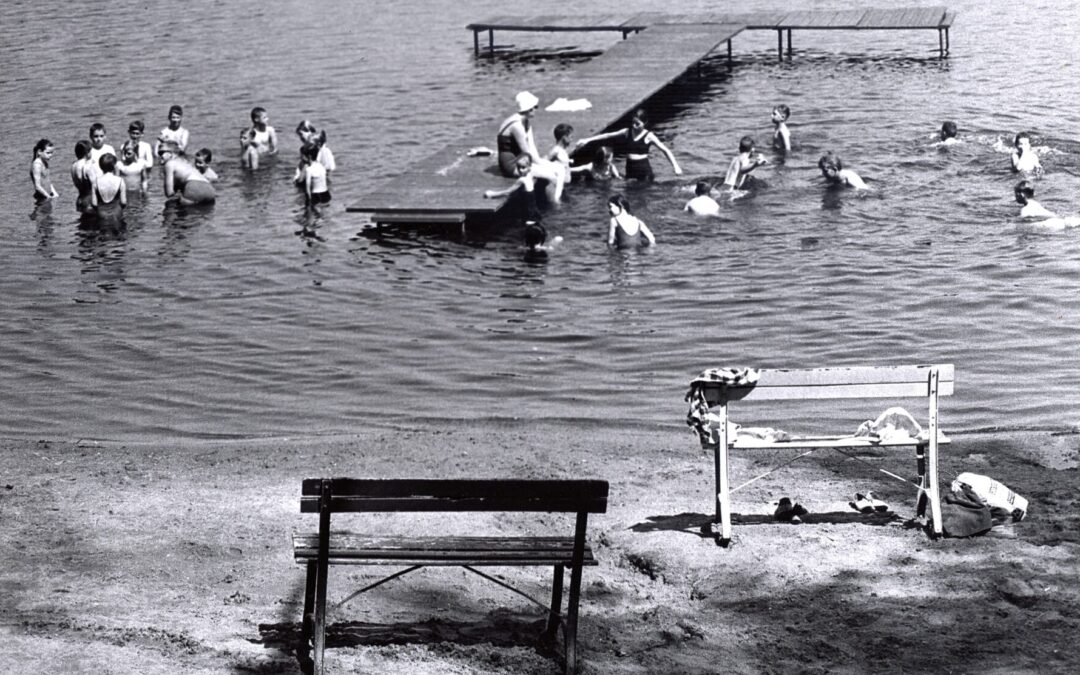
The September 1, 1910, issue of The Plymouth Democrat reported that Henry Kelver had a “thrilling experience” on Dixon Lake. He was in the middle of the lake when he saw a dark looking object in the distance approaching his boat. “The water parted into waves on either side of the object as it came nearer…its head looked like that of a big black dog and its eyes snapped ferociously. Just below the blue water of the surface was a big black form, about the size of a wheelbarrow and there seemingly were a hundred pairs of legs wiggling and paddling beneath it. Within two or three rods of the boat the monster turned, dove and disappeared.”

“A terrible murder was committed two miles south of this place on Sunday night last. The circumstances that led to the horrible deed were about as follows: About 4 o’clock Sunday afternoon two men, aged about 30 years, called at the house of Mr. Mikel Hisey and requested to stay until after the rain, which was falling. After sitting in the house about an hour they started to leave. One of the men was of medium size and tolerably well dressed, and the other larger and very rugged. Mr. Hisey thought no more about them until in the morning in passing an old house used for a stable, he heard someone groaning, and going in and up on the loft, where he had some hay, he found the better dressed man with three gashes cut in his head through the skull, and the brains oozing out. The man had been stripped of pants and coat and left with nothing on but shirt, vest, and boots. The boots were both made for one foot. The instrument used to accomplish the deed was a cutter from a shovel plow. Medical aid was summoned, but nothing could be done for the man. He was beyond help, and, of course, could not speak to tell of the deed. He died during the day; nothing being left by which he could be identified. His companion no doubt had done the deed. It is supposed the murderer took the train at Argos, going south, as a man answering the description, with black pants too short by several inches, was seen getting on the train in the morning. Mr. Hisey thinks they were carrying a small bundle when at his house.  All possible steps are being taken to secure the arrest of the murderer.” From the October 2, 1873, Plymouth Democrat.