John R. Jacoby’s Meat Preservation Technique

John R. Jacoby’s Meat Preservation Technique

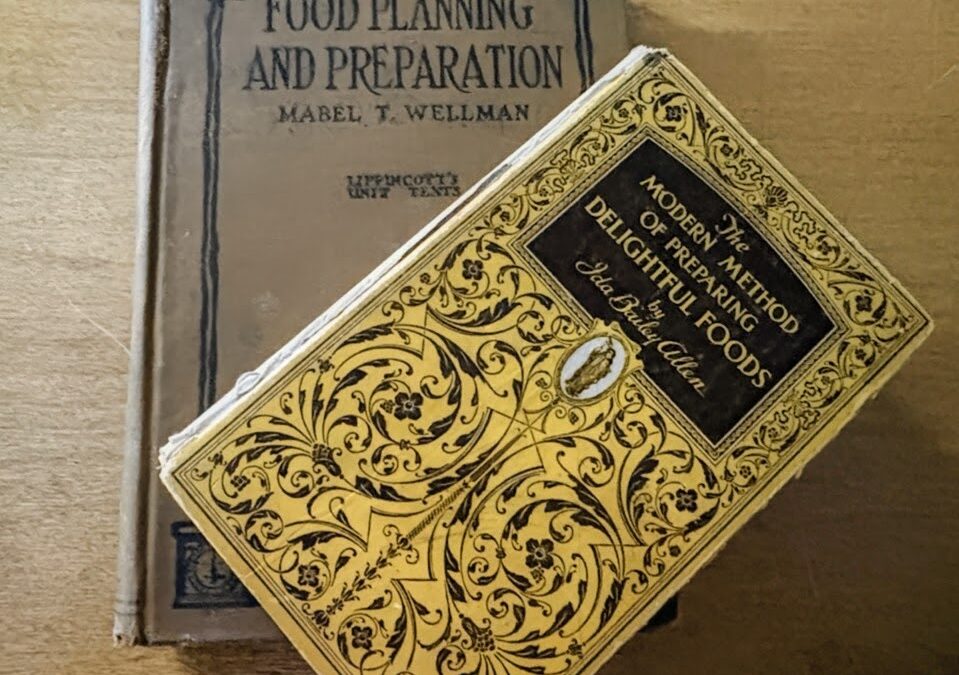
Food planning and preparation books.

Meat preservation involves methods to retain the taste, texture and safety of meats. Artificial refrigeration began in the 1750s, and developed more fully in the early 1800s, but it wasn’t until the 1930s that refrigerators became popular in the U.S. Before this, knowing how to preserve food without refrigeration was vital for families!

Read this excerpt from the memories of John R. Jacoby, born in Center Township in 1859, on his days-long process of preserving meat. Jacoby was a lifelong Marshall County farmer and secretary of the Jacoby Church and Cemetery in Plymouth, which his grandfather co-founded. The article has been edited for clarity.

How to Preserve Meat by John R. Jacoby

“First to do is to rub saltpeter over the meat. Then, put salt in the kettle, enough to cover the hams and shoulders good. Get the salt good and hot so it smokes.

Take a hoe and dig a hole in the salt, then drop a ham in and cover it completely. Leave in for two minutes and then take it out and turn it over. Leave in salt for two minutes more, or a little longer according to the size of the hams.

Then wash the meat again with Borax and hang the meat up. Let it drip for a couple of days, then smoke the meat all it needs. Then take down the meat and wrap in paper and put in sacks. Then it is ready to put away.”

The MCHS and Museum is currently renovating its Dairy and Ice Room which tells all about the history of refrigeration and ice harvesting in Marshall County. Stay tuned for its grand reopening later this year! The Museum is open Tuesday through Saturday from 10 am-4 pm at 123 N. Michigan St. Call us at 574-936-2306 for more information.

One-Room Jail in the Fire House

One-Room Jail in the Fire House

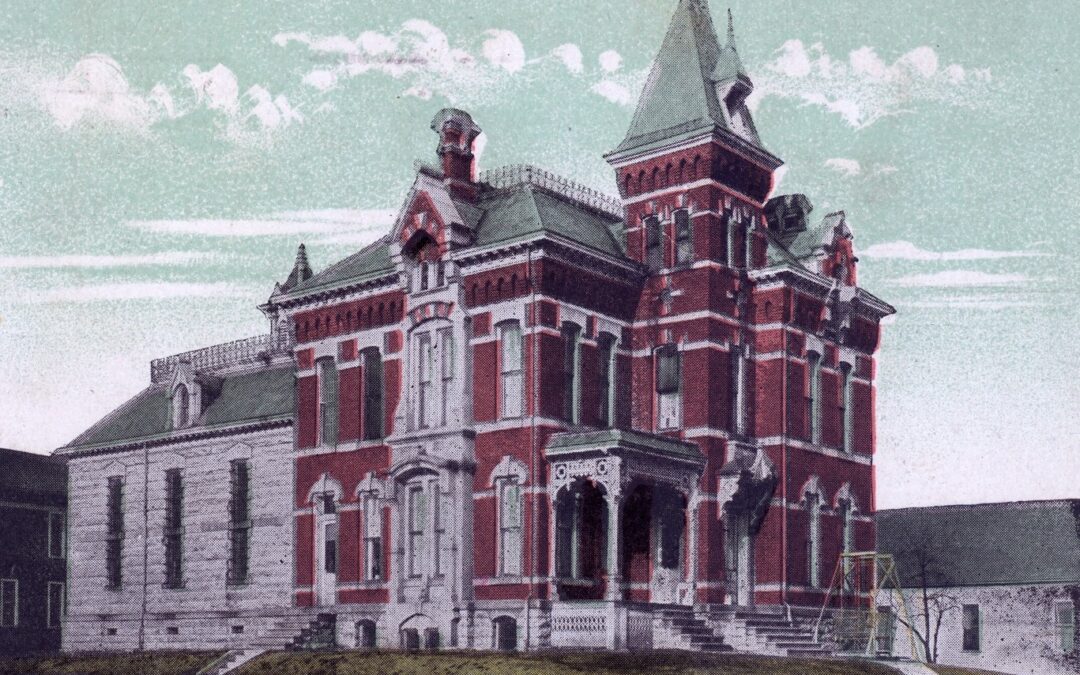
Feature Image. Old Marshall County Jail and sheriff’s residence, postmarked 1911.

A “calaboose” was usually a one-room jail used to house transients and drunks overnight, before sending them on their way. The following un-edited articles were found in a couple of our early newspapers.

Dealing With Crime

According to the Marshall County Independent of November 23, 1894, “Every day a number of tramps drift into Plymouth and enjoy the luxuriant sleeping accommodations of the city calaboose. It is due to the efforts of Marshalls Meyers and Mead that these gentlemen of indolent leisure are induced to continue their weary wanderings after only partaking of Plymouth hospitality for a few hours. Unless this class of citizens is watched closely by the police everywhere, and more especially in the smaller cities, they quickly become a nuisance. The way to treat them is to give them some place to sleep at night and then send them on their way.”

The Independent of December 2, 1898, said “A report made by the committee on police, heartily recommended that a new calaboose be built, and more, that it be built on the city’s property now occupied partially by the waterworks plant. It was deemed advisable to heat the structure with the waste steam from the exhaust pipe of the pumping engine. The facts which seem to argue strongest for erecting the new calaboose are, first, that the old one is uninhabitable and unsafe. Second, $12 a year rent must be paid for the old one, and the fuel costs much more. The matter of locating and constructing the building has been left in the hands of a committee who will report at the next meeting.

A New Calaboose

Apparently, the new calaboose was built, because the Independent of April 20, 1900, stated” The new calaboose has already been put to a very good use. For several nights it has been filled with those knights of idleness commonly called hobos and others of a more degenerative order.”

Interestingly, Plymouth’s last “calaboose” was located inside the old Fire House. The headline of the Weekly Republican of October 13, 1910, was “Hobos in Fire House.” The article went on to say “The old calaboose in which many a “weary willie” has been sheltered from the icy blasts of a cold night in Plymouth, is soon to be effaced from the landscape of Plymouth. In its place, a cell is to be fitted up in the fire house, which will harbor the unfortunates during the winter months. The abandonment of the calaboose was made necessary because of the impossibility of heating the little house, as before. The council last evening voted to fix up a cell in the fire house.”

Using the Calaboose

The new calaboose was put to good use according to the Weekly Republican of September 21, 1911. “A well-dressed young man who was decidedly under the weather, made his appearance on Michigan St. Saturday at a little past 7:30. Being unable to keep the sidewalk, officer Jacoby was called to his assistance, and placed him in the cage at the fire house.

The man was well dressed and offered practically no resistance to being locked up. Officer Jacoby states he is from Fort Wayne.”

If you love trivia about history, check out the newspaper files in the Historical Society & Museum archives. We are open from 10:00 until 4:00, Tuesday through Saturday.

Plymouth Was a Bicycle Manufacturing Hub

Plymouth Was a Bicycle Manufacturing Hub

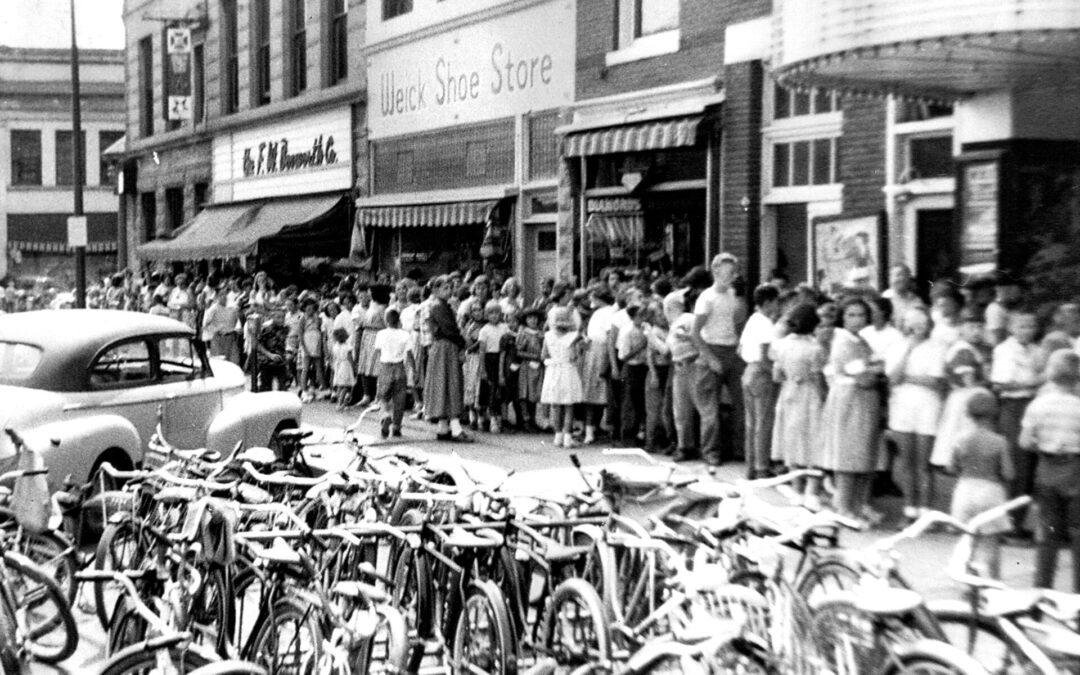
Feature Image. Rialto line to see Smiley Burnette, ca 1952.

By Dennis Gibson

During the 1890s, the U.S. was in the midst of its first bicycle craze. Bikes helped bridge the gap between horses and automobiles. The boom awakened an interest in good roads, furthered the cause of women’s liberation and was even linked to changes in social behavior. Improvements in bike technology fueled the fad. Once it was both safe and comfortable to ride, everyone wanted in. The average cost of a bike in the 1890s was $75 – that’s $2,625 today!

Plymouth Cashes In On Bikes

The attitude toward women riders was still very conservative during the 1890s. There were questions of whether women should ride, how they should ride, whom they should ride with and what their reputation would be if they did ride! The long, heavy skirts women commonly wore also made biking difficult. Bloomers and shorter skirts were an option but could draw scorn and unwanted attention. However, suffrage advocates praised the bicycle as means of giving women more freedom.

Marshall County cashed in. Bicycle parts made in Plymouth were sold to dealers throughout the United States. There were two bicycle factories located here, as well as one that manufactured handlebars.

Built in 1891, covering nearly 50,000 sq. ft., even featuring its own fire department, the Indiana Novelty Manufacturing Company was one. It was the largest factory in the world that made wooden rims for bikes, as well as mud and chain guards. In 1893, co-founder George W. Marble patented a method of making one-piece bicycle rims from ash that were both lighter and stronger than metal ones. Two carloads of lumber were used daily and by 1895, the plant was producing 700,000 rims a year, as well as 100,000 sets of guards. Indiana Novelty supplied nearly all the leading bicycle companies in the U.S. and had agents in most principal cities, as well as Toronto, London and Paris. They made more than half of the wooden rims used by bicycle manufacturers.

Plymouth Cycle Manufacturing Co.

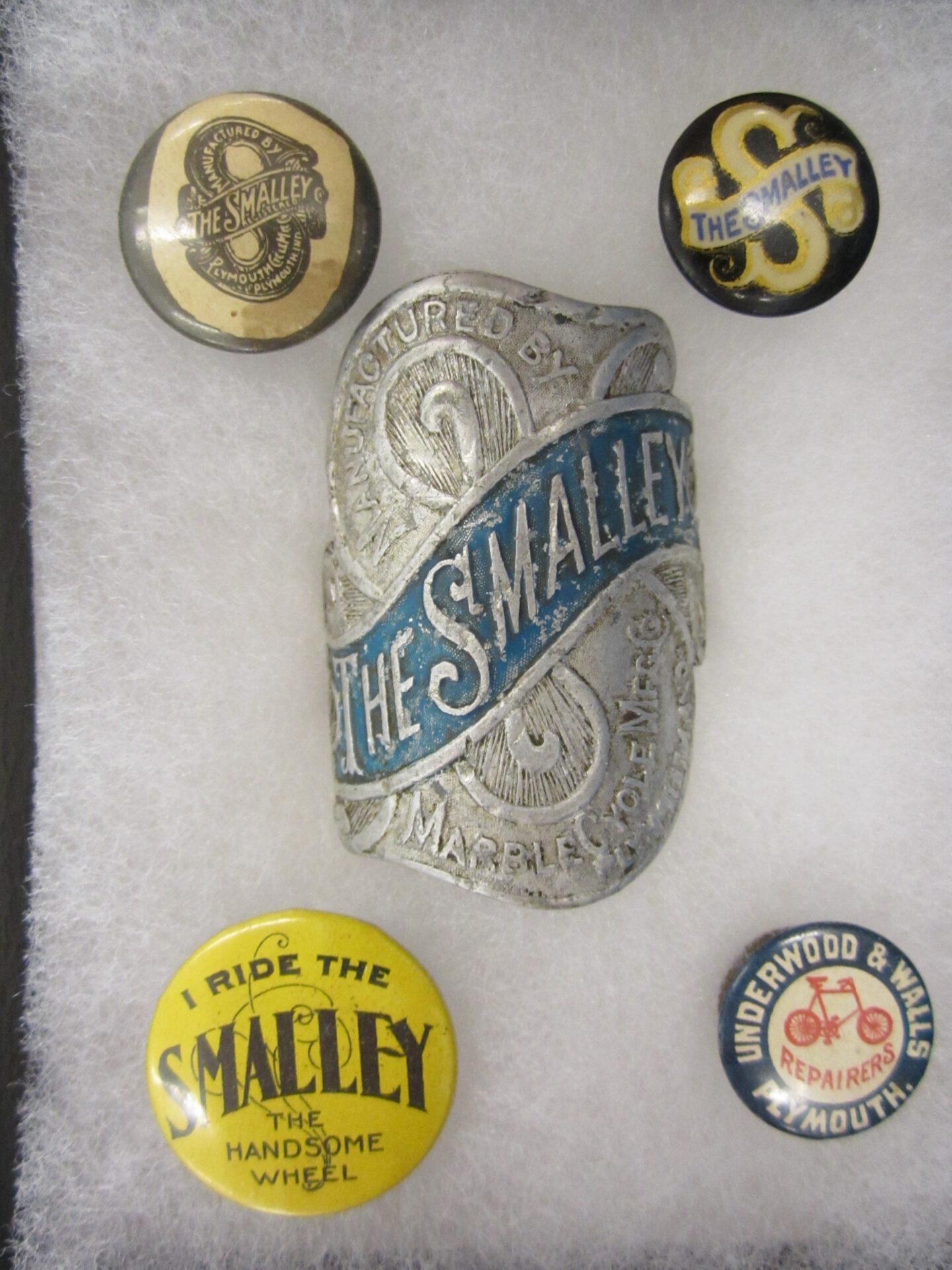
Safety bikes were the alternative to high wheelers, or penny farthings, introduced in the 1880s. Some sources credit Marble with inventions linked to these and other early types of bikes. Marble also created most of the machinery used by Indiana Novelty in the manufacture of its wooden rims. In 1892, he and several other founding members of Indiana Novelty formed the Marble Cycle Manufacturing Company, with the addition of W.D. Smalley, who also had years of experience in the bike trade, and was the namesake for their bike, the Smalley.

In 1894, the company was sold and became the Plymouth Cycle Manufacturing Company.

“It is estimated that the company made approximately 700 bikes a year for the first two years. The output was increased to 4,500 bikes in 1895, with hopes of making 6,000 for 1896. It was reported in the Plymouth Republican that ‘Plymouth Cycle had been operating for months at 13 hours per day. The factory was limited to 5,000 bicycles but now has orders for 2,000 more.’”

However, the country was in recession, and large orders that had been placed were never paid for. Plymouth Cycle was taken over by creditors Bass and McDonald. They reopened the factory in 1897 as the Elektron Cycle Company, but work was halted in 1898 and a judgment secured by former employees for wages due. The company’s machinery and materials were sold to the Shelby Manufacturing Company and moved to Ohio. The bicycle business that had boomed in the early 1890s became a thing of the past. According to the Department of Transportation, bike sales nationwide plunged 79 percent from 1897 to 1904. The craze was over.

Smalley pins.

Unfortunately, the MCHS Museum does not currently have a Smalley or Elektron bicycle to display, but we do have more good information on display in our transportation room. We always welcome donations of any items made by any Marshall County manufacturer! Our Museum is open Tuesday to Saturday from 10:00 am to 4:00 pm.

Mildred Bovee (1909-1979)

Mildred Bovee (1909-1979)

Feature Image. Image of Esther Badiac, Mildred Bovee and Berniece Strang, ca 1958.

To celebrate Women’s History Month, we are highlighting some of the remarkable women who have improved the quality of life in Marshall County and beyond, not just for women, but for all of us. The following is a lightly edited story written in the 1980s by Betha Haag.

A Portrait of Mildred Bovee in Words

Some people do big things and some little

Some succeed each time – some fail

Some become famous and some never do,

And some put their fingers in so many pies

nothing comes through

But this lady with hair turning grey, blue eyes sparkling bright and a gracious smile to greet friend or foe, finds that in the end the foe always becomes a friend.  She meets each challenge that comes her way with courage and wisdom, and never quits a task until completed  and completed successfully.

This blue-eyed, eager, busy woman was born February 28, 1909 in the city of Chicago, the oldest of eight children.  She was born under the sign of Pisces, and is intelligent, brave and outgoing.  She has all these traits, and with her love of others she has a deep wish to make the world better, beginning with her own community and spreading out from there.

After high school, Mildred graduated from Trooks Commercial College in Chicago, and always worked in real estate and the building and loan field in the city.

In 1931, she married Carl Bovee in Chicago.  They are proud of their two sons, Kenneth and Curtis, and their five grandchildren.  But God works in a mysterious way “His wonders to perform”.  Both boys developed an asthmatic condition when small, and the doctor suggested they get the boys out of the south Chicago air into some area where the air was clean and pure.  Now where could anybody find better or purer air than in Marshall County?  Not only is the air purer, but many other things are better about this locale.

They were impressed with Plymouth, and because of Carl’s previous business dealings with Allen Rudd, selected the Plymouth area.  They moved here in 1947 and began operating a motel.  The boys were never again bothered with any serious asthmatic attack after coming to Indiana.

Mildred Bovee will be remembered by many mothers and fathers, for she arranged for them to talk to their soldiering sons via ham radio.  Through her kindness and thoughtfulness, happiness was given and lonely hours became perfect hours – not only between parents and soldiers, but between friends and relatives when sorrow struck, or when “Merry Christmas” was sent across the air waves to a daughter far away from home or an ill aunt.  American Field Service students were thrilled to talk to their families, even though an ocean might separate them.

Mildred aided in all Civil Defense work when needed.  She could never sit with idle hands when there were tasks to be done – especially if those tasks would help others.

Having started the motel business in West township, she became interested in the community and the 4-H programs.  She became a 4-H leader and West township was the first to have an electric project, which Mildred instructed and directed.  She was also active in the Parkview hospital auxiliary and in the work of the First Methodist Church.  She also found time to manage the family business.

Her ham radio experience proved invaluable to the Civil Defense, and it served as a wonderful basis for 4-H leadership.

Mildred has served on many county boards, providing constructive ideas and suggestions to improve and implement programs for the community and the organizations.  These organizations include the American Red Cross, the County Mental Health Association, Parkview hospital board of trustees and the Civil Defense board.  Mildred was a member of the Parkview hospital board for 11 years.

As a member of the public relations committee of the Plymouth Business & Professional Women’s Club in 1958 with chairperson Bernice Strang, a survey of Plymouth industries and their products was conducted.  Employment and potential expansion plans were also part of the survey.

With the cooperation of Plymouth industries and “The Pilot-News”, a week was designated as “Salute to Plymouth’s Industries”, with articles and pictures highlighting each industry.  There were articles about this project in the “National Businesswoman”.  One of the industries featured was Lemert Engineering, and the head of the business, Mrs. Eva Lemert, was then a member of BPW.  Her firm had produced an invention that marked a great forward stride in the aircraft manufacturing industry.  Eva Lemert and her firm’s invention were written up in two trade publications with a national distribution.  An article also appeared in the “Independent Women Magazine” of Washington, D. C., and the 1961 issue of “Who’s Who in American Women” included her in their publication.

To this day, the members of the committee that promoted this project are convinced that their studies and actions were the inspiration to the Plymouth Chamber of Commerce when they later formed the Plymouth Industrial Development Corporation.  This committee, Mrs. Bovee believes, convinced PIDCO that a woman should be on their board, whereupon BPW member Rosetta Beiter Casbon served as the secretary-treasurer for several years, serving with distinction.

Mildred has always had many hobbies.  Besides her pet hobby, that of being a ham radio operator, was the making of lovely arrangements of everything from the most beautiful flowers to the lowliest weed.  All through spring, summer and fall she gathered these items, and her completed arrangements would end up in the hospital, nursing homes, some sick room, or anywhere that they might add a little sunshine.

Her latest hobbies are macrame and lapidary.  She and her husband Carl especially enjoy making lovely gems from just simple rocks.  They have ordered their own equipment so that they may make them at home at their leisure, instead of using the club house equipment.  They give away almost all the items they make.

Eight years after the Bovees moved to Marshall County, Mildred became a member of the Plymouth Business & Professional Women’s Club, and in 1958-1960 she served as president, when the membership reached 148.  She gives the entire credit for her later attitudes, ambitions and achievements to the wonderful women she worked with through the years.  Without the leadership abilities that she acquired through her BPW responsibilities, she would never have attempted to be active in politics on a local or county level or served on the various county boards.

In her new community of Hawthorne (a Leesburg, Florida suburb) she recently has become the editor of their community newsletter, “Penn-Notes”.  It is just two years old, beginning with four pages and growing to the present eight pages.  Last year she helped organize a tax aide service.  She and 11 other qualified residents attended a two-day training session and twice a week they counsel any senior citizen in the county.  These counseling sessions are held at Mildred’s church, the Methodist church, where she is also active in the Methodist Women’s group.  Missing her hospital auxiliary work back here in Marshall County, she recently signed up for service at her local county hospital in Florida.

Mildred is in excellent physical health and keeps it that way by hiking, along with her husband, two and three miles a day.  The rest of their waking hours are spent outdoors as well, swimming, golfing, playing shuffleboard and enjoying archery, the consumption of citrus fruits and the Florida sunshine.

Of her years as a member of the Plymouth BPW, Mildred has this to say: “We have had some great leadership in the club and the district, and I am certain that the newer women are availing themselves of all that the BPW Club has to offer its members.”

I will close this biography of a very wonderful person, one whom Marshall County hated to lose and one who hated to leave us, too.  We close with her own philosophy of life, and I quote: “I feel that you are what you make of yourself or – we are our own destiny.  As you well know, we are happiest when we are serving others.”

This is just one example of the personal stories and biographies contained in our archives. We welcome researchers to our library. The Museum is open from 10:00 until 4:00 from Tuesday through Saturday. Located at 123 N. Michigan St. in Plymouth, and our staff is always willing to help. For more information, call us at 574-936-2306. Check out our website at www.mchistoricalsociety.org.

Dedication of the Historic Firehouse

Dedication of the Historic Firehouse

Feature Image. Fire House dedication, firemen standing in front of old firehouse, ca 1995.

The following article was written in the MCHS Quarterly on July 3, 1976, and the original firehouse was still in use after 100 years.

An Early City Hall and Engine Building

The City Hall and Engine Building, now housing our present fire department, was completed late in 1875. Built by Robert McCance and W.P. Beaton as contractors, the building cost $4,200. Alfred Morrison, Platt McDonald and W.D. Thompson supervised the construction for the city. The original building was 34 feet wide and fifty feet long, with brick walls 35 feet high and 18 inches thick to the second story with 12-inch-thick walls from there to the roof. The hose and bell tower was nine feet square and 59 feet high.

The first floor consisted of one large room in which the firefighting equipment was kept. Listed as the equipment owned by the department at that time was one hand engine, one hose cart, hose and hooks and ladders.

Upgrading Equipment

The first fire engine was purchased sometime between 1863 and 1868 and was, from all indications, a “sidestroke” engine. Five or six men to a side, pumping up and down vigorously, were able to produce a respectable, pulsating stream of water, procured from a cistern or the river. “Hooks” were long pike poles, usually with a pointed end as well as a hooked end. They were used for pulling down buildings in an attempt to smother fire and keep it from spreading.

The upper story of the new building had two rooms, one for the use of the fire department and the other used as a city council chamber and Mayor’s office. The building was described as being “large enough for the city to use for many years to come”, and so it has been.

Funding the Building

Possession of the building was taken by the city on February 21, 1876, and the dedication was marked with a grand ball, proceeds of which were $165.00. The volunteers had been staging balls for some time prior to this dedication ball for an earlier reference to one in January of 1868 noted receipts of $80.40. The annual Fireman’s Ball continues, each year being held in February, for the benefit of the Fire Department.

Honorary Member Certificate.

This is just one of many resources available at the Marshall County Historical Society & Museum, located at 123 N. Michigan St. in Plymouth. Call us at 574-936-2306.

Organizing Fire

Organizing Fire

Innovation and necessity have been, and still are, the driving force of progress in almost any field; perhaps none so desperately as the need for fire safety. As communities in Marshall County grew in population, naturally, business enterprises took hold, and buildings sprang up to accommodate them. People used the most plentiful and available material – wood – and built their buildings quickly.

In Plymouth, the original plat map from the 1830s designated lots for a business district. It began with Lot #1 (where the REES Theatre is located) and moved north up to Lot #21 and then crossed Michigan Street and started back south with Lot #22 and ran through Lot #42. Those lots were side-by-side, as were the buildings constructed on them. It is no surprise, then, that when one wooden structure went up in flames, fire spread quickly, sometimes aided by the wind. More than once, the whole business district was wiped out.

Welcoming Progress

At the time, there was little by way of fire protection. Business owners simply accepted that a fire, once out of control, would destroy their buildings and typically their contents as well. A devastating fire in 1857 that consumed most of the downtown businesses convinced Plymouth town leaders of the need for a volunteer organization of firefighters. In February 1958, the Protection Hook and Ladder Company was formed with a total membership of 57. A bucket brigade was organized as a part of the group. A two-story frame building was built on the Adams Street riverbank.

Two other fire companies were organized in December 1865, the Adriatic Engine Company and the Torrent Hose Company. The City Hall and Engine Building on Center Street was completed in 1875 and served the department for 95 years. The first engine was purchased sometime between 1863 and 1868 and required five or six men to a side, pumping up and down to produce a stream of water. The problem of a dependable source of water was solved when a series of brick-lined cisterns were constructed. The sprinkling wagon, used to keep dust down in the streets, was charged with keeping the cisterns full. The city waterworks, built in 1888, finally replaced the cisterns.

Changing Standards

As equipment was added, so were horses drawn vehicles. The station floor was designed with grooves in it to provide traction for the horses as they raced to answer the alarm. Equipment was sparse. The Wide Awake Hose Company #2 paid $160 in 1883 for a hose cart. In 1912 the city purchased its first motorized vehicle, a hose and chemical truck for $5,000. In addition, city officials added a Gamewell Fire Alarm System with 20 alarm boxes placed around the area.

At about this same time, the City of Plymouth began to pass ordinances meant to set standards for buildings to improve fire safety. Downtown businesses had to be built of brick with fire walls in between, and ceilings were to be metal or some other fireproof material. In 1896, an ordinance passed that any stove and pipe put up for use in any building must be set on a suitable platform covered with zinc or other metal, or on brick. Also, where the stove pipe entered a chimney, it must be securely fastened and the spaces around it “securely stopped with some non-combustible material.” The ordinance went on with specifications about ventilators, cleaning, riveted pipe joints and other details.

The ordinance even stated that ashes could not be collected in a wooden bucket or stored in a wooden barrel within 20 feet of any building. The fine for violation of the ordinance could cost up to $10. The city marshal or chief engineer was placed in charge of inspections with the power to enforce the ordinances. If a building owner failed to address an issue, the City would have it done and bill the owner, adding a $10 fine to the cost.

Upgrades and Preservation

Center Street looking North in Plymouth, Indiana.

Innovations continued to make the fire department more efficient and more professional for a growing city. In the 1950s, several retired businessmen and volunteer firefighters began taking turns driving the trucks, sleeping in a 2nd floor room across the alley from the fire station. In 1970, the department moved to the current building. Throughout the 1960s and ‘70s, the roster of full-time firefighters grew, and the department added a pumper with an 80-foot snorkel at a cost of $72,000. At that time, six pieces of equipment were manned by six full-time personnel and 20 volunteers.

Currently, the City of Plymouth is looking for ideas on how to best use the old fire station (and once city hall) on the corner of Washington and Center streets. If you have ideas for its preservation and continued use, pick up a Request for Proposal form in the city clerk’s office and submit your ideas.

The Marshall County Museum and Research Library’s normal hours are 10 a.m. – 4 p.m., Tuesday – Saturday. Stop in and see us!