John R. Jacoby’s Meat Preservation Technique

John R. Jacoby’s Meat Preservation Technique

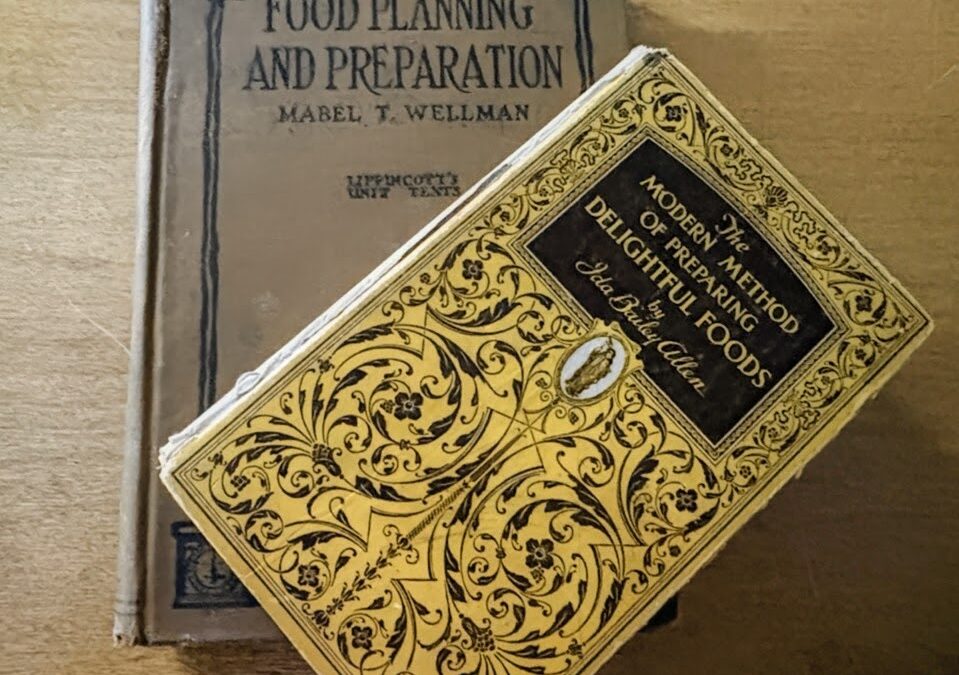
Food planning and preparation books.

Meat preservation involves methods to retain the taste, texture and safety of meats. Artificial refrigeration began in the 1750s, and developed more fully in the early 1800s, but it wasn’t until the 1930s that refrigerators became popular in the U.S. Before this, knowing how to preserve food without refrigeration was vital for families!

Read this excerpt from the memories of John R. Jacoby, born in Center Township in 1859, on his days-long process of preserving meat. Jacoby was a lifelong Marshall County farmer and secretary of the Jacoby Church and Cemetery in Plymouth, which his grandfather co-founded. The article has been edited for clarity.

How to Preserve Meat by John R. Jacoby

“First to do is to rub saltpeter over the meat. Then, put salt in the kettle, enough to cover the hams and shoulders good. Get the salt good and hot so it smokes.

Take a hoe and dig a hole in the salt, then drop a ham in and cover it completely. Leave in for two minutes and then take it out and turn it over. Leave in salt for two minutes more, or a little longer according to the size of the hams.

Then wash the meat again with Borax and hang the meat up. Let it drip for a couple of days, then smoke the meat all it needs. Then take down the meat and wrap in paper and put in sacks. Then it is ready to put away.”

The MCHS and Museum is currently renovating its Dairy and Ice Room which tells all about the history of refrigeration and ice harvesting in Marshall County. Stay tuned for its grand reopening later this year! The Museum is open Tuesday through Saturday from 10 am-4 pm at 123 N. Michigan St. Call us at 574-936-2306 for more information.

The Bloomer Costume

The Bloomer Costume

Ehrhart, S. D. (1895) The bicycle – the great dress reformer of the nineteenth century! / Ehrhart. , 1895. N.Y.: Published by Keppler & Schwarzmann, August 7. [Photograph] Retrieved from the Library of Congress, https://www.loc.gov/item/2012648650/.

This article is taken directly from “A Twentieth Century History of Marshall County,” written by Daniel McDonald. Although McDonald is adept at expressing himself, I have edited lightly. Here he takes on a contemporary fashion craze – bloomer suits. Bloomers were known as “Turkish Pants,” hence the editorial rant below.

All About Bloomers by Daniel McDonald

The bloomer costume for ladies, which created much excitement throughout America during 1851, was just then being introduced in Plymouth. On this topic, the editor of The Pilot delivered himself as follows:

“New Dress – The bloomer costume is decidedly an improvement upon the dress of the female portion of the community. It is light, graceful and seraphic, well suited to the female figure. It will be welcomed by all the lovers of taste and refinement in the fashionable world. The Asian societies have long been celebrated for their beauty, polished manners and splendid attire. Our rivers will now be the Golden Horn; our valleys the Valley of Sweet Waters and our Seas the Bosphorus of the Turkish capital. A voyage to Constantinople will be useless. We may now take our siesta in the gay pavilion, and glide over the moonlit waters in the light caique (skiff)! Come ladies, step forth in your gorgeous apparel, decked with rose of gold and leaves of silver, and gladden our hearts with sweet smiles.”


The Bloomer Costume, Nathaniel Currier (1851)

Evidently, this was a facetious way the editor had of poking fun at the “costume” and killing it before the fad got a fair start here. At any rate, that was perhaps the result of it. Apparently, only one or two Plymouth ladies had the courage to procure bloomer suits and attempt to introduce them by wearing them as they would other female apparel. When they appeared in the streets, it was reported that they were objects of much curiosity—as if they had been untamed animals from Borneo. There is no easier way to kill anything that the people do not take very kindly to than to make fun of it, just as the editor of The Pilot did in his hifalutin article above quoted. At least that was what happened to the bloomer costume. McDonald might say, “It disappeared from the social horizon like the morning mist before the rays of the rising sun.”

Suffice it to say, ladies’ apparel has come a long, long way. If you want more commentary on life in Marshall County in the 1800s, McDonald’s book is for sale in our Museum Shop. Stop in anytime between 10 and 4 on Tuesday through Saturday and pick up your copy. The Museum is located at 123 N. Michigan St. in Plymouth. Call us at 574-936-2306.

The Famous Fairs of Bourbon

The Famous Fairs of Bourbon

Feature Image. Undated birds-eye-view of fair.

The Town of Bourbon 1872 fair was the first one established in the county. It took place in a schoolhouse 1½ miles east of Bourbon. The fair was discontinued for a few years and started again in 1891, as an 1892 ticket listed it as the Second Annual Fair. Some days the crowds were as large as 10,000 to 14,000 visitors. They usually took place in late September or early October, and often school would be dismissed so students could attend.

The Purpose of the Bourbon Fair

Among the Bourbon fair’s goals was to improve livestock breeding, to promote the area’s agricultural, mechanical and industrial interests and to provide good clean entertainment. They erected several permanent buildings: a grandstand with a half mile track, an art hall, stables and fenced-in animal pens.


Race track looking north.

Each year a brochure was printed showing everything that was going to be happening at the fair.  The catalog also provided plenty of opportunities for local businesses to advertise. As a sample of the fair offerings, the 1933 catalog listed various cattle, sheep, swine, poultry, turkeys, waterfowl, and pet stock (eagle with cage, pea fowl, guineas, pigeons, rabbits, cage of squirrels, largest cat, ferret, pair of silver foxes). Also to be shown in all categories imaginable were grains and seeds, vegetables and roots, apples, pears, peaches, plums, persimmons, chestnuts, quinces and grapes, cut flowers, shrubs and flowers. The table luxuries category included canned fruits and vegetables, jellies, breads, cakes, cookies, fudge and candy.

The art hall contained “ladies fancy work” of coverlets, quilts, spreads, pillows, knitted goods -including socks, mittens and clothing – and every kind of rug. Embroidery and needlework included dresser scarves and handkerchiefs, pillowcases and tablecloths. All sorts of collections were featured, including coins, stamps, curiosities of any kind, shells, marbles, etc. Fine arts covered clay molding, landscapes, drawings in oil, pen, pencil, crayon and charcoal, baskets and “miscellaneous article not otherwise entered.”

And we cannot forget the most exciting activity, the Speed Program – horse races in trot or pace, pulling contests and mule races. Any mule winning the race two years in a row was barred. Straw and stalls were free for all horses entering the race. Horse racing was the big attraction and took place throughout the years to the last fair.

Horses on racetrack.

Other activities through the years included a firemen’s tournament, a band contest, bicycle races, trick bicycle riders and ball games. There were large pumpkin contests. In 1927 a “calling cows” contest was planned. The champion caller was to be rewarded with a handsome old-fashioned cow bell. In 1941 they added an amateur night.

The Bremen Enquirer: October 23, 1891

“About sixteen or seventeen years ago Bourbon began to have fairs…. The excellence of these fairs gave them a great reputation, far and wide, and everybody who attended spoke in the most flattering terms of them. One of the strong features of these fairs was the splendid exhibit of stock of all kinds, and to them is due much of the advancement in stock breeding in and around Bourbon which for many years could boast of being far in advance of any other section of country in this part of the state….  

“Last Friday found us at the Bourbon fair…. We were agreeably astonished at the very excellent buildings they have erected, and which were just finished during the fair. The sound of the saw and hammer was mingled with the cry of the fakir and the music of the merry-go-round and the hum of human voices.

“It will be impossible in the limits of this article to describe in detail the many attractive features of Bourbon’s fair. The exhibits in stock were fine and quite large…and the parade was something that would make the heart of the fellows who have been raising ‘scrub’ stock chock full of envy at the progressive farmers who believe in keeping up with the march of progress.

“The agricultural department was well filled with the choicest products of a rich soil and a propitious season and elicited words of praise from all who viewed it.

“The poultry department contained many fine specimens of thoroughbred fowls that would delight the eyes of any poultry fancier on earth.

“The implement department contained the regulation wares in the way of necessary and labor-saving machinery that is necessary for the systematic tickling of the productive soil.

“The floral and art hall contained a wonderful collection of fine fabrics wrought into articles of usefulness and beauty by the nimble fingers of the ladies. Stepping into this art hall is like stepping out of this old prosaic world into a fairy land, an elysian bower of beauty and whose radiance dazzles the eye and beauty charms the soul. So different from what we meet in our everyday life that one forgets that he is on this mundane sphere but thinks rather that he has been transported to a new world where all the beauty, loveliness and grandeur of nature and art has been gathered, combined and blended together in a manner to mystify our temporal senses and induce the belief that by some means we have caught a brief glimpse of Paradise.

“Without question the most remarkable thing about the entire grounds is the fine race track that the association has succeeded in building. It is constructed on the most approved plan and the very fact that it is only a few weeks old as yet and has had such splendid time made upon it shows conclusively that it is destined to be one of the best in the state. . ..”

The Bremen Enquirer: A Few Years Later

“Bourbon has a very fine race track and up to the Bremen fair this year the best time ever made on a track in Marshall County was made over the Bourbon track, 2:21 by Billy the Kid (presumably a horse, not the outlaw). This time was cut down to 2:19¼ at the Bremen fair last week and now the managers of the Bourbon fair say that the time will be again lowered over the Bourbon track next week, therefore you may look for some very fast going. Do not miss it. You may regret it if you do.”

Jim Bates Sr. on horse.

The Bremen Enquirer: October 12, 1894

“A correspondent from Bourbon to Wednesday’s Chicago Times says a prize of $200 is to be awarded at the Bourbon fair on Thursday to the man who drinks the most whiskey. It is a foregone conclusion that the $200 will remain in Bourbon.” (Perhaps the residents felt they should live up to the name of the town.)

The Argos Reflector: October 11, 1900

“The crowd on Wednesday was . . . larger than expected by the management. But on Thursday the vast throngs of people simply overwhelmed the officers in charge. The number of single tickets sold on this day was 6,400. This does not include children, holders of season tickets, exhibitors, caretakers of exhibits, race horses, nor stock holders. The treasurer of the association informed our reporter that he could not be far wrong in saying there were more than 10,000 people in the grounds on Thursday. On Friday the attendance was not so large but was larger than expected.

Other Bourbon Fair Stories

There was not always a happy ending at the fair. Dolphus was a magnificent Shropshire ram of fine proportions, good weight and clean heavy fleece of high quality. He was exhibited at the Bremen fair in 1895 and then later entered at the Bourbon fair. While on exhibition he was seized with an illness and died. Another time a horse tied up with a rope fell, choked and died.

There was snow at the Bourbon fair in 1906. October 10 saw the area receive ten inches of snow.  Tents fell beneath the weight of the snow, tree limbs were snapped and bushes were bent to the snow. People came to the fair in boots to see the snow. The next couple of days the weather was very mild.

As the automobile became more popular, accidents involving them began to take the place of accidents with horses, wagons and buggies. In 1910 Dr. Nichols broke his arm while cranking his “machine” when leaving the fair. The next day another doctor did the very same thing. The Bremen Enquirer concluded that “Automobiles appear to have a special grudge against doctors just at present.”

More difficulty with doctors and automobiles. In 1915 Dr. and Mrs. Hammon Imus were thrown out of their buggy, and it was smashed when it was struck by an automobile on their way home from the fair.

In 1935 Ida Helmlinger of Bremen, the founder and president of the Old Maids Association of the World, was invited to visit the Bourbon fair. “We’ll find a place for you somewhere,” she was told, “even if we have to put you with the chickens.” She still went and met hundreds of people, after which she went to the Warsaw fair.

By the 1940s and 50s the fair featured four days of racing. Besides the usual races, there were pony races, farmers’ running races, and farmers’ cart races. Modern times brought tractor pulling contests.

Eventually, as interest in harness racing waned, and the county fair grew and became more popular, the Bourbon fair ceased to be. In 1963 the fairgrounds were sold to Triton School Corporation, and sadly, one of Marshall County’s most beloved institutions passed into history. The last fair was said to have been in 1962, though there are a couple of newspaper items mentioning people attending the fair in 1964.

Bourbon Fair, 67th Annual poster.

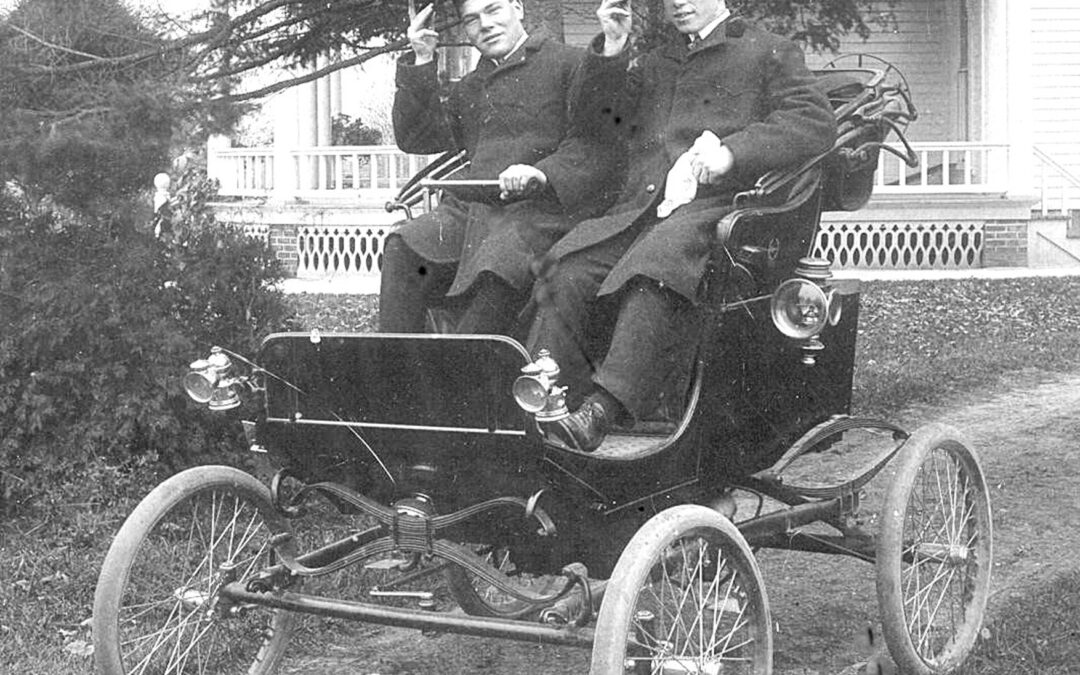
The Museum is open from 10 until 4 from Tuesday through Saturday at 123 N. Michigan St., Plymouth. For more information, call 574-936-2306.

The Great Huckleberry Emporium of Marshall County

The Great Huckleberry Emporium of Marshall County

Feature Image. The Huckleberry Queen in the National Police Gazette.

Save the date for our third annual Casino Night Fundraiser! This year’s theme is Boots & Bowties. Join us June 19 at the REES Theatre as we journey back in time to the infamous Huckleberry Marsh, an 1800s Marshall County boom town, where the atmosphere was a dynamic mix of tension and camaraderie and the daring gathered to misbehave. This article, published on July 28, 1870 in the Republican Newspaper, gives some insight into life and humor of this era.

Tyner City Correspondence #1, by Co Smo Brania

Since writing for public journals is one of one of the necessities of this progressive age, your correspondent could not well keep silent any longer.  Every city, village, and community has a history, and this history should be real and carefully studied.  But we commence our history of the sayings and doings of the good people of Tyner City and vicinity, we must first inform you that we are all having a big sweat in the “neck-of-the woods”.  From certain unmistakable indications, we are warranted in saying that for a few days past, the weather has been decidedly warm.  Old Sol riding high over us poor mortals in the power of his calorific glory and in order to try our morals as well as the tenacity of our mortal bodies, has been, and at this moment is, pouring upon us his scorching rays without any regard whatever to our feelings or comfort.

The fact is Mr. Editor, these dog days are most doggedly hot.  But thanks to the changing seasons, they are slowly passing by, and soon the majestic monarch will leave us to enjoy the comforts and luxuries of autumnal breezes.

And now for a few facts and items in regard to Tyner City, and first, so far as I can learn, the health of the city is moderate-a few cases of abdominal derangements giving the patients more uneasiness in the gastric regions, than the doctors have respecting their convalesence.

The saloons are, financially, in a healthy condition-doing well at least for themselves.  And yet, Mr. Editor, you must not infer that we all get drunk.  No sir, we possess the faculty of knowing just how much of the “critter” our “innards” demand to keep our breadbaskets (stomachs) in a healthy condition and our consciences in good running order. We seldom get out of our perpendicularity, though now and then the hell without and the fire within incet somewhere about the knee joints, where there action conjointly upon the “Synonial fluid” produces a decided weakness of the motor muscles: thence running up the vertical column, terminate in the cerebrum and celebellum (brain) causing what is generally known as the sun stroke by proxy.

Such was the condition of a poor fellow we passed lying on the grass, along the R.R. a few days ago.  He had a powerful stroke, and a tolerable sized bottle by his side.  He muttered something incoherently and I passed on hoping the stroke would not prove fatal.

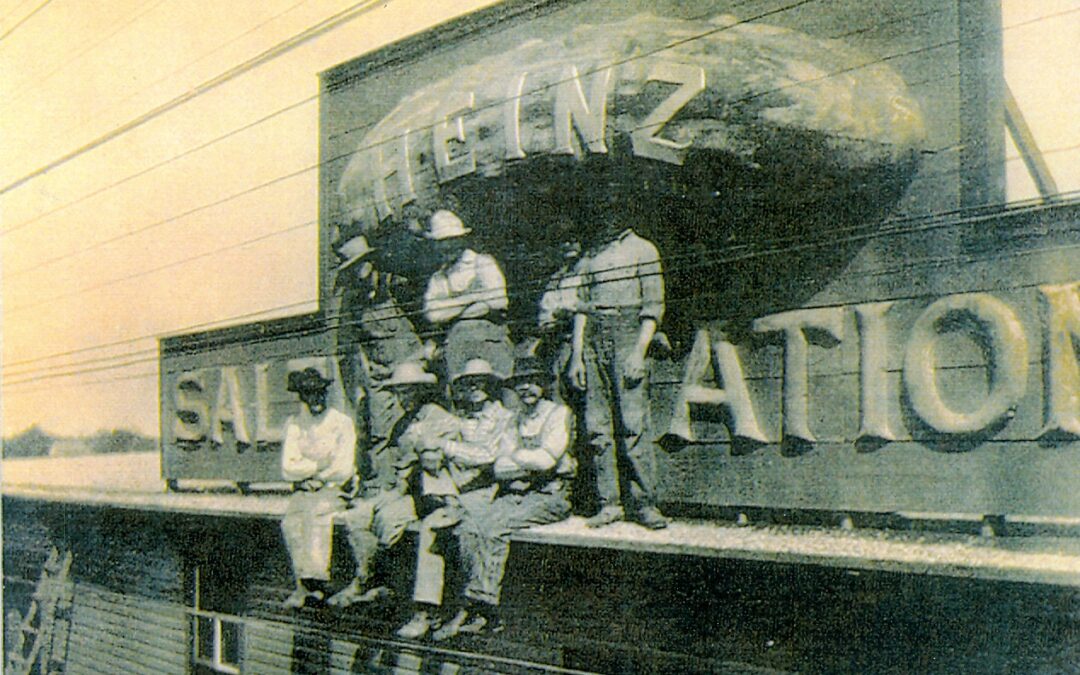
The trade in Huckleberries still continues quite actively.  I presume most of your readers are aware that Tyner City is the great Huckleberry Emporium of Marshall County, About 3 miles northwest is located what is known as the “Big Marsh”. In this marsh the berries grow and every day hundreds of men, women and children are wading through it gathering the berries.  In the center of the marsh is an acre or two of solid ground, more elevated than the rest, on which is a nice grove.  This is called the “Stamping ground”.  Here the eager multitude comes every evening or morning with their berries and find a real ready market.  A kind of eating and drinking saloon is kept here for the accommodation of the “ pickers”.

Curiosity prompted your correspondent to visit this locality.  When I arrived at the borders of the marsh, a scion of humanity met me, lugging a basket of berries in each hand.  “Anymore left in there?” I asked, “Thunder yes!” replied the sprig, “wagons loads”.  “Any snakes in there”, “Snakes the d——“, replied the young hopeful.  “Snakes don’t migrate to this locality, but continued he, see here stranger, you’ll find hornets by the millions”.

We hope to see you at our fundraiser and that this article has primed you for picking a Western outfit! Tickets available online here. Stay tuned on our Facebook for more information and when you can purchase tickets in person. Learn more about our historical towns at the Marshall County Museum from 10:00 am until 4:00 pm, Tuesday through Saturday.

Organizing Fire

Organizing Fire

Innovation and necessity have been, and still are, the driving force of progress in almost any field; perhaps none so desperately as the need for fire safety. As communities in Marshall County grew in population, naturally, business enterprises took hold, and buildings sprang up to accommodate them. People used the most plentiful and available material – wood – and built their buildings quickly.

In Plymouth, the original plat map from the 1830s designated lots for a business district. It began with Lot #1 (where the REES Theatre is located) and moved north up to Lot #21 and then crossed Michigan Street and started back south with Lot #22 and ran through Lot #42. Those lots were side-by-side, as were the buildings constructed on them. It is no surprise, then, that when one wooden structure went up in flames, fire spread quickly, sometimes aided by the wind. More than once, the whole business district was wiped out.

Welcoming Progress

At the time, there was little by way of fire protection. Business owners simply accepted that a fire, once out of control, would destroy their buildings and typically their contents as well. A devastating fire in 1857 that consumed most of the downtown businesses convinced Plymouth town leaders of the need for a volunteer organization of firefighters. In February 1958, the Protection Hook and Ladder Company was formed with a total membership of 57. A bucket brigade was organized as a part of the group. A two-story frame building was built on the Adams Street riverbank.

Two other fire companies were organized in December 1865, the Adriatic Engine Company and the Torrent Hose Company. The City Hall and Engine Building on Center Street was completed in 1875 and served the department for 95 years. The first engine was purchased sometime between 1863 and 1868 and required five or six men to a side, pumping up and down to produce a stream of water. The problem of a dependable source of water was solved when a series of brick-lined cisterns were constructed. The sprinkling wagon, used to keep dust down in the streets, was charged with keeping the cisterns full. The city waterworks, built in 1888, finally replaced the cisterns.

Changing Standards

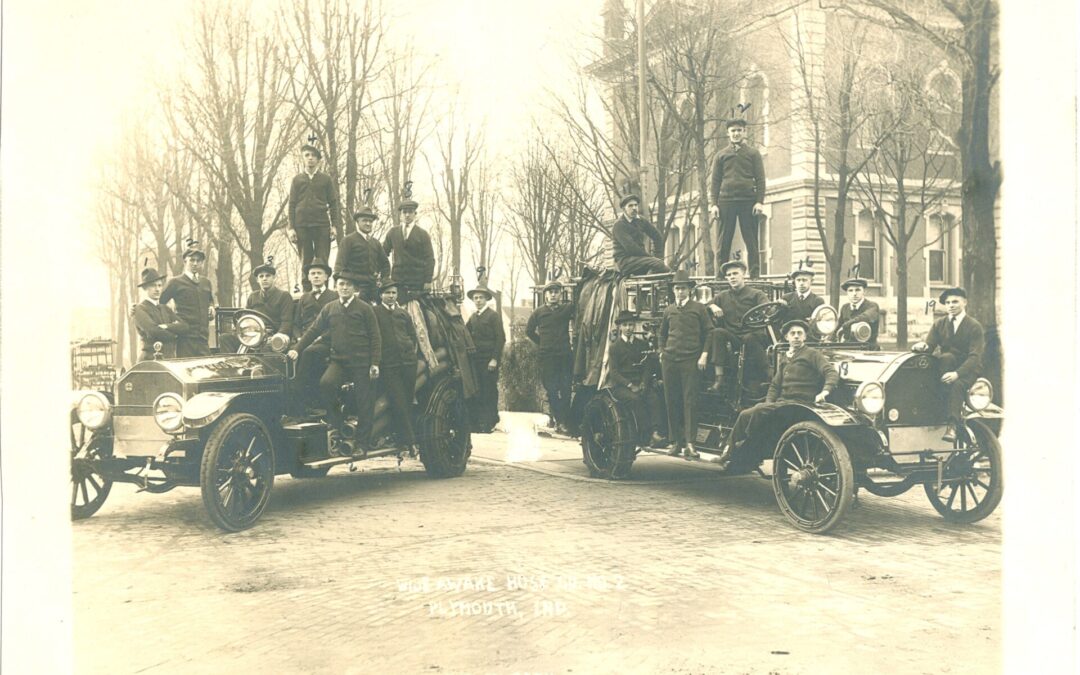
As equipment was added, so were horses drawn vehicles. The station floor was designed with grooves in it to provide traction for the horses as they raced to answer the alarm. Equipment was sparse. The Wide Awake Hose Company #2 paid $160 in 1883 for a hose cart. In 1912 the city purchased its first motorized vehicle, a hose and chemical truck for $5,000. In addition, city officials added a Gamewell Fire Alarm System with 20 alarm boxes placed around the area.

At about this same time, the City of Plymouth began to pass ordinances meant to set standards for buildings to improve fire safety. Downtown businesses had to be built of brick with fire walls in between, and ceilings were to be metal or some other fireproof material. In 1896, an ordinance passed that any stove and pipe put up for use in any building must be set on a suitable platform covered with zinc or other metal, or on brick. Also, where the stove pipe entered a chimney, it must be securely fastened and the spaces around it “securely stopped with some non-combustible material.” The ordinance went on with specifications about ventilators, cleaning, riveted pipe joints and other details.

The ordinance even stated that ashes could not be collected in a wooden bucket or stored in a wooden barrel within 20 feet of any building. The fine for violation of the ordinance could cost up to $10. The city marshal or chief engineer was placed in charge of inspections with the power to enforce the ordinances. If a building owner failed to address an issue, the City would have it done and bill the owner, adding a $10 fine to the cost.

Upgrades and Preservation

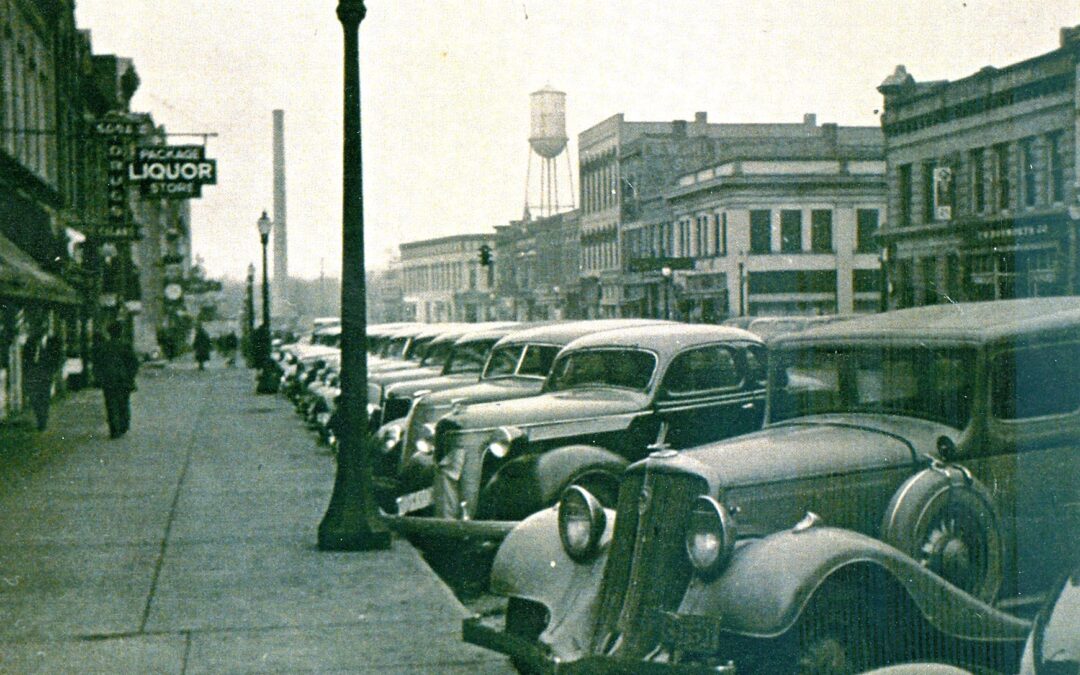
Center Street looking North in Plymouth, Indiana.

Innovations continued to make the fire department more efficient and more professional for a growing city. In the 1950s, several retired businessmen and volunteer firefighters began taking turns driving the trucks, sleeping in a 2nd floor room across the alley from the fire station. In 1970, the department moved to the current building. Throughout the 1960s and ‘70s, the roster of full-time firefighters grew, and the department added a pumper with an 80-foot snorkel at a cost of $72,000. At that time, six pieces of equipment were manned by six full-time personnel and 20 volunteers.

Currently, the City of Plymouth is looking for ideas on how to best use the old fire station (and once city hall) on the corner of Washington and Center streets. If you have ideas for its preservation and continued use, pick up a Request for Proposal form in the city clerk’s office and submit your ideas.

The Marshall County Museum and Research Library’s normal hours are 10 a.m. – 4 p.m., Tuesday – Saturday. Stop in and see us!