Christian Seiler of Bremen

Christian Seiler of Bremen

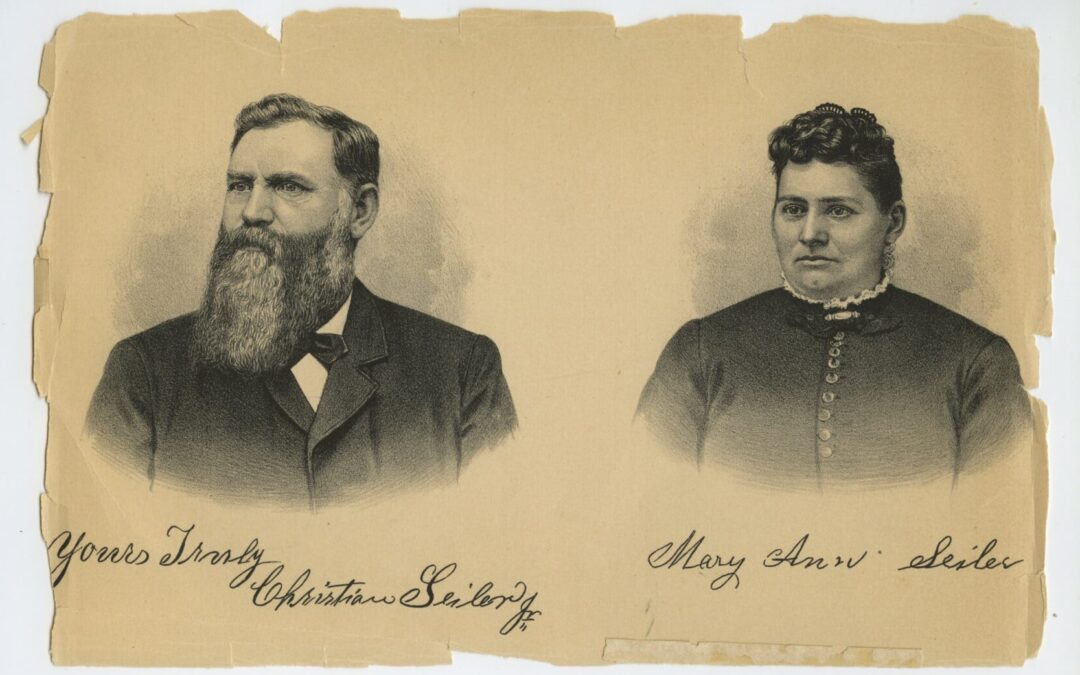
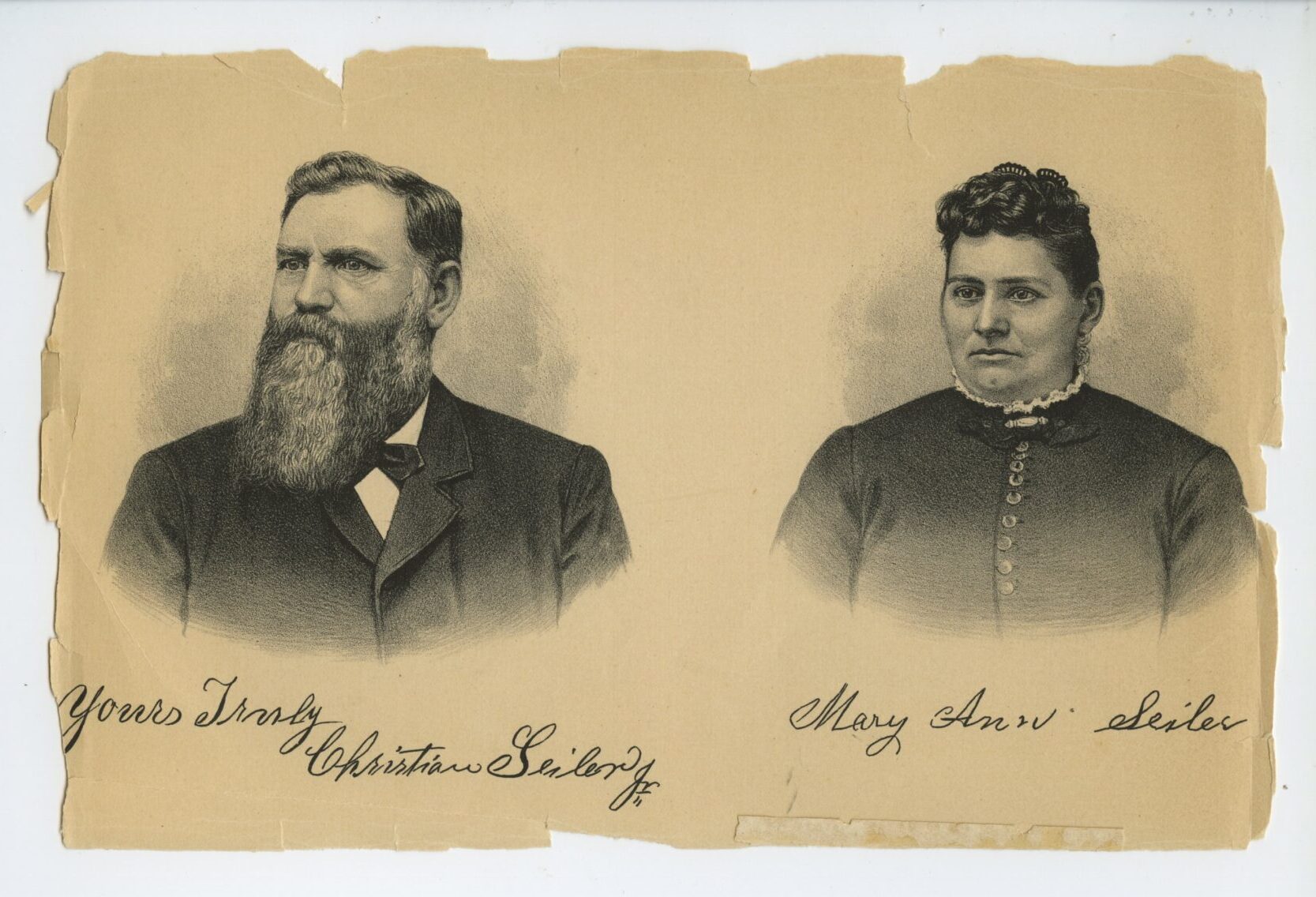
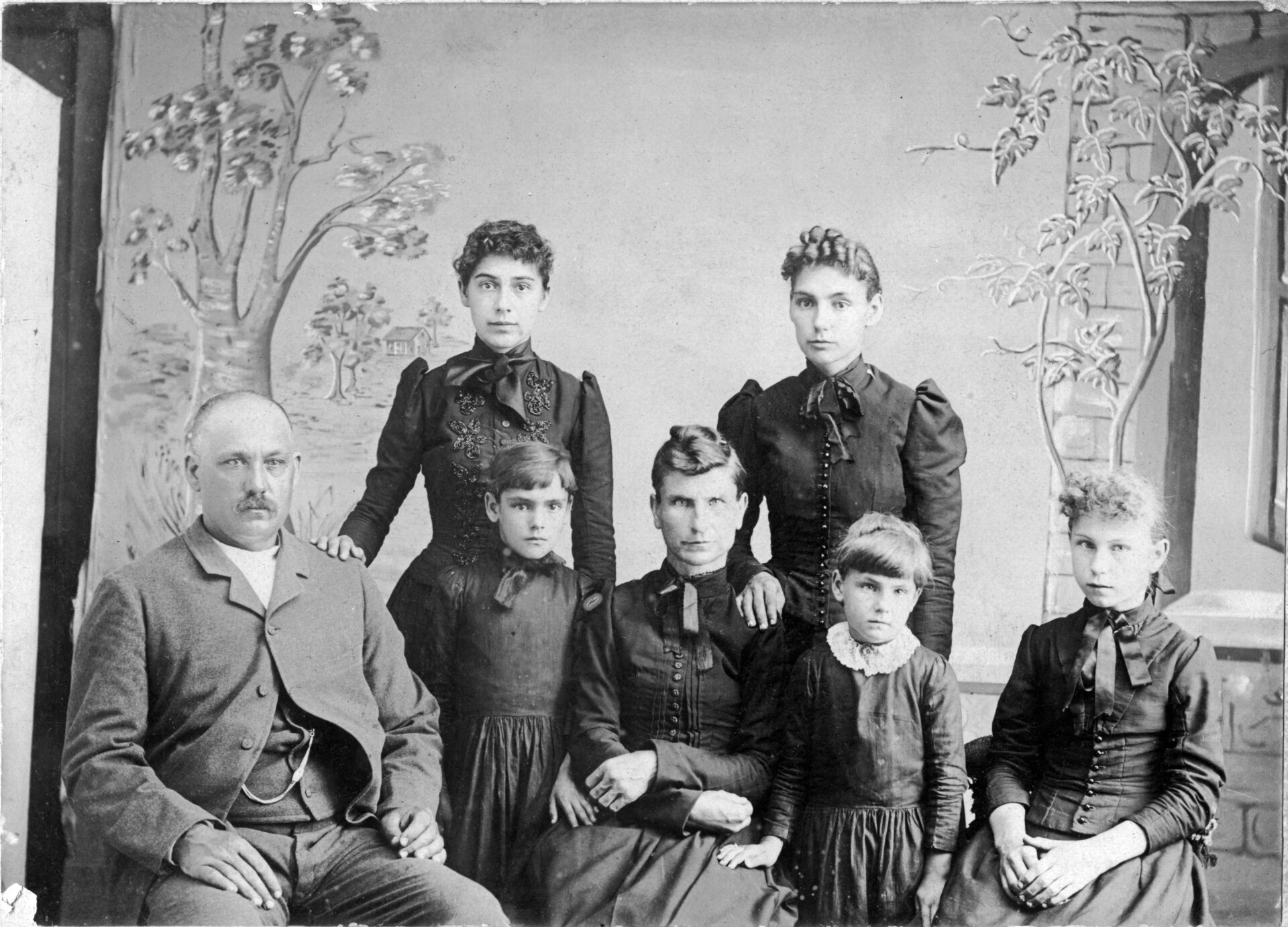
Christian Seiler and his wife, Mary Ann.

The history of Christian Seiler, Jr., of Bremen is a fascinating example of how Marshall County grew and prospered during the 1800s. Some of the beautiful descriptive phrases used by the original writer have been left in this essay, as they perfectly convey the picture of an earlier time.

Birth and Childhood of Christian Seiler

In the spring of 1837, Christian Seiler, Sr., and Anna Fents were united in marriage, and unto them six children were born. Christian Seiler, Jr., first saw the sun rise on the morning of March 18, 1838, on the shore of Lake Brienz, near Interlaken, Canton Berne, in Switzerland. His father was born in the same house on August 10, 1806. His mother was Anna Fentz, born August 15, 1810, in Gsteigwyler, a romantic spot within two miles of Interlaken.

In the year 1798, when French generals took control of Berne, the capital of Switzerland, they demanded all the money that had been hoarded there in the national treasury. Grandfather Fentz was called on as a militiaman to help defend his country. Perhaps the first and only duty he performed was to obey the orders of some French commander to watch the money that was boxed up and ready on the sidewalk in front of the treasury building for shipment to Paris. Afterward, the old man often said that he was a fool for not taking a box of the gold and walking away with it. He was in that day considered a wealthy man, as he owned a great deal of land, cows, horses and sheep. In the summer season he was always up in the Alps herding his stock and making cheese and butter.

Moving to America

In the year 1853, the Seiler family determined to emigrate to America to better their fortunes, having heard and read much of this fruitful land and the opportunities it offered to those who were seeking homes. So, on the 13th day of October 1853, the entire family started from their native home for the western world. They made their way across Switzerland, through France to Paris, and thence to Havre where they took passage in a French sailing ship. After a voyage of 28 days, they arrived safely in the harbor of New York. They remained there over Sunday, and then proceeded west by way of the Erie railroad to Buffalo, by boat to Cleveland and Toledo, thence by the Lake Shore to South Bend, IN, where they arrived on the 1st of December.

On the 5th of that month, they rode on an ox wagon, owned by Uncle John Dietrich, to the town of Bremen, which was their destination. Christian Seiler, Sr., bought eighty acres of land one mile west of Bremen from his brother-in-law, for $700, of which $300 was paid in cash. His son, Christian, was then bound out to his uncle, John Dietrich, for the period of five years to earn the $400 that was unpaid on the land.

About June 1, 1854, Dietrich with his family moved to Bremen into a log house, and in the spring of that year erected the first cabinet shop, in which Christian learned his trade and served his time, which ended January 1st, 1859. Christian then went to Olney, IL, where he worked as a carpenter in summer and as a cabinetmaker in winter. He received wages of $1.25 a day and board.

Returning to Bremen, Christian continued to work at his trade successfully until the civil war broke out in 1861. In the fall of that year he enlisted in Company K, Twenty-Ninth Indiana volunteer infantry. He took part in the battles of Shiloh, Stone River, Chickamauga, and the siege of Corinth. During several months in 1863, Christian occupied the honorable position of color-bearer of his regiment. In October 1863, he received an injury that sidelined him, and a month later was discharged as his service commitment expired. Returning to Bremen, he resumed work at his trade.

Christian and Mary Ann Seiler

Christian Seiler's Later Life

On the 15th of February 1866, Christian Seiler, Jr., was united in marriage to Mary Ann Beylor, who was born in German Township in 1846. To their union were born the following children: Frederick William, Margaret Ellinore, Eda Annie, Edward Clayton, Clara Erclina, Jennetta May, Emma Estalla, Josephine and two sons who died at birth.

Mary Ann’s father was George Beyler, a native of Alsace, France, who came to this county in 1833, first settling in Ohio, and later in Marshall County. In 1837 he married Rebecca Lehr, a native of Lancaster, PA. Mr. Beyler cleared land and was very successful. He accumulated a great deal of property during his life. He was a good Christian man and held membership with the Evangelical association for 35 years. He was respected and loved by all who knew him, and died in 1881, at age 70, sincerely lamented by the entire community.

Christian Seiler worked at his trade until 1871 when he built a shop and storehouse and went into the furniture and undertaking business. He prospered until 1882, when he sold out to John Miller of LaPorte.

He has held the position of assessor of German Township, member of the town school board, clerk and treasurer of Bremen and justice of the peace. He filled all the offices conscientiously and gave satisfaction to the people who appointed him.

Christian built a house in Bremen for his father, when he retired from farming in 1873 because of old age. Christian Seiler, Sr., died there December 17, 1873, at age 67. He was followed by his wife on the 16thday of March 1887 at age 76.

Christian Seiler, Jr., was not a member of any church, but belonged to the Masonic Fraternity and the G.A.R. post of Bremen, IN. In 1881, he took a trip to the old country, revisiting beautiful Switzerland, the scene of his birth and childhood, and visited other countries, remaining abroad three months. Mary Ann Seiler died on April 12, 1891 at age 45. Christian died on July 18, 1914, at age 76.

The Museum is proud to preserve and share family stories. If you have a Marshall County family story, please share it with us. Stop in anytime between 10 and 4 on Tuesday through Saturday! The Museum is located at 123 N. Michigan St. in Plymouth. Call us at 574-936-2306.

Ben Shaffer Gets Bremen Some Artillery

Ben Shaffer Gets Bremen Some Artillery

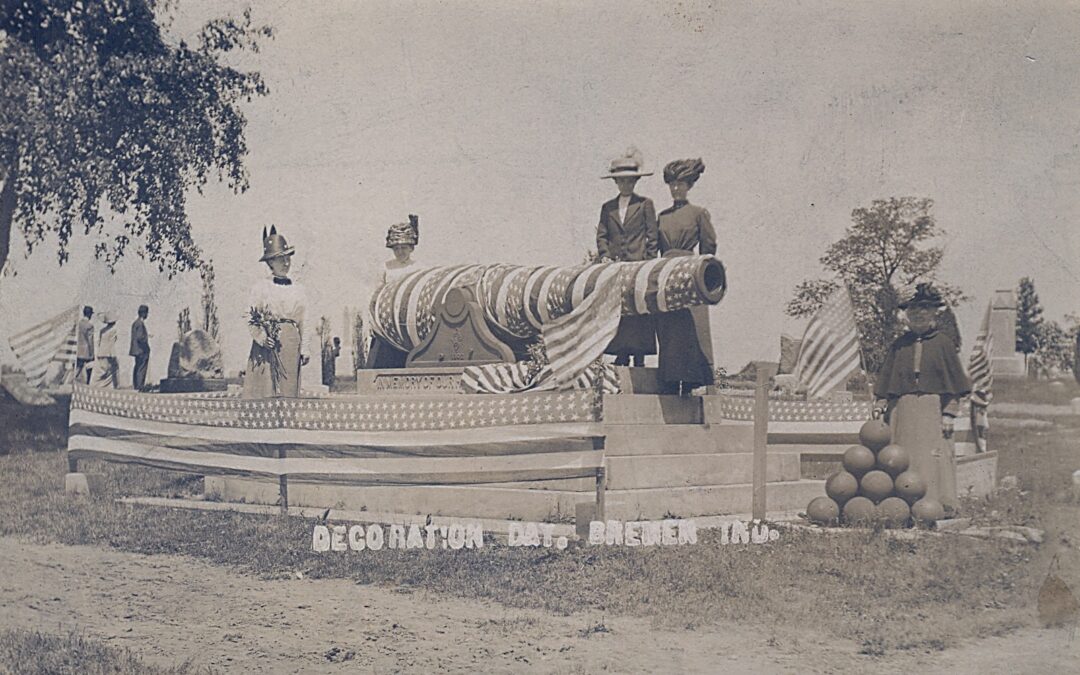
Feature Image. Celebrating a monument for Union soldiers on Decoration Day, ca 1903

By Derek Jensen, President of Historic Bremen, Board Member, Marshall County Historical Society.

Benjamin Shaffer (1844-1912) was an interesting character in Bremen history. His father emigrated to Bremen from Germany and became a wealthy farmer. As a young man, Benjamin served in the Indiana 74th Volunteers (infantry) Company F during the Civil War.

After the war, Shaffer returned to Bremen and took up farming. He later moved to town and became an investor and also assistant town marshall in the 1890s. He was known for his rattlesnake hunting prowess. The Bremen Enquirer of August 25, 1910, states “Benjamin Shaffer killed seven rattlesnakes yesterday about two miles south of town.”

Honoring Civil War Soldiers

Shaffer was proud of his military service and honoring Bremen’s Civil War soldiers was a point of pride. He belonged to the Grand Old Army of the Republic post in Bremen. Through his efforts, Bremen was awarded a cannon for their cemetery in 1902. Shaffer helped to get the cemetery incorporated in 1903 and was named president of the cemetery association in 1904.

The May 16, 1902, edition of the Bremen Enquirer said: “Benjamin Shaffer, commander of the Hardzog Post G.A.R. of this city, is in receipt of a letter from Senator Beveridge stating that the ordnance bureau has instructed the commanding officer at Ft. McHenry, MD, to turn over to the Post one eight-inch Rodman gun and 20 eight-inch shells. The piece will not be mounted, and transportation charges must be borne by the Post. A carriage will be made for the gun here, and arrangements made for its immediate shipment. It will be mounted in the Bremen cemetery as a monument to the Union soldiers buried in unknown graves. It is a matter of regret that the arrangements could not have been completed in time for Decoration Day.”

Presenting the Artillery

The June 13, 1902, the Enquirer stated: “The cannon presented by the government to the Bremen G.A.R.  arrived yesterday morning. Last Friday Mrs. Dr. Smith and Mrs. Marquet circulated a subscription paper and in a short time secured $200 to be used in paying transportation charges and mounting the piece in the cemetery. It will be placed at left of the main driveway, just inside the gate, and mounted on a pyramid of limestone 40 inches high and with a base of 10-1/2 X 12-/2 feet. At each side of the gun will be a small pyramid of shells. The gun is 10-1/2 feet long, 8-inch caliber and weighs about 3 tons.”

The gun was placed in a custom-cast tilting carriage made by the local Holland Radiator foundry, marked with “1902,” at a cost of $15.50. The town was able to celebrate the monument in style on Decoration Day of 1903, and the Women’s Relief Corps draped the cannon in flags for the ceremony.

About "Ben" Shaffer

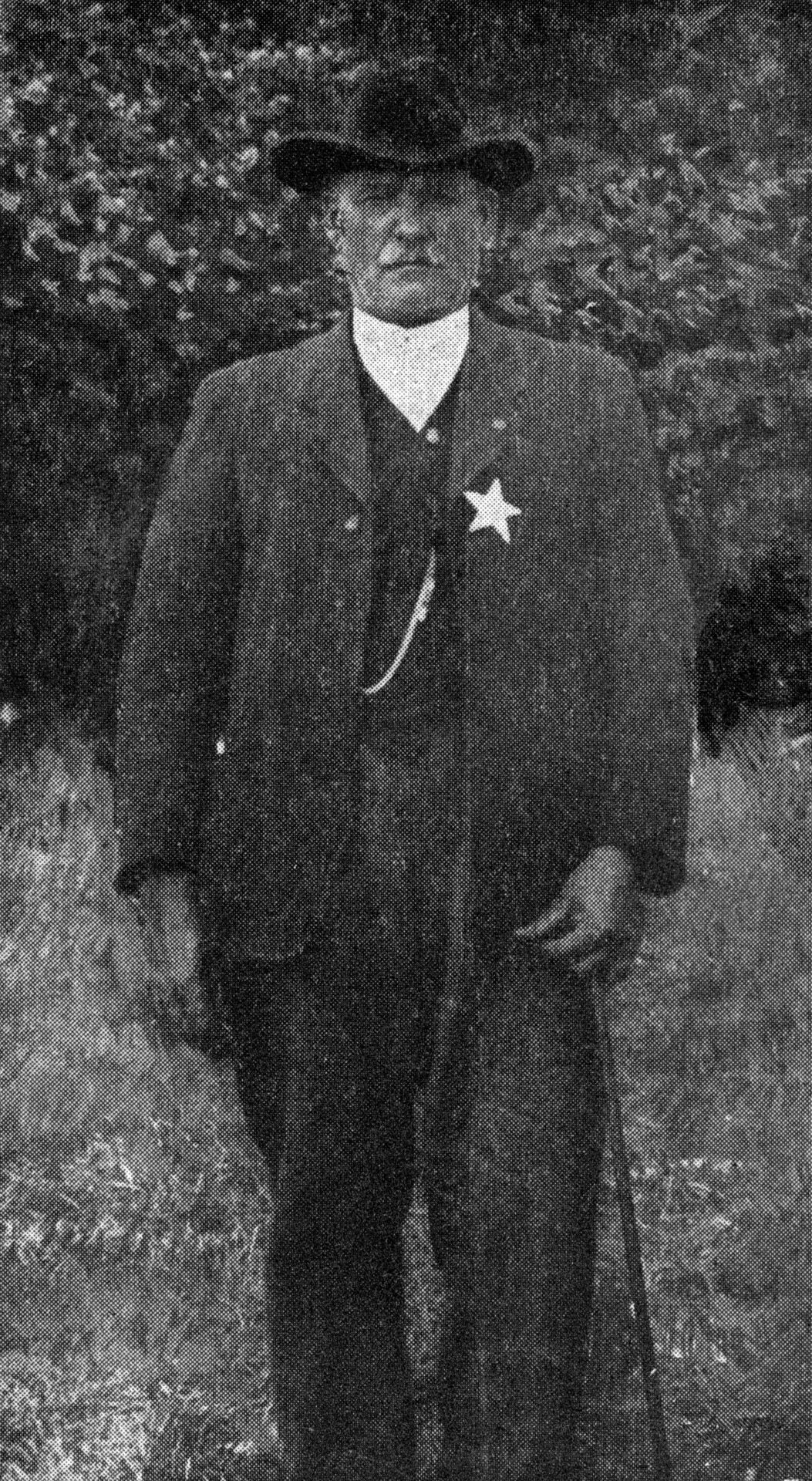
Benjamin Shaffer.

When he died in 1912, Benjamin Shaffer was buried in the family plot, right next to the cannon. Having been survived by five daughters, his descendants in the area today include Senffs, Ruffs, Stouders and Jensens, including this author.

The Benjamin and Mary Ann Shaffer family.

The Marshall County Historical Society and Museum is located at 123 N. Michigan St., Plymouth. We are open Tuesday through Saturday from 10 until 4. We have an unlimited supply of great stories and pictures in our archives!