Chief Pokagon’s Love Story

Chief Pokagon’s Love Story

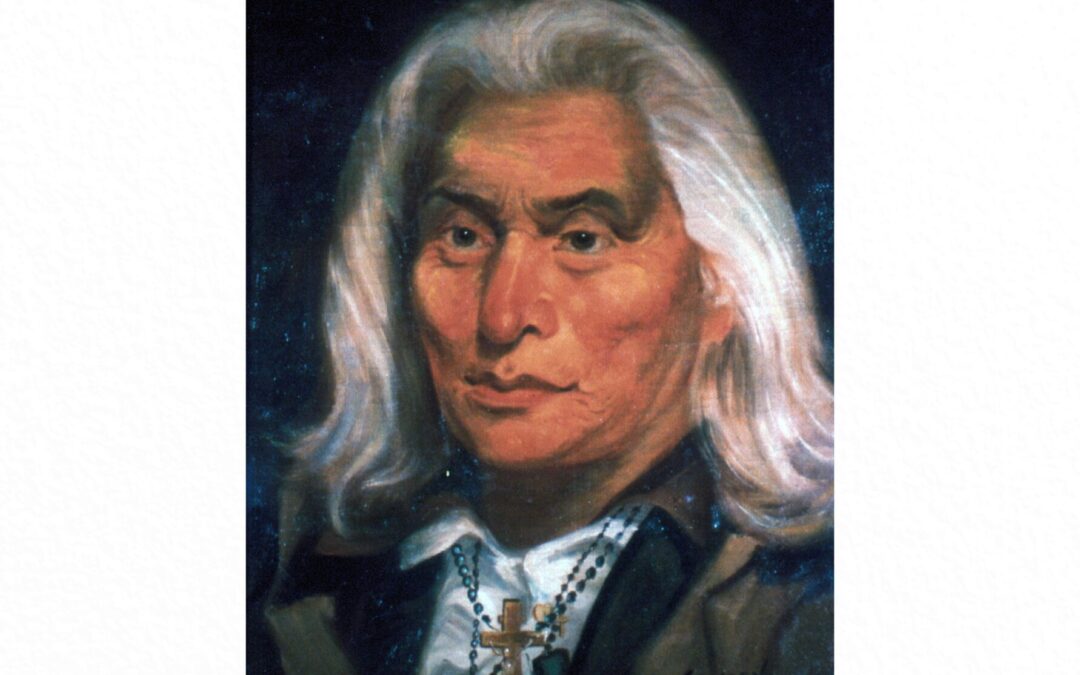
Leopold Pokagon by Van Sanden. ca 1850s from the Indiana Center for History.

Daniel McDonald was a historian who was born in Plymouth, Indiana and lived from 1833 to 1916. His writing reflects his ideas and may contain language common in 19th century writing that may not reflect modern standards. The article has been lightly edited for clarity.

The story is told in Daniel McDonald’s 1881 "History of Marshall County"

Simon Pokagon was born at what was known as Pokagon village, on the Pottawattomie lands in Indiana in 1830.  He was sent to Notre Dame University, where he graduated with honors.  He wrote many articles on the Pottawattomies and also gave lectures.  He died on January 25, 1809.

A short time before his death he wrote the story of his courtship and marriage to Lonidaw, a fair Pottawattomie maiden.  The great charm of the story, “O-gi-maw-kwe Mit-i-gwa-ki, Queen of the Woods,” lies in the simplicity with which the lover pours forth the passion of his heart.  It is the beautiful legend of the princely Hiawatha and the fair Minehaha in real life.

Pokagon begins his story by telling how he chanced to meet the shy and winsome Lonidaw and how he sought her favor, doubting and hoping in turn, until she graciously smiled on him.  Then he was forced to be absent from her for several months.

Pokagon with a lover’s enthusiasm paints the scene in the morning when he returned: on the journey to Lonidaw’s wigwam the sun though yet unseen had painted the eastern sky a brilliant red.  High in the air were multitudes of wild pigeons, sweeping the heavens as far as the eye could reach and moving in a line, like columns of trained soldiers, southward to procure their morning meal.  All the twigs and branches of the grand old forest were thickly fringed with needled frost, forming a silvery screen through which the sunshine was sprinkled down, shedding the glory in the tree tops, on the ground, filling my youthful soul with love for the Divine. 

Stillness reigned almost supreme along the trail I passed, only broken now and then by the woodpecker beating his chiseled bill into some decaying wood in search of food, or some partridge on a prostrate tree sounding his rolling drum to entertain his lady love of early spring.  I paused and listened to his oft repeated drumbeats of love, poured forth in military style, and to myself I said:  Happy lover, no doubts disturb thy trusting heart, which fear and sore distrust are warring in my soul.

I reached the wigwam of my bride to be.  All was quiet as the morning air.  My fluttering heart was all the sound I heard, that like a bird in a cage beat the bars that held it fast.  While standing before the door a strange feeling held me there in bonds which none but a doubtful lover can ever know and which no language can express. 

While there I stood Lonidaw opened wide the door, bidding me come in.  The chilling gloom of yesterday had left no impress on her face, but instead the fondest smiles of maidenhood were plainly written there.  Then well I knew those smiles so sweet were all for me alone.

With mutual hearts we clasped each other and sealed again the marriage vow with concert kisses, imparting a thrill of joy that only they who truly love can ever feel and fully understand.

The wedding followed, a description of which is given by the bridegroom himself:

When the moon of flowers and bloom came, and mating birds were moving northward and wild flowers were blooming and the trees were putting on their robes of green, I took the hand of my dear beloved Lonidaw and she became my bride.  No wedding cards were passed around, no gifts were made, no bells were rung, no feast was given, no priest declared us one.  We only pledged our sincere faith before her mother and the King of Heaven.  Our hope, our joys were one.  Hand in hand along an ancient trail we took our course until we reached a land of game.  Here we paused and like two mated birds that search and find a place to build their nest of mud and straw, so we, beside an inland lake where towering woods embrowed its shore and flags, rushes and wild rice in plenty could be found, built our wigwam home of poles and bark.  There oft at dawn and eventide we fished from our birch canoe, and that she would have more success than I, ofttimes I would bait well her hook and let my own go bare, then wonder why she caught more fish than I.

Oft, returning from the chase, weary and tired of carrying game, I’d follow down the trail upon a narrow neck of land that ran into the open shore, and I never failed to see Lonidaw’s erect and slender form on hasty run.  No swan ever faster swam or more elegantly appeared than she when bending to the oars, pushing her birch canoe across the swelling bosom of the lake.  As she would approach me while waiting on the shore I always hailed her “queen of the woods.”  On our return across the lake she would cling to the oars and have me steer.  I always felt her image in my heart and loved to see it in the lake and oft would ask her if her feelings were akin to mine.  Her only answer was an approving glance and downcast smile.  Thus happy in each other’s love we floated down life’s stream.

Phone: 574.936.2306

Learn more about the history of the Potawatomi people in Marshall County in our Historic Crossroads Center exhibit. We are open Tuesday through Saturday from 10:00 AM until 4:00 PM. The Museum is located at 123 N. Michigan St. in Plymouth. Call us at 574-936-2306.
Small Statue of Liberty Replica

Small Statue of Liberty Replica

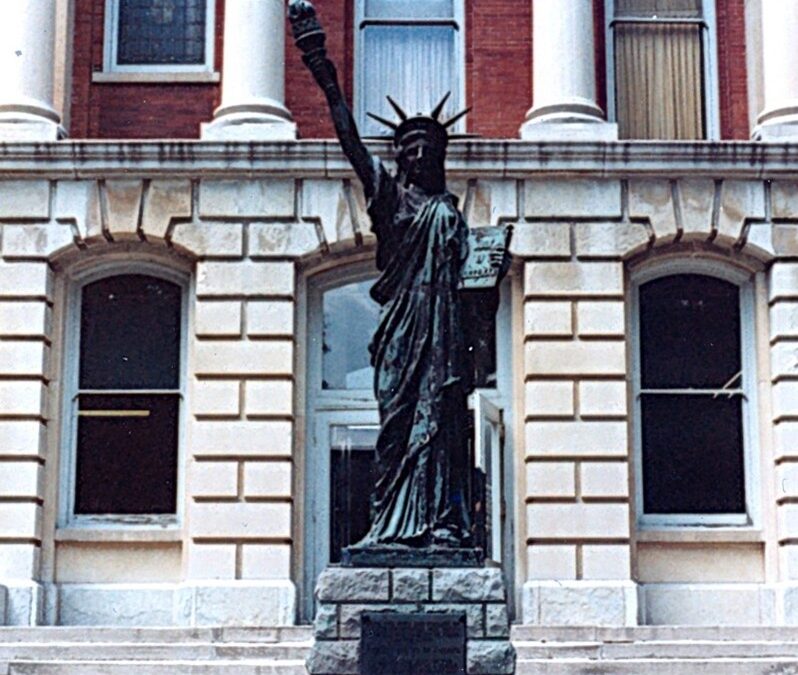
Small Statue of Libery replica in front of the Marshall County Courthouse in Plymouth, IN.

A gift of friendship from the people of France to the United States, the “Statue of Liberty Enlightening the World” was dedicated by President Grover Cleveland on October 28, 1886. It has a fascinating history that is well worth researching. But did you know that Marshall County has a small replica of the Statue of Liberty? It sits on the courthouse lawn in Plymouth, and it has a story as well.

In 1949, to celebrate its fortieth anniversary, the Boy Scouts of American initiated a program entitled, “Strengthening the Arm of Liberty.” Each local scout troop across the country was tasked with raising $300 to $350 to purchase a “Little Sister of Liberty.” The troops donated the replicas, which are eight feet four inches tall and made of copper plating, to their communities for prominent display. Almost 200 of these replicas were installed throughout the country between 1949 and 1952. Other Little Sisters known to exist in Indiana are in Gary, Madison, Peru and South Bend. Most are in front of courthouses, like ours in Plymouth and the one in South Bend.

The statues were mass produced. Plymouth’s Little Sister was shipped by express on February 13, 1951, from the Friedley Voshardt Company in Chicago. The company made stamped architectural sheet metal ornaments of aluminum, bronze, copper, lead and zinc.

The dedication of Plymouth’s Little Sister was, predictably, on July 4, 1951, with about 350 people in attendance. One side of the statue features a plaque with an inscription on it, and it stands on a 15-foot base. The base was not purchased by the Scouts but paid for with contributions.

The dedication ceremony started with the junior high school band marching up Garro Street to Center Street and north to the courthouse. The band played “America.” The colors were presented, and the invocation given. Plymouth’s first scoutmaster, Judge Alvin Marsh, recalled the founding of the local troop on August 19, 1912. Coincidentally, that group met on the corner of the courthouse lawn.

At 10:18 a.m. four Scouts slowly untied the string that held the veil covering the statue and presented it to the county commissioners. (Surely there couldn’t have been much anticipation about what it would look like.)

Governor Henry Schricker was the main speaker. In his speech he mentioned the three references to God in the Constitution and noted that there could be no democracy without religion. He also praised the Boy Scouts of America, declaring the program invaluable in the building of citizenship.

After the governor’s speech, Vance Zartman sang a verse of “America the Beautiful” and a closing prayer was offered.

Scouts participating in the background display stood at parade rest throughout the ceremony. Represented at the ceremony were Plymouth Pack 71 and Troop 6, Argos Troop 55, Bremen Troop 56 and Lakeville Pack and Troop 47.

The text on the marker reads, “With the faith and courage of their forefathers, who made possible the freedom of these United States, the Boy Scouts of America dedicate this copy of the Statue of Liberty as a pledge of everlasting fidelity and loyalty to the crusade to strengthen liberty. 1951.”

Over fifty years passed, and the question arose – what had happened to all the Little Sisters around the country? A national search was undertaken in 2007 to find the Little Sisters of the Statue of Liberty. At that time, about 100 were accounted for, about half of those that were supposed to have been placed. Weather and vandalism had claimed some. Others were stashed in storage. Still others had been sold for scrap.

Local Scout Tim Jeffirs decided to do something about the condition Plymouth’s Little Sister had gotten into. He spearheaded a campaign to clean the miniature statue as part of his Eagle Scout project.

On July 4, 2007, a rededication ceremony for the refurbished Marshall County Statue of Liberty took place. The American Legion Post #27 Color Guard presented arms. Troops 251 and 257 and Pack 222 presented the colors. Abigail Jeffirs sang “On the Banks of the Wabash,” Tim Jeffirs explained his project, and Nathaniel Jeffirs performed the “Star Spangled Banner.” Sounds like quite a family project. Prayer was offered at the beginning and end of the program.

Several years have passed since that rededication ceremony, and the statue is beginning to look a little worse for wear. It is about time for the statue to be spruced up again, and then Marshall County can be proud of her Little Sister once more. Any BSA troops looking for a project?

The Marshall County Historical Society and Museum is located at 123 N. Michigan St., Plymouth. We are open Tuesday through Saturday from 10 until 4. We have an unlimited supply of great stories and pictures in our archives!

George E. Thornburg: Lifelong Depot Agent

George E. Thornburg: Lifelong Depot Agent

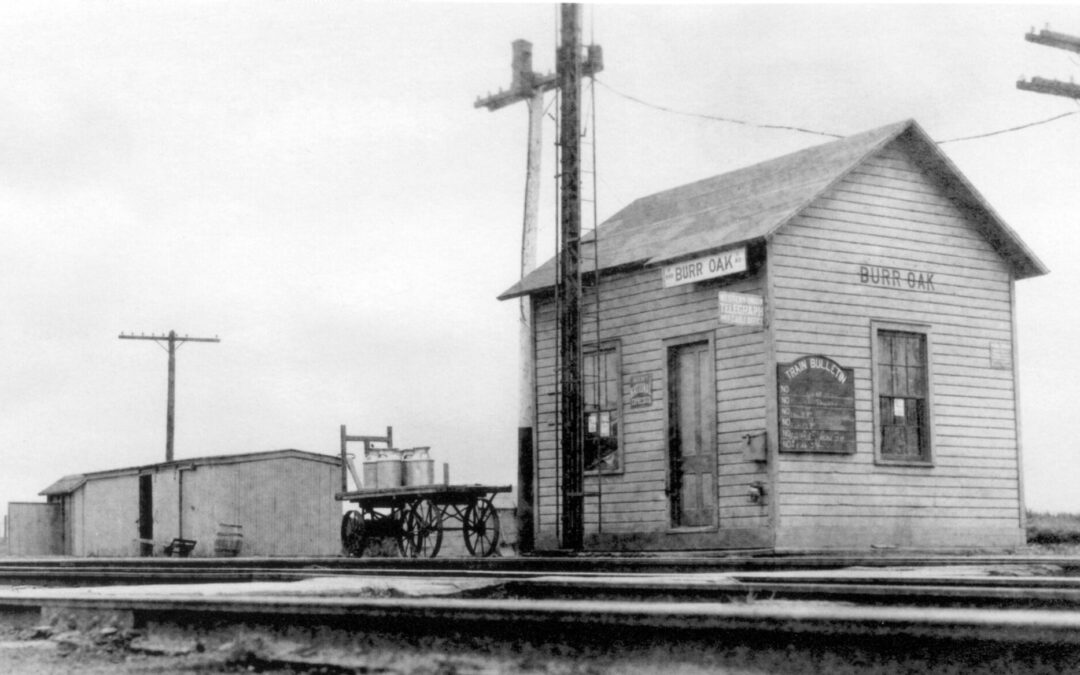
Burr Oak Depot, undated.

The information below comes from the Indianapolis Star Magazine, November 18, 1956, and the Culver Citizen of September 18 and 25, 1957.

Early Life of George Thornburg

George Edgar Thornburg was born at Stillwell, IN on April 3, 1891, one of four children of William Henry and Malinda (Kaser) Thornburg.  By the time George was 9 years old, the family was living in the LaPaz area.

He married Amanda Lodema Strang on May 17, 1910, and they made their home in Burr Oak.  They had five daughters, Opal, Elwyn, Kathryn, Mary Jane and Ramona.  All five daughters grew to adulthood, married and lived in Marshall County.

A Career In Railroading

Thornburg went into “railroading” in 1910 and would have a 47-year career.  Since telegraphy was the up and coming thing, he started by watching the telegraph key at the local junction in LaPaz.  After George had mastered the code, he and his cousin rigged a line between their houses and practiced sending messages.

After a brief interval as a streetcar conductor in South Bend, he came back to the steam locomotives.  ‘There’s something about a railroad,” he stated.  So many people at that time felt the pull of the railroads.

At the time employees of the railroad worked nine hours, seven days a week.  If the freight loads were heavy, the shift might stretch to 12 hours.  Trains were dispatched by orders telegraphed ahead to each station.  Thornburg would receive the orders, fasten them to a hook at the end of a long pole and hand them up to the engineer.  If the train was not scheduled to stop at the station, he had to move fast, for the train’s speed would not slacken as the locomotive thundered past.  Sometimes the orders involved two engineers, and he would have to get the orders to both.

Thornburg was employed by the Nickel Plate Railroad as an agent first at Ober, then Hibbard, then Burr Oak.  In 1954 he was transferred to Hibbard again.

Memorable Days On the Railroad

In 1917 he said he saw a derailment, “and it was plenty for a lifetime.”  A wreck occurred on August 30 of that year, described in the Bremen Enquirer of September 6, 1917.   An arch bar broke under a car in a long line of cars going about 30 miles an hour.  Fifteen freight cars were smashed to pieces and piled up along the south side of the B & O track near the bridge over the Yellow River a mile and a half west of Bremen.  Oats, sugar, agricultural implements and various freight were all mixed up.  Fortunately, no one was hurt.  It was several days before the wreckage was cleaned up.

Thornburg did get to meet a celebrity, the well-known opera singer Mme. Schumann-Heink, whose son attended Culver Military Academy.  George said she “had a nice way, pleasant and not a bit put on.”  Tycoons then often travelled by private railroad car, and Thornburg would occasionally be the recipient of some delicious food shared by their chefs.  On occasion a hobo would sneak in for a nap on a bench in the waiting room.

In the 1950s some Culver Military Academy students still used the Nickel Plate Railway station at the Hibbard depot, which was a flag stop.  He would have to handle the luggage and make sure no items were left behind by the boys.

George Thornburg's Everyday Duties

Eventually the telephone and automatic signals replaced the skills of telegraphy and teletyping.  But Thornburg still had to sell tickets and keep up with paperwork for baggage and freight.  He had to receive the mail from trains that did not stop.  He was sometimes helped in this by “a youthful assistant, Bobby Albert.”  Bob Albert would grow up to work for the railroad and as a lifelong train enthusiast, still volunteers at the railroad museum.

Thornburg also had the regular duties of keeping the station swept, the waiting room benches dusted and the potbellied stove ready for a fire.  A phone call would tell him if the train was on schedule.  If a taxi was requested, he would call a cab company in Culver.  When passengers wanted to board the train, Thornburg would put on his billed railroad cap and step out well ahead of the train to flag for a stop.  He also figured tickets and helped plan trips.  The longest ticket he ever sold was a 13-coupon ticket to Vancouver.  He said he prided himself on being a good consultant and had a flair for scenic routes.

An important duty for Thornburg was that he had to closely inspect every passing wheel for “hotboxes,” an axle bearing that became excessively hot due to friction.  If one got hot enough to burn out a journal bearing (a plain bearing without rolling elements), or a journal box, which housed the journal bearing, it could cause a wreck.

A Tragic Ending

On Monday, September 16, 1957, Thornburg said he called the Culver Citizen with a heavy heart to report bad news.  He had received a telegram: “On and after September 24 all business in the Hibbard and Burr Oak stations will be handled at Knox.  Tuesday, September 23 will be the last day that the Hibbard station will be open to the public.”  This was perhaps the saddest disappointment of his long life of service.

But he never had to see the closing of the Hibbard station.  A week before it was scheduled to close, he passed away of coronary thrombosis while sitting in a chair in his home at Burr Oak on the morning of September 18, 1957.  Can a person die of a broken heart?  If so, perhaps George Thornburg did. George Thornburg was faithful to his job working for the railroad for 47 years.  He was a true railroad devotee.

Marshall County’s history is full of great stories about the people and events that shaped our area. The Marshall County Historical Society & Museum offers the opportunity to research and learn about our forebears. We are open from 10:00 until 4:00, Tuesday through Saturday, at 123 N. Michigan St., Plymouth. Call us at 574-936-2306.
Archelaus Hunt: Founder of LaPaz

Archelaus Hunt: Founder of LaPaz

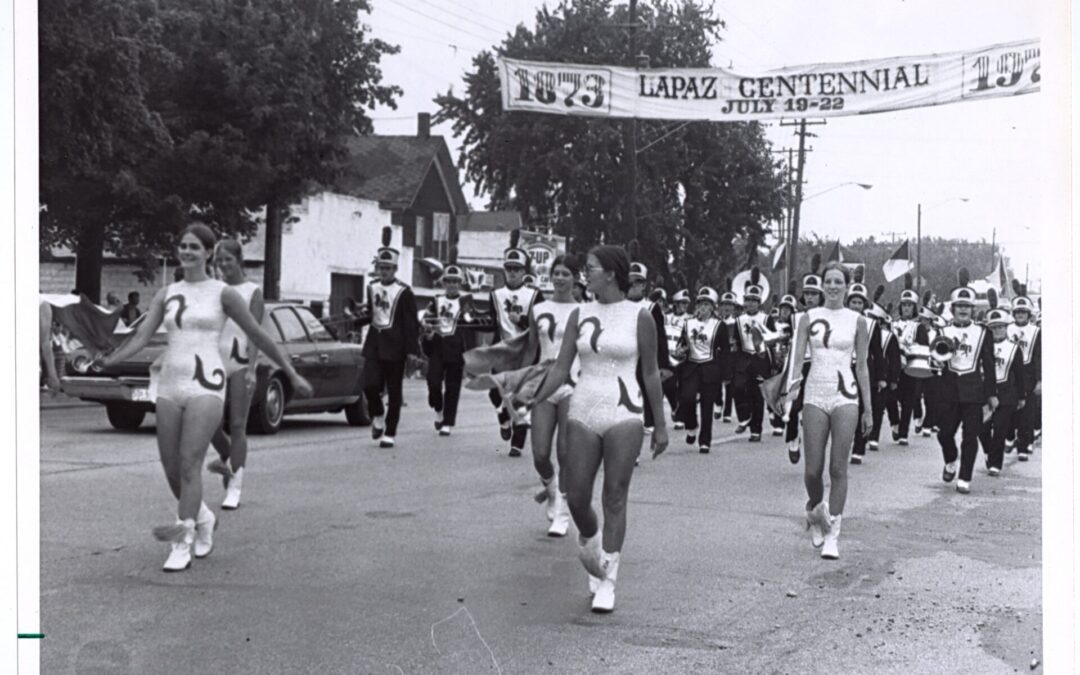
Feature Image. Parade celebrating the LaPaz Centennial in 1973.

The Baltimore and Ohio Railroad was built through Marshall County in 1873.  Archelaus Hunt came back from South America following its completion. Like so many other towns, its location was determined by the fact that the railroad was there. Hunt wanted to lay out a town called “LaPaz” in honor of LaPaz, Bolivia. Archelaus had mined silver in Bolivia. He purchased 18.48 acres, Section 5 of the Michigan Road lands, which were surveyed, platted into 121 lots and recorded on August 9, 1873.

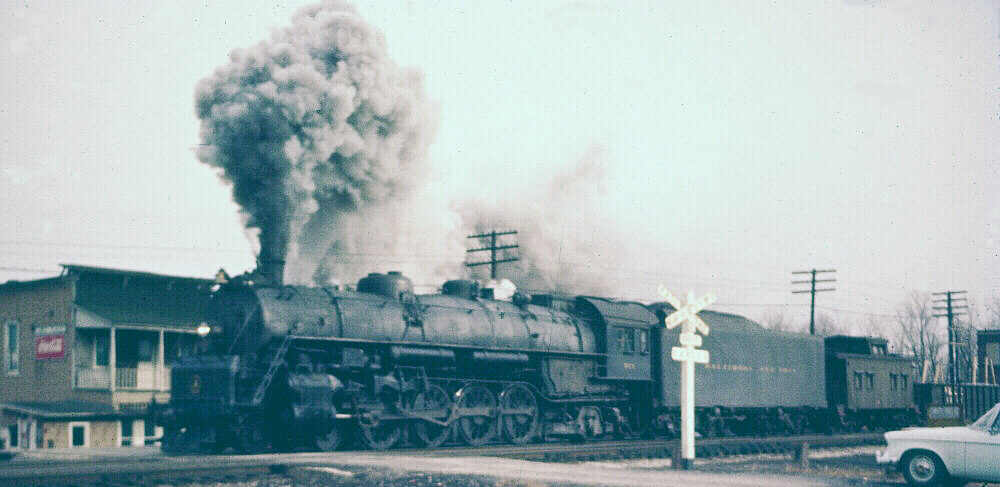
LaPaz Junction, Baltimore & Ohio 731 passing store.

A Life Cut Short

Archelaus was engaged to marry Sarah A. Schilt of Bremen. He recorded the plat of LaPaz on August 9, 1873, and took out a marriage license with Sarah five days later. Sadly, that marriage would never take place.

On Monday, October 27, 1873, Archelaus was leading his horse to water when the horse became playful and he gave it the full extent of the rein. According to the newspaper account, Archelaus was exercising his horse, which was said to be gentle. “Archelaus would give the horse the length of his halter and let him run around him. The horse playfully kicked up its heels and accidentally struck Archelaus in the chest. Archelaus walked a few steps along Michigan Road and then fell, expiring immediately. “

There is a notation in the marriage records at the bottom of the marriage license: “The above license was never used. Hunt dead.”

Researching Archelaus Hunt

Archelaus Hunt’s story came to the forefront this year when a researcher contacted the museum trying to find out about him and where he was buried. The researcher had made inquiries, and no one seemed to know where Archelaus was buried. A reference card in the Museum led to an older cemetery reading of the Bremen Municipal Cemetery dated 1934 that listed Archelaus’ name. The reading of his tombstone said he was 35 years old. Museum staff suggested that the researcher contact the Bremen clerk’s office, which he did, and reported that Tara Beasley and sexton Nate Lockwood were very helpful and able to assist him with finding the location in the cemetery.  Archelaus owned eight graves in the Bremen cemetery.

Six years later, on July 9, 1879, Sarah Schilt married John Graverson. One of their descendants is the researcher who contacted the Museum.

Archelaus’ probate file is at the Museum. It refers to a brother Alvin and a sister Alwilda. 

About Alwilda

Some creative searching led to Alwilda’s death record. Her name was Alwilda Dingman, and she died in New Buffalo, MI, on May 1, 1875, at the age of 29. She also died young and only outlived her brother by less than two years. Alwilda was born in Michigan, and her parents (and Archelaus’) were Merrit Hunt and Abigal Hunt. While we do not have a written record, it is likely that Archelaus was born in Michigan as well.

Alwilda appeared on the 1870 census in New Buffalo, Berrien County, MI. The Dingman household consisted of Isaac, 40, Wilda, 30, Henry, 12, Jennie, 6, and Nelson, 1.

This story is a great example of the genealogy & research services provided by the MCHS library. Collaborating with Bremen Clerk Tara Beasley and sexton Nate Lockwood, it perfectly illustrates the way information can be tracked in Marshall County.

For more information on early Marshall County, pick up a copy of our latest publication, From Crossroads to Communities: An Updated History of Marshall County, Indiana, written by Dr. Don Balka. Balka details the establishment of current and long lost communities over the course of our history. The MCHS & Museum is open from 10:00 until 4:00 on Tuesdays through Saturday, at 123 N. Michigan St., Plymouth. Call for information at 574-936-2306.

A Bold Robbery in Bourbon

A Bold Robbery in Bourbon

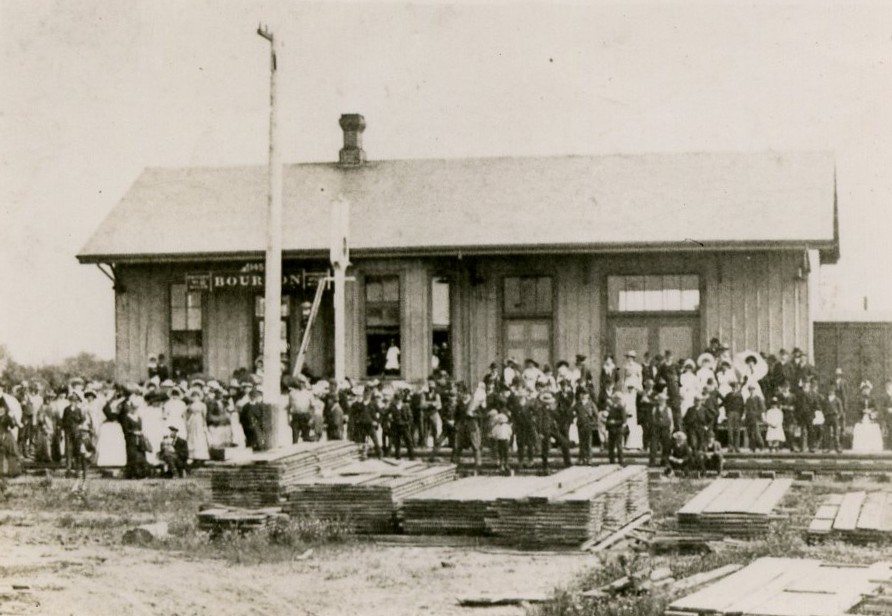
Feature Image. Bourbon railroad depot, ca 1883.

While the advent of railroads brought many advantages to the community, including easier access in and out of the area and an easier way for the farmer to move his crops, it also brought more people into the county, some of whom were unsavory characters.  A group of robbers decided to make Bourbon their home base.

The story is told in McDonald’s History of Marshall County of those bold robbers who operated in Bourbon:

A History By McDonald

“During a considerable period before and after the completion of the Pittsburg, Fort Wayne & Chicago Railroad, the town of Bourbon was infested with a gang of counterfeiters and robbers who kept the inhabitants in a constant fever of excitement and fear.  The existence of this gang and many of those connected with it were well known, but the evidence of their guilt was not sufficient to warrant legal proceedings.  Some of them were, however, finally arrested, but the law’s delay and the many technicalities brought into requisition enabled all of them to escape the penalty they undoubtedly deserved.

“One night in the summer of 1867 a large number of housebreakers and robbers entered the residence of Joseph W. Davis.  Before entering they blackened their faces and otherwise disguised themselves.  They had taken the precaution to give the watchdog, a very fine Newfoundland, a dose of strychnine, which had put him effectively out of the way.  They procured a large scantling (a piece of lumber of small cross section) and, using it as a battering ram, drove it with such force against the front door as to break it open with the first blow. 

“Two of the robbers rushed into the bedroom where Mr. Davis and wife and infant child were sleeping and laid violent hands upon them before they realized the true condition of affairs.  A pistol was under Mr. Davis’ head, and in making a desperate effort to procure it, he was struck several times on the head and face, making the blood run profusely.  The burglars secured the pistol and (with one) holding Mr. Davis down by the throat, the remainder of the robbers went through the several rooms in the house, taking them one by one, going through the house and taking everything of value that suited their fancy.  In one of the rooms they found the hired girl; in another, the hired man.  At each of these rooms they placed one of their number on guard, and now, having everything arranged safely, they began to rummage every part of the house,  They made Mr. Davis open his safe, from which they took all the money and papers and other valuables contained in it. 

“They prepared an excellent supper from the supply of cooked provisions they found in the kitchen and buttery, of which they partook with evident relish.  They remained about two hours and, having finished their work, bade the occupants an affectionate good night and hastily took their departure.

 “When the robbery became known early the next morning, the whole town was in a furor of excitement and threats of lynching suspected parties were freely made, but as nothing definite could be ascertained as to who the guilty parties were, nothing was done.  Sometime afterward the pocketbook and papers were found close to the railroad track near Bucyrus, Ohio, and shortly after returned to the owner.  Several of the suspected parties soon left town and others were not slow to follow, and this was the last trouble Bourbon ever had with housebreakers.”

Who was Joseph W. Davis?

Who was Joseph W. Davis?  The thieves picked their victim well. 

Joseph W. Davis was a lumber dealer and farmer.  He was in the milling business with his brother Omar and built a hotel in Bourbon.  The Davis mills had been destroyed by fire in 1865.  In 1867, the year of the robbery, the Davis brothers built again after the Davis block was destroyed by fire.   In December of that year Joseph W. Davis was chosen to represent his party on the Board of Registry for Bourbon Township.  Davis was also a lawyer, practicing law for over thirty years, and a state legislator.  The gang would have figured Davis had something worth stealing when they broke into his house.

Born on January 22, 1829 in Ulysses, Davis would have been thirty-eight years old when he visited by the gang of thieves who ransacked his house.  He lived to be seventy-two years old and passed away on February 1, 1901.

MCHS & Museum is full of great stories, and you are free to look anytime! We are located at 123 N. Michigan St. in Plymouth. Our hours are 10:00 until 4:00, Tuesday through Saturday. Call us at 574-936-2306.