One Boy’s Adventure with Tobacco

One Boy’s Adventure with Tobacco

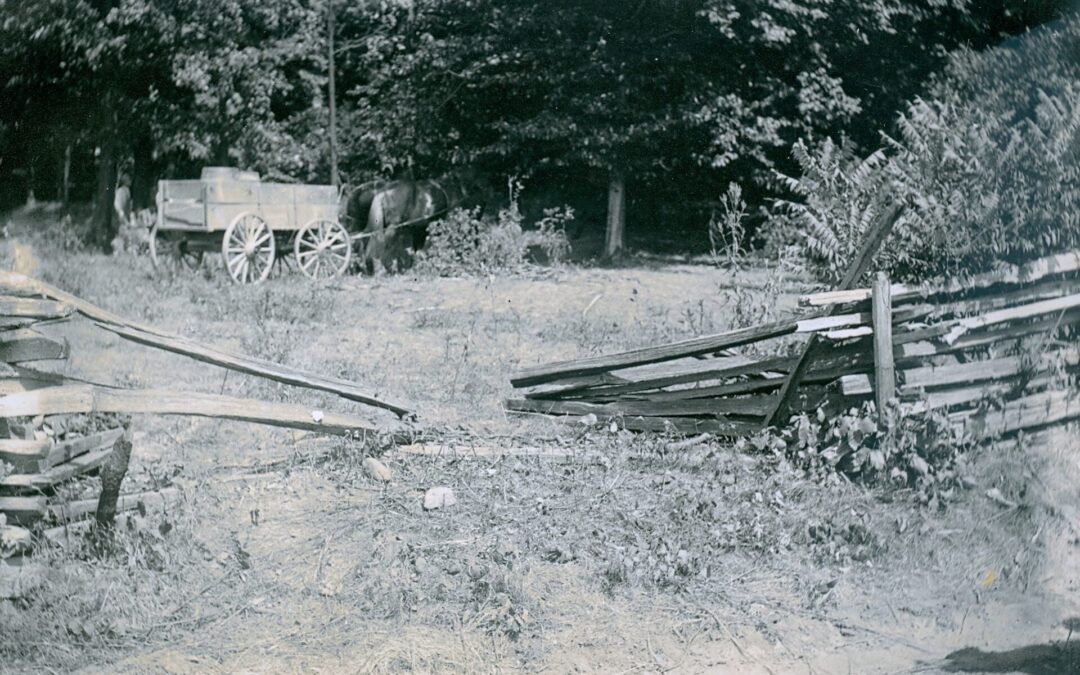
Broken fence, image by Jesse Steele, undated.

The following article is taken from “A Twentieth Century History of Marshall County,” written by Daniel McDonald, published in 1908. Copies of this book are available at the MCHS & Museum. I have only lightly edited it.

“In the early days of Marshall County every farmer who used tobacco, and some who did not, raised a small patch every year as regularly as they did lettuce and onions and beets and cabbage and other garden truck. At that time there was very little of what was called “Boughten tobacco” to be had, and what there was, was known as “Kentucky pig-tail.” It was soaked in licorice, was as black as tar, and was altogether villainous stuff. Some of the tobacco raised here then was of fairly good quality, and after having the habit of using it firmly fixed it answered the purpose, and was as good – or more properly, bad – as much of the imported stuff in use nowadays.

It was a dreadful ordeal one had to go through with to accustom himself to the use of tobacco, and it was equally hard to rid himself of the habit after it had been acquired.

The writer remembers vividly as if it was only yesterday his first effort at learning to chew tobacco. It was the home grown weed. Nearly every boy in those days deemed it necessary to use tobacco. The boy who couldn’t chew the stuff and squirt the “ambier” – to use a word coined for the purpose – didn’t amount to a —–!

It was on a summer day. He was resting from the day’s labor in a fence corner in the shade of a tree when the man who was with him asked him to take a chew of tobacco. He concluded it was as good a time as any to begin and bit off a large mouthful and went at it. For a time, all went well, but presently a sickly feeling came over him, and it was not long until he heaved up Jonah to beat the band! Sick! Well! Don’t talk! A sicker child you never saw! He parted with everything from the top of his head to the soles of his feet! He saw all the stars in the heavens above; the aurora borealis quivering in the northern hemisphere and felt several distinct shocks of earthquake! Finally, he managed to get to the house, where his mother almost went beside herself, being sure he had the cholera! The true state of affairs was divulged, and after sassafras and sage tea had been administered and the proper antidotes applied, life began to return, and by the next morning he had fully recovered.

The reader may think that this experience ended his efforts to learn to use the filthy stuff! Not so! The neighboring boys had mastered the art and were squirting tobacco juice with as much gusto as the biggest man in the neighborhood! So, he determined to learn to chew tobacco or die in the attempt. And he did, and after a while the habit became so firmly fixed on his system that when he wanted to quit it he found it was almost impossible to do so. He determined, however, not to be a slave to tobacco or anything else, and long ago quit it entirely, forever and a day.”

The MCHS and Museum is a true “cabinet of curiosities,” containing loads of fascinating artifacts and information. We are open from 10:00 am until 4:00 pm, Tuesday through Saturday. The Museum is located at 123 N. Michigan St. in Plymouth. Call us at 574-936-2306 or visit our website at www.mchistoricalsociety.org.
Brown Bag Lunch & Lecture Event

Brown Bag Lunch & Lecture Event

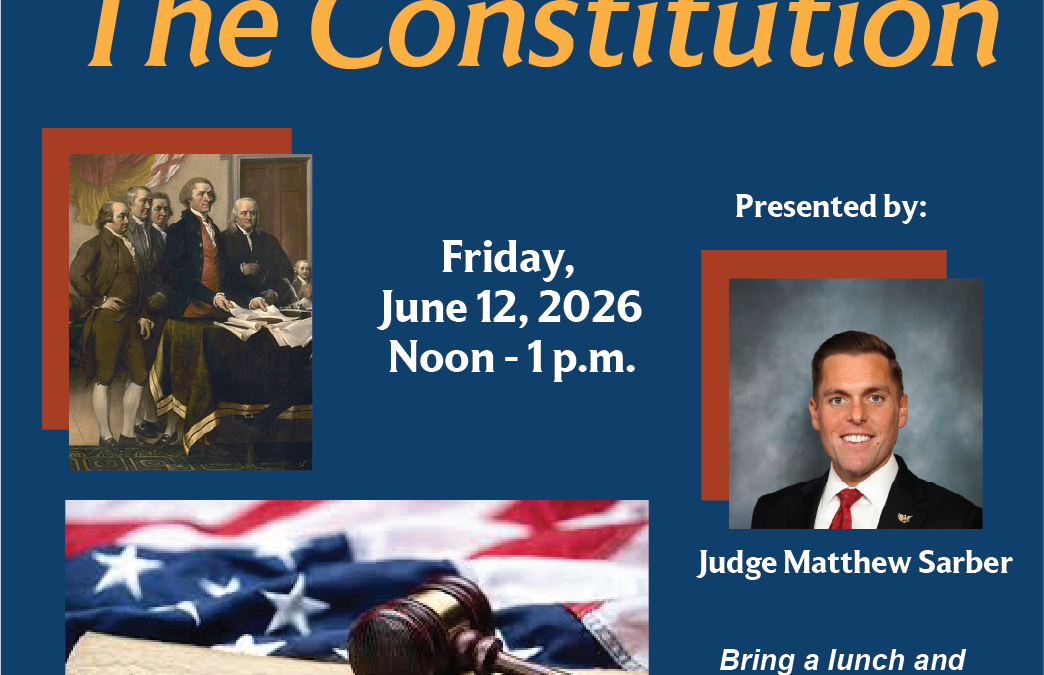
Join Judge Matthew Sarber for an engaging look at the U.S. Constitution — its founding ideas, the influence of the Federalist Papers, and the framework that shaped our government. Judge Sarber will also connect these principles to today’s world, leading a thought-provoking discussion and Q&A inspired by current events.
Theaters of Marshall County

Theaters of Marshall County

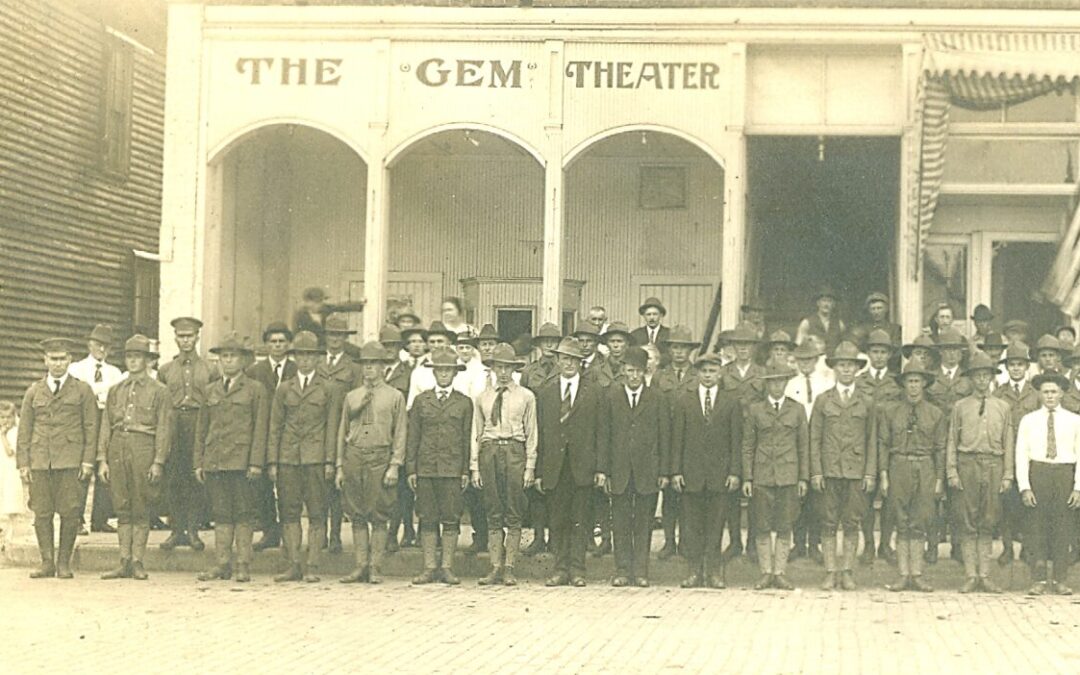
The Gem Theater.

One big change that took place at the end of the 19th century was the rise of commercial entertainment, especially for the growing middle class. Workers began to have more leisure time, and electric lights in towns and cities made the evening hours available for fun pursuits.

Sports, live music and vaudeville shows flourished, but nothing revolutionized leisure time quite like the motion picture. As early as 1910, there were already almost 10,000 movie theaters nationwide, and the movies had become one of America’s most popular pastimes. In Marshall County alone, there was at least one movie house in most towns almost continually throughout the first half of the 20th century. Young people especially sought amusement, escape and freedom from parental control. The relatively inexpensive movie theaters gave them a place to go to experience something new with every film.

The last half of the 20th century saw a return to home-based entertainment that continues today. Television in the 1950s, videocassette recorders (VCRs) in the 1980s, then high-definition TVs, and most recently, the various streaming services, all led to the demise of local movie theaters.

However, in recent years, interest in iconic downtown movie houses has surged, and many communities have found creative ways to restore and repurpose those buildings. One thing remains clear – Americans still love their movies!

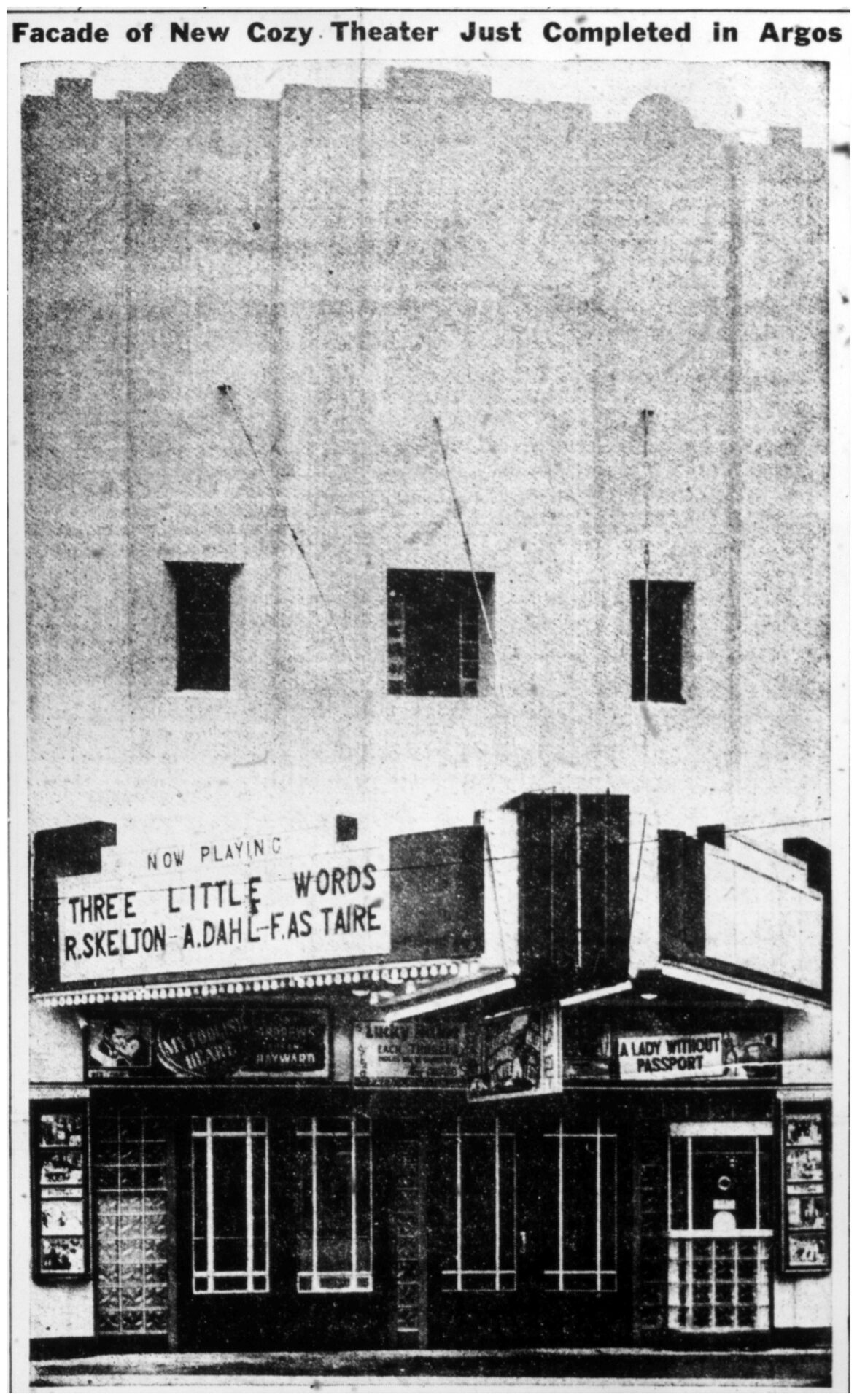
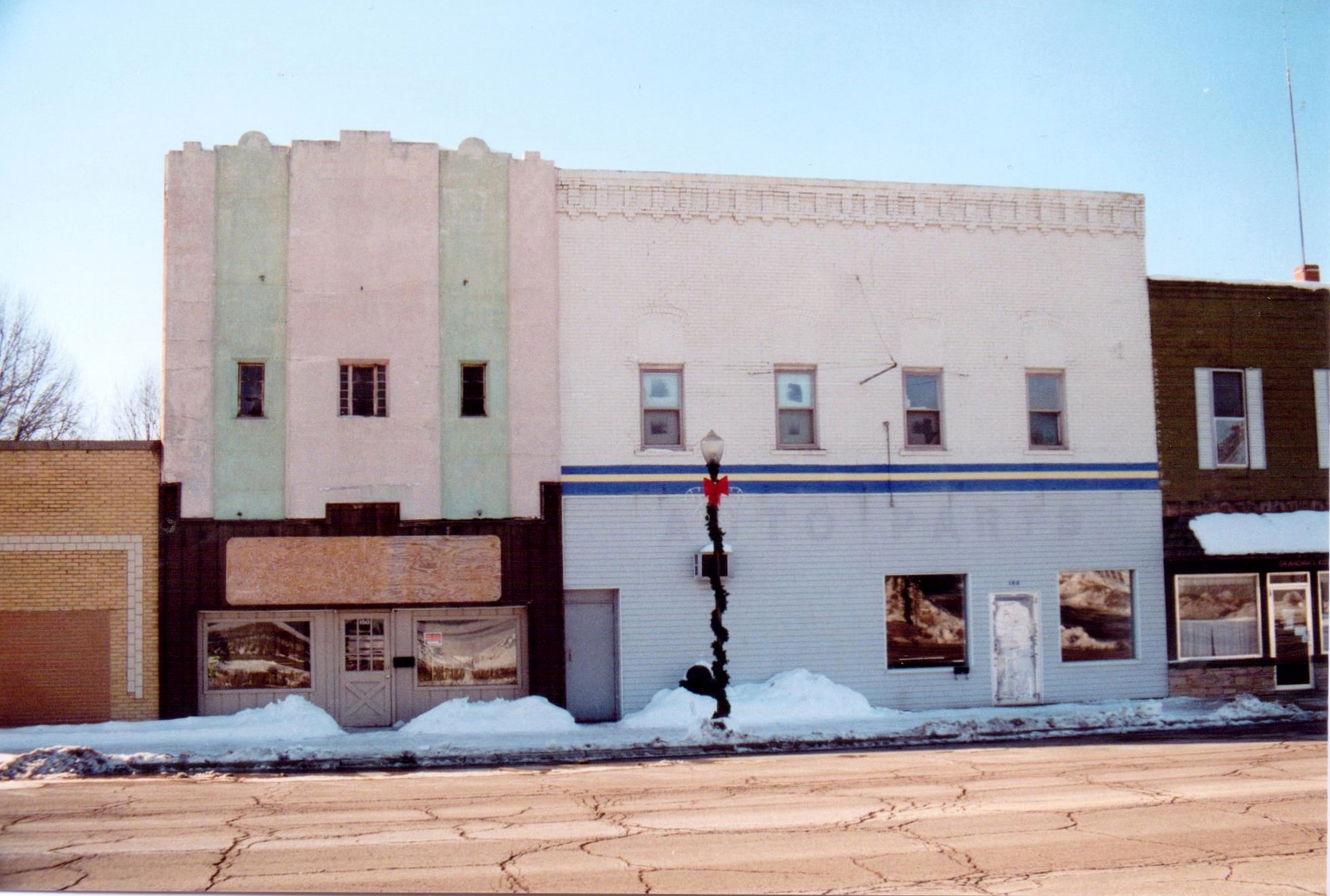
The first theater in Argos opened in 1912 as the Princess. A movie-goer could see one whole reel for a nickel. By 1926 the cost of a double feature had gone up to 10 cents for children and 25 cents for adults. Ernest Parren purchased the theater in 1937 and changed the name to the Lido, after a famous theater in Italy. It operated for just under a year under Parren’s leadership before he closed the doors, leaving Argos without a movie house for the first time in 25 years.

Anthony Bokas from Chicago purchased the Lido in March of 1939 and remodeled it extensively. On April 12, 1941, the new Lido reopened with the movie Fargo Kid, starring Culver Military Academy graduate, Tim Holt. The following day, Rosalind Russell and Brian Aheme came to Argos to celebrate the new Lido opening and to promote their film, Hired Wife. The theater operated as the Lido until 1944, when it changed hands and became The Cozy. During the 1950s, the Cozy also showed Spanish language movies for the migrant workers during the season.


Facade of the Cozy Theater in Argos.

Modern image of theater building.

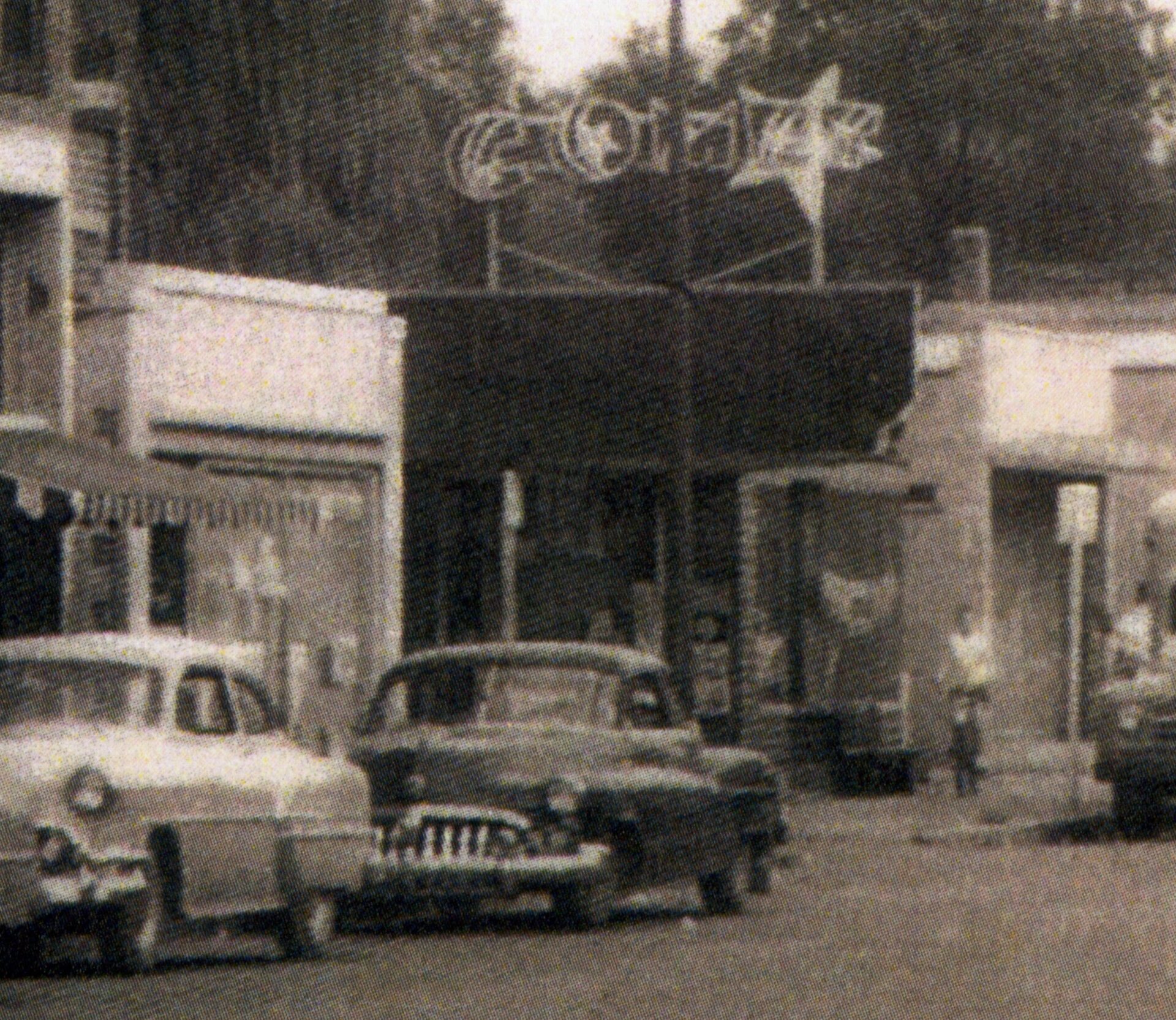
The August 8, 1907, issue of the Bourbon Mirror reported that, “We (Bourbon) have a permanent motion picture theater in the room just north of Vink & Co.” For 5 cents, proprietors Ward and Kern promised exhibitions every night except Sunday. In May 1910 a new moving picture theater, the Gem opened. Either the Gem changed its name, or a new theater opened in October 1911 as the Navarre, showing “the choicest in picture dramas.” Local history teacher and coach Gene Rovenstine built the Comet theater in 1946. It was named for the Bourbon High School sports teams. The movie changed three times a week, and the cost to see the opening film, Our Hearts Were Growing Up, was 14 cents for children and 35 cents for adults.

The Comet was the scene of a daring burglary in 1950. A man from out of town parked near the back door and bought a ticket to the last show of the evening. Before the movie ended, he made his way to the basement and waited. After the staff left, the burglar came upstairs, muscled the safe to the back door and loaded it into the back seat of his car. Approximately $900 was stolen, along with the safe. A few months later the safe was found in a field near Lapaz. It had been emptied of cash and dumped.

The Comet Theater in Bourbon, undated.

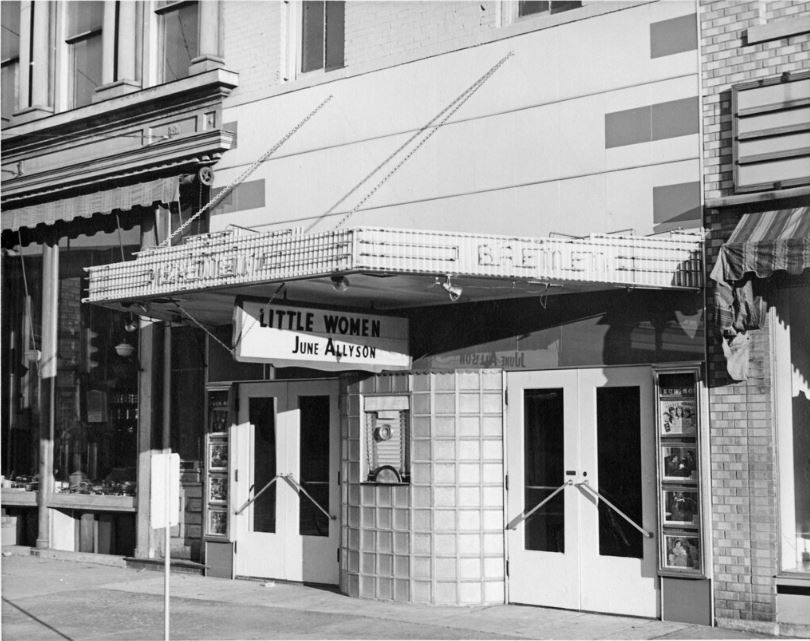
About the closure of his business in 1957, Rovenstine later wrote, “The theater was interesting work which I enjoyed and prospered doing, until television reared its ugly head.” Many early theaters started out as opera houses and followed the trend into moving pictures, as was the case in the town of Bremen. Animated pictures were shown at the opera house as early as 1897. Wilbur W. Drake was owner and manager of the Majestic Theatre and got himself into trouble during his tenure for “Sabbath desecration.” He pled guilty to showing movies on Sunday and paid a $5 fine.

The Majestic was the scene of the only known theater shooting in Marshall County history. On an October evening in 1917, there were about 260 people in the theater when a 16-year-old boy, who had just stolen a revolver, attempted to show it off to a friend. The gun accidentally fired, hitting a young boy across the aisle in the leg. Worried that children would be trampled in a rush to the door, Manager Drake rushed in and yelled for everyone to sit down. The victim went to the hospital and the shooter went to the “calaboose.” Sometime between 1920 and 1930, the movies shown at the theater, now called the Gem, became questionable in decency and taste. It finally closed in 1932. The new Bremen Theatre reopened in the same building two years later, offering only “first class, clean, talking pictures.” In December 1982, Jim and Sue Holliger of Goshen purchased the Bremen Theater, which had, once again, been closed for a couple of years.

Bremen Theater showing Little Women, ca. 1949.

In September 1913 Billy Link bought a building lot in Culver for $675 and built a brick two- story building. The first floor housed a drug and novelty store, and the second floor was a movie theater. By 1919, Link expanded into the Liberty Theater, located on Scott Street. Known as “Culver’s Temple of Mirth,” it was remodeled from Hayes Garage into an 800-seat auditorium. Featuring two shows nightly, it was billed as “a big city show – all for twenty-five cents, plus war tax.”

The Home Theater on South Main Street was first owned by John Osborn and showed silent films. Ruth and Martha Werner played the piano. Osborn offered a free serial film to children after school. The catch was that they had to come back later to learn the fate of their heroes. The theater opened in 1914 and closed in 1930. A 1979 survey also listed a Star Theater located on the southeast corner of Main and Washington streets which opened in 1917 and closed in 1920. It was owned and operated by Milton Robinson, who also ran a bakery.  In August 1931 the New Palace Theatre opened. It was located across from the train depot and had been completely remodeled. The grand opening featured Will Rogers in Young As You Feel. The New Palace Theatre later became the El Rancho, owned by Everett Hoesel. The El Rancho theater has changed hands a few times since then, but is currently closed.

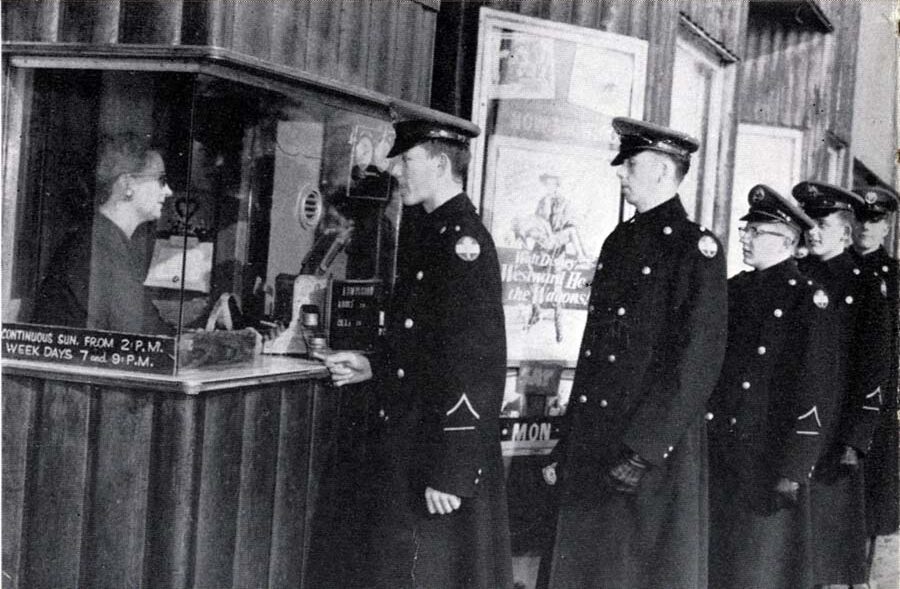
El Rancho Theater with cadets, ca. 1957.

It’s always worth your while to come in the see the rest of the Museum, located at 123 N. Michigan St., Plymouth, open Tuesday through Saturday from 10 a.m. until 4 p.m.

The Bloomer Costume

The Bloomer Costume

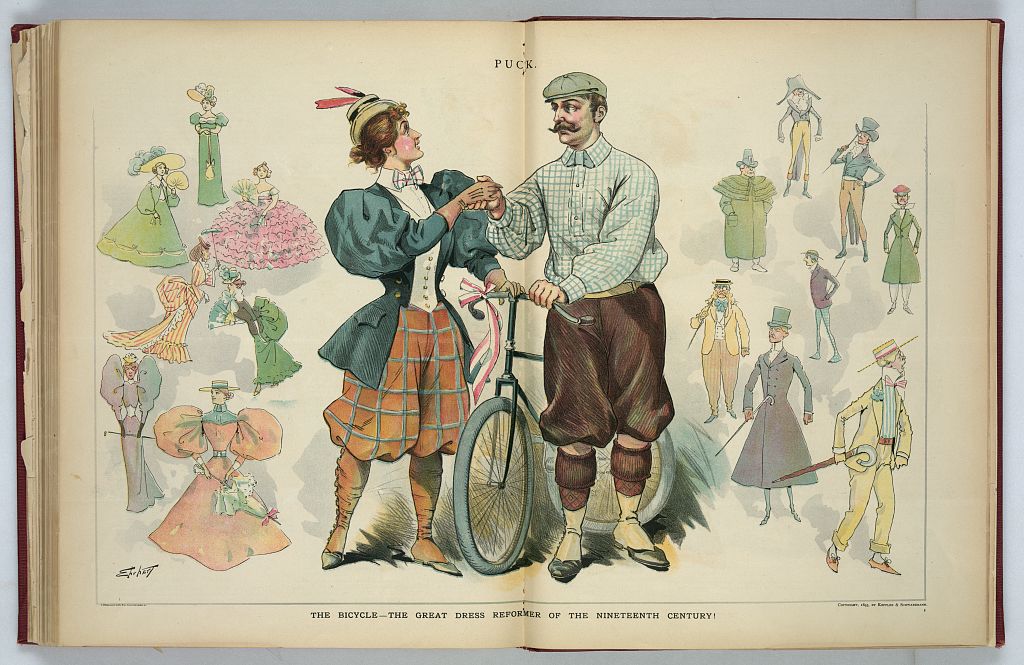
Ehrhart, S. D. (1895) The bicycle – the great dress reformer of the nineteenth century! / Ehrhart. , 1895. N.Y.: Published by Keppler & Schwarzmann, August 7. [Photograph] Retrieved from the Library of Congress, https://www.loc.gov/item/2012648650/.

This article is taken directly from “A Twentieth Century History of Marshall County,” written by Daniel McDonald. Although McDonald is adept at expressing himself, I have edited lightly. Here he takes on a contemporary fashion craze – bloomer suits. Bloomers were known as “Turkish Pants,” hence the editorial rant below.

All About Bloomers by Daniel McDonald

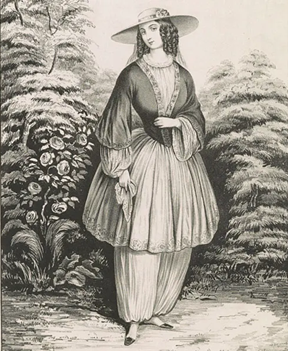
The bloomer costume for ladies, which created much excitement throughout America during 1851, was just then being introduced in Plymouth. On this topic, the editor of The Pilot delivered himself as follows:

“New Dress – The bloomer costume is decidedly an improvement upon the dress of the female portion of the community. It is light, graceful and seraphic, well suited to the female figure. It will be welcomed by all the lovers of taste and refinement in the fashionable world. The Asian societies have long been celebrated for their beauty, polished manners and splendid attire. Our rivers will now be the Golden Horn; our valleys the Valley of Sweet Waters and our Seas the Bosphorus of the Turkish capital. A voyage to Constantinople will be useless. We may now take our siesta in the gay pavilion, and glide over the moonlit waters in the light caique (skiff)! Come ladies, step forth in your gorgeous apparel, decked with rose of gold and leaves of silver, and gladden our hearts with sweet smiles.”


The Bloomer Costume, Nathaniel Currier (1851)

Evidently, this was a facetious way the editor had of poking fun at the “costume” and killing it before the fad got a fair start here. At any rate, that was perhaps the result of it. Apparently, only one or two Plymouth ladies had the courage to procure bloomer suits and attempt to introduce them by wearing them as they would other female apparel. When they appeared in the streets, it was reported that they were objects of much curiosity—as if they had been untamed animals from Borneo. There is no easier way to kill anything that the people do not take very kindly to than to make fun of it, just as the editor of The Pilot did in his hifalutin article above quoted. At least that was what happened to the bloomer costume. McDonald might say, “It disappeared from the social horizon like the morning mist before the rays of the rising sun.”

Suffice it to say, ladies’ apparel has come a long, long way. If you want more commentary on life in Marshall County in the 1800s, McDonald’s book is for sale in our Museum Shop. Stop in anytime between 10 and 4 on Tuesday through Saturday and pick up your copy. The Museum is located at 123 N. Michigan St. in Plymouth. Call us at 574-936-2306.

Fun Facts about Valentine’s Day

Fun Facts about Valentine’s Day

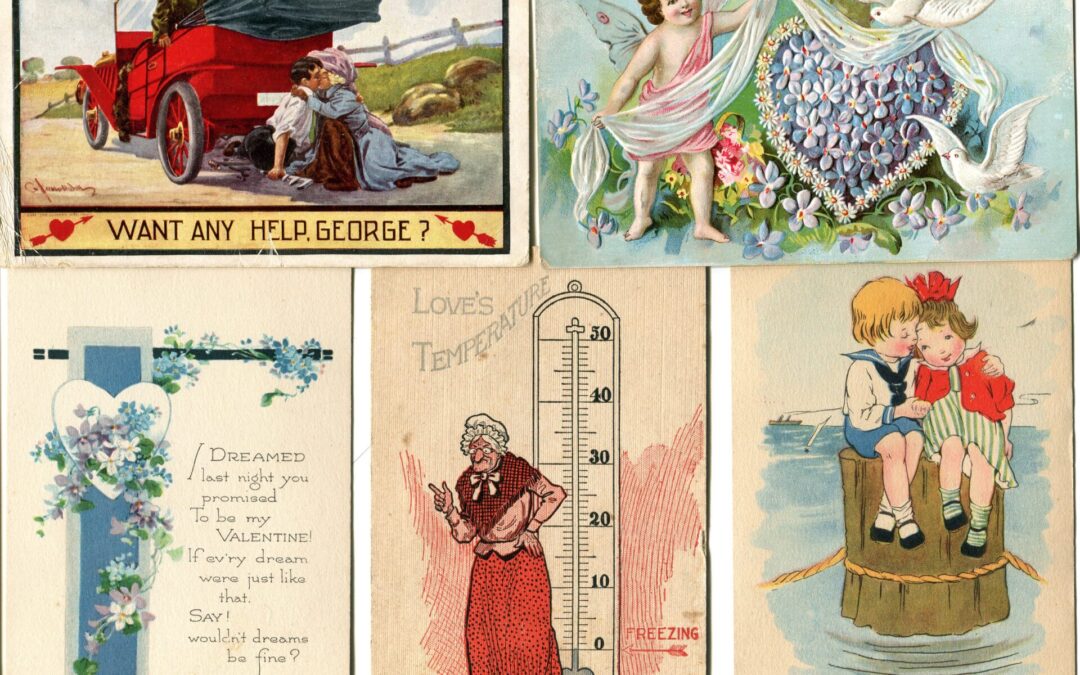
Feature Image. An assortment of Valentine’s cards from the Museum collection.

The iconic cupid of Valentines Day, with a cherubic face and angelic wings, began as the Greek god, Eros. He was the son of Aphrodite, the goddess of love and procreation. Cupid is known to shoot two types of arrows, one to cause people to fall in love, and one to make them hate each other. We’ve compiled some fun and interesting Valentine’s Day info from the web!

Food Is the Way to the Heart

Candy hearts began with a Boston pharmacist Oliver Chase. He invented a machine that produced small medical lozenges for the throat. When he saw how popular they were, he turned them into candy with cute messages on them.

Of course, chocolate is a huge part of Valentine’s Day now, but it has a sad beginning. Physicians in the old days would recommend chocolate to people suffering from a broken heart or pining for a lost love. It was Richard Cadbury, a British chocolatier, who invented the first chocolate box. Always the businessman, he realized that he could capitalize on Valentine’s Day by producing chocolate boxes and marketing them as something to be given to your sweetheart.

Valentine’s Day is not celebrated the same way all over the world. In Japan for instance, on February 14th, women give gifts and chocolates to their male companions. The men don’t reciprocate until March 14, which is known as “White Day.” On Valentine’s Day in England, women used to place five bay leaves on their pillows. This was done with an aim to bring dreams of their future husbands. In Norfolk, England, Jack Valentine acts as a Santa for Valentine’s Day. Children anxiously wait for the treats, though they don’t get to see Old Father Valentine. In many places, Valentine’s Day is also celebrated as the beginning of spring.

People Associated with Valentine's Day

Venus, the goddess of love, adored red roses, making them a perfect symbol to express love for another person. To the Victorians, the deeper the rose color, the deeper the passion. A white rose would have been appropriate for a young girl or woman who had not felt passionate love. In a contradiction, the white rose symbolized soul-deep love and marriage. White roses are often referred to as “bridal roses.”

Saint Valentine, for whom the holiday is named, defied the emperor Claudius of Rome. Marriage was outlawed because the emperor believed single men made better soldiers. Saint Valentine performed weddings in secret in defiance of the unfair law. Pope Gelasius later declared the Valentine’s Day holiday in 498 A.D.

Another fun fact. Penicillin, the world’s first antibiotic and one of the greatest scientific discoveries, was introduced to the world on Valentine’s Day. Alexander Fleming was the Scottish physician-scientist who was recognized for discovering penicillin. The simple discovery and use of the antibiotic agent has saved millions of lives and earned Fleming – together with Howard Florey and Ernst Chain, who devised methods for the large-scale isolation and production of penicillin – the 1945 Nobel Prize in Physiology/Medicine.

Sharing Love Notes

In one ironic twist, Alexander Graham Bell applied for the patent to the telephone on February 14th, 1876, never imagining that it would become the biggest medium for sending Valentine’s Day greetings almost 150 years later.

As for sending cards, Valentine’s Day is second only to Christmas in the number of cards sent around the world. Today, most cards are mass-produced and generally the selection is pretty sparce by the 14th. Artist Esther Howland was one of the first American printers to start producing Valentine’s Day cards beginning in the 1850s. Ornate cards trimmed with lace became treasured mementos, but why lace? Lace is commonly used in making bouquets of roses and in other items during Valentine’s Day. The word ‘lace’ comes from the Latin word ‘laques’ which means to snare or trap a person’s heart. Isn’t that fitting?

We sign our valentines with Xs and Os to send kisses and hugs. This is not the letter X’s original purpose. In medieval times, most people could not read or write. If a need arose to sign their name, most would simple mark an X. To show affection and loyalty, the writer would kiss the X on the paper before sending.

The often-heard term “wear your heart on your sleeve” began with an old custom. People would pick a name out of a bowl to see who their valentine would be. They would then pin the paper to their sleeve for everyone to see.

The oldest known valentine still in existence today is perhaps a poem written in 1415 by Charles, Duke of Orleans, to his wife while he was imprisoned in the Tower of London following his capture at the Battle of Agincourt. A lot of his poetry was not so cheerful as he wasn’t released until 1440, and the poem below was written after his wife died.

Let men and women of Love’s party
Choose their St. Valentine this year!
I remain alone, comfort stolen from me
On the hard bed of painful thought.

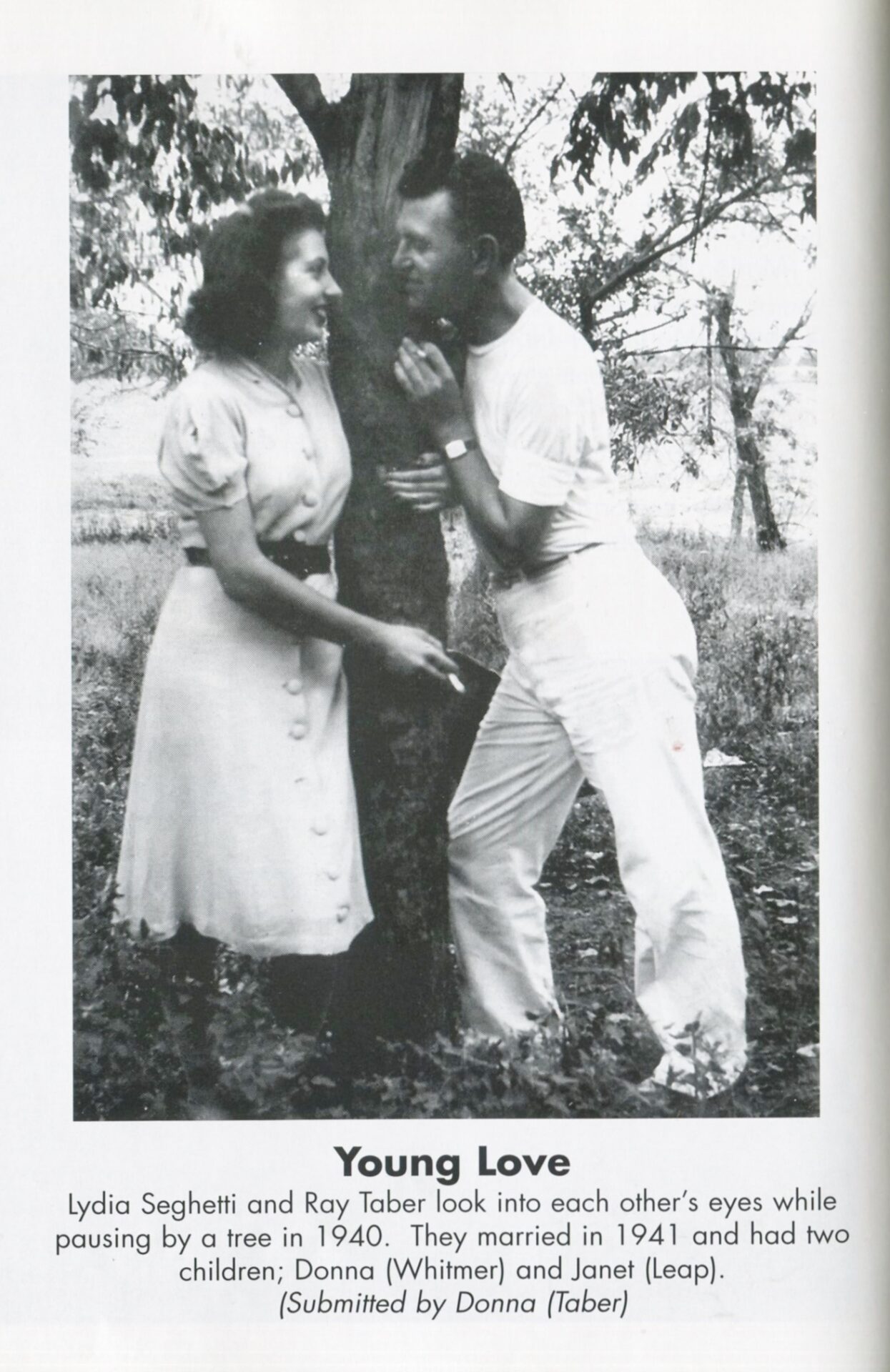
Lyda Seghetti and Ray Taber leaning agaist tree, ca. 1940. Featured in Plymouth Remembered, page 80.

The Museum is home to a large selection of antique and vintage valentines, although not currently on display. You can still come see our treasures, perhaps as a lovely museum date! The Museum is open from 10 until 4 from Tuesday through Saturday at 123 N. Michigan St., Plymouth. For more information, call 574-936-2306.