Indiana Statehood

Indiana Statehood

On December 11, 1816, Indiana became the 19th state to join the Union. The journey to statehood was long with several hurdles along the way. In honor of Indiana’s 209th birthday, we retell the story of our state. Today, we are known for our demonym “Hoosier,” corn, the Indy 500, our sports teams and more. Our history, however, spans thousands of years, starting with Paleo-Indians who roamed the Americas, including present-day Indiana, around 8000 BC following the end of the Ice Age.

Prehistoric Era

Paleo-Indians were nomadic hunter-gatherers who used stone tools and hunted large game animals (you can learn about the Ice Age in our Prehistoric Animals book, available now in our store).  There is evidence of more permanent habitation around 5000 BC with earthen mounds that were used for habitats, ceremonies and temples. The Hopewell People around 1000 BC grew various crops, created pottery and engaged in trade. Between 1000 and 1450 AD, there was a Mississippian settlement near Evansville, Indiana on the Ohio River. They created complex mounds and earthworks that aligned with celestial events with incredible precision. You can visit this archaeological site today.

European Exploration

In the 17th century, French explorers reached present-day South Bend and traded with Native Americans for highly desired fur skins. French and French Canadians soon established trading posts, and some tried to control Native trade routes. When the British arrived, they also wanted control of the fur trade. The Natives sided with the French in these tensions and eventually went to war against the British. When the British won the French and Indian War in 1763, all French lands east of the Mississippi River and northwest of the colonies were ceded. The Crown proclaimed the land west of the Appalachians as “Indian Territory” and did not allow colonists to settle there, angering many people.

During the American Revolution, Congress passed a “Resolution on Public Lands” and allowed settlements west of the Appalachians with the intent to create new states. The United States gained its independence in 1783 with the signing of the Treaty of Paris. In 1787, present-day Indiana became part of the “Northwest Territory.” The Northwest Ordinance of 1787 gave this territory a government and a process to create states if they met certain stipulations. To apply for statehood, you had to have sixty thousand people or more, prohibit slavery and have a bill of rights, amongst other things. This land would eventually become Indiana, Ohio, Michigan, Wisconsin, and Illinois.

Expanding Settlements

In 1800, Congress divided the land again into the Northwest Territory, which would become Ohio three years later, and the rest was the Indiana Territory. The territories would be divided and changed many times as new states formed. The Indiana Territory was governed by William Henry Harrison, and its capital was Vincennes. In August 1804, Harrison called for an election to see if voters wanted a state government. By December, Harrison proclaimed that the Indiana Territory would have a General Assembly, moving it one step closer to statehood.

By 1809, the borders of our state were outlined with the formation of the Michigan and Illinois Territories. Ohio was still the only state that had formed from the original Northwest Territory, however. Becoming a state was controversial. Some people wanted to continue slavery, and some did not want the increased taxes and costs that came with statehood. It also meant leaders would be far away in Washington, making it difficult to communicate with them. Statehood slowly chugged along, and fighting between settlers and Natives continued.

Road to Statehood

In 1811, the Indiana General Assembly voted 4-3 to petition Congress for statehood. Congress denied their petition until the state’s population reached 35,000. Efforts were abandoned by the territory due to a lack of money and the beginning of the War of 1812. During this time, the territory’s capital was moved to Corydon because it was more central and less likely to be attacked by the Natives after the Battle of Tippecanoe.

The General Assembly petitioned for statehood yet again in 1815. With 63,000 people, we were above the minimum population. The only thing left was to form a constitution, which President Madison allowed by signing the Enabling Act in May 1816. The constitutional convention was led by Jonathon Jennings and continued through August, when Jennings himself was elected as the first governor of Indiana. While writing it, there were heated debates. Ultimately, the constitution did not allow for women or people of color to vote. It prohibited slavery within Indiana. It was also the first state to start a state-funded school system, which is now Indiana University. That November, we held our first General Assembly under the 1816 Constitution. Finally, on December 11, 1816, President Madison admitted Indiana into the Union as the 19th state!

For those curious, Indianapolis became our capital in 1825 after it was chosen and built in 1821 for its central location. Visit the Museum from 10:00 am until 4:00 pm, Tuesday through Saturday to learn about early Marshall County. The Museum is located at 123 N. Michigan St., Plymouth. Call us at 574-936-2306.
Accomplishments of WPA in Marshall County

Accomplishments of WPA in Marshall County

In our U.S. history classes most of us gained a passing acquaintance with President Franklin Delano Roosevelt and his Works Progress Administration program that helped Depression-era workers get back to earning a paycheck. The projects were wide ranging geographically as well as in type. Everything from buildings to bridges were constructed or improved. WPA workers built roads, dams and hatcheries, just to name a few. Below is an article published in the June 5, 1940, edition of the Culver Citizen about the impact the WPA had on Marshall County. It has been lightly edited to improve readability.

The Works Progress Administration constructed eight new buildings, reconstructed or improved five others and paved or improved 78.5 miles of highways, roads and streets, according to a survey released today by John K. Jennings, state administrator. Jennings said the survey was the first all-inclusive one to be made of WPA accomplishments in Marshall County. It includes all major projects since the start of the work-relief agency in August 1935. The survey said that a total of 729 Marshall County men and women who lost their jobs in private industry have been given WPA work-relief at one time or another.

Almost all the WPA roadwork centered on improving farm-to-market roads, of which 71.8 miles were bettered. In city street and alley work, the WPA improved a total of 4.1 miles. Of that, it laid new paving on 2.3 miles.

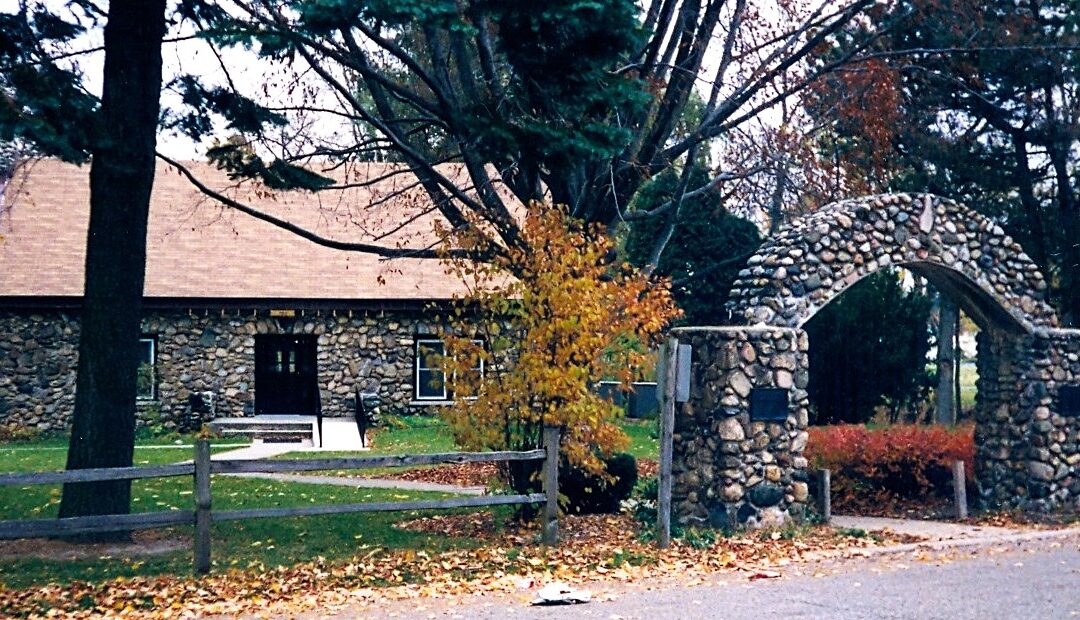
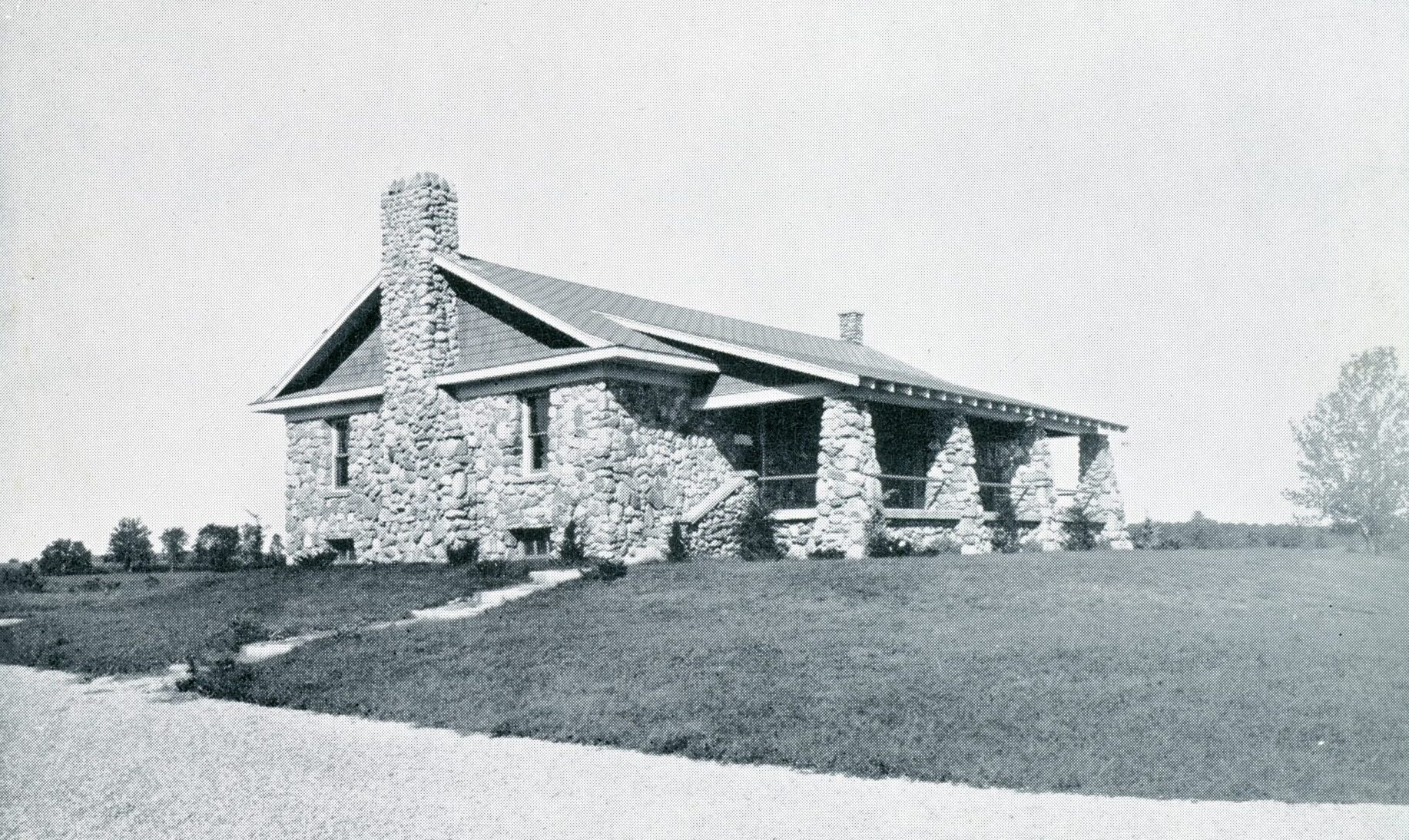
The WPA constructed a new warehouse for the Plymouth City Hall, a bathhouse at Culver, a hatchery clubhouse (Isaac Walton Leaugue), a barn at Magnetic Park in Plymouth and one other building at the same park (Conservation Clubhouse). In reconstruction and improvement work, the WPA bettered the Marshall County Courthouse, highway garage, jail and infirmary (Shady Rest Home). It improved the school at Inwood, Lincoln High School Athletic Field, Culver Park, Bremen Cemetery, and Huff Cemetery in German Township.

Isaac Walton League Clubhouse in Argos, IN.


In miscellaneous construction work, WPA employees built a dam at Plymouth having a storage of 300 acre-feet, the Magnetic Park fish hatchery which now has a capacity of 10,000 fingerlings, and the Argos Fish Hatchery with a capacity of 375,000 fingerlings annually. Magnetic Park, 17 acres, and Centennial Park, 35-acres, both in Plymouth, also received improvements.

Throughout Marshall County, WPA workers reconstructed or improved 26 steel bridges measuring 2,356 feet, improved 352 miles of roadside drainage, paved 4.8 miles of sidewalks and paths, laid 7.7 miles of curbs and seven-tenths of a mile of gutters.

In the utilities and sanitation field, the WPA laid 2.2 miles of water mains, aqueducts, and distribution lines, installed 5.8 miles of storm and sanitary sewers, made 19 sewerage connections and dug 221 manholes and catch basins. Nearly 1,200 sanitary privies were erected by the WPA. (These privies had concrete slabs and vaults and were considered more sanitary. They were nicknamed “Eleanors” due to Eleanor Roosevelt’s support for the program.)

More than 2,300 feet of retaining walls and revetments were constructed. One new airplane landing field was built on which runways totaling 5,280 feet were laid. In the professional and service division, WPA workers renovated 2,232 books, turned out 15,183 garments from sewing projects, and completed 5,490 items other than garments such as mattresses, quilts, etc. The sewing products were given to the needy.

The impact of the Works Progress Administration on Marshall County and its residents can hardly be overstated. If you want to know more about the WPA in Marshall County, come into the Marshall County Historical Society. Our research specialists will be happy to help! We are open from 10 a.m. to 4 p.m. Tuesday through Saturday.

A History of Post Offices In Marshall County

A History of Post Offices In Marshall County

In our modern society, we have many choices for communicating. We can access most of those choices simply by reaching into our pockets or purses for our cellphones. On rare occasions, we might send something through the mail, but even then, we have choices. The U.S. Postal Service is only one way -UPS, Federal Express, and Amazon are just a few more.

Have you given thought recently to how communicating with friends and acquaintances might have been just a few decades ago? People sent letters, written on paper, with fountain pens, and it took days and sometimes weeks for the missiles to reach the intended recipient. The first post office in Marshall County was established in Plymouth on October 17, 1836, and by 1883 there were eighteen post offices in Marshall County:  Argos, Berlinton, Bourbon, Bremen, Cavender, Donaldson, Inwood, Ilion, LaPaz, Marmont, Maxinkuckee, Oakington, Plymouth, Tyner City, Teegarden, Tippecanoetown, Wolf Creek and Walnut.

Sending Mail In the Past

In his HISTORY OF MARSHALL COUNTY, Daniel McDonald described how the business of the post office had changed over the years. There were no stamps until the late 1850s. Letter postage was 5 cents per half ounce, and the sender did not buy it. The receiver of the letter paid when he claimed it from the postmaster. He could simply refuse it, leading to a lot of mail ending up in the dead letter office. This system cost the government enough money that eventually the sender paid for stamps that had to be affixed to the envelope, and the cost actually went DOWN from 5 cents to 3 cents.

In the early days, mail arrived at the post office by stagecoach three times each week. Individuals would have to go to the post office to pick it up. By 1851 Plymouth had three local mail deliveries daily and once each week from places farther away. By 1875 the Post Office opened at 7:00 a.m. and closed at 8:00 p.m.

Rural Mail Deliveries

Rural mail delivery started in Marshall County in 1900. Calvin Switzer held the contract at $400 per year and the distance of the route was approximately 25 miles. Forty-five mailboxes had been put up and it was expected that there would be as many as 75 by the end of the first week. Before that, Robert McFarland delivered mail to his neighbors. According to an article in the Plymouth Democrat, he walked from his home to Maxinkuckee (a distance of about three miles) on Fridays to pick up any mail and deliver it to his neighbors as he passed their homes. He chose Friday because the newspaper would be in that mail. He received no money for his efforts and considered it a pleasure. In 1910 the Post Office Appropriation Bill contained a provision which required a suitable mailbox conveniently placed on the outside to receive it.

Various Town Post Offices

Argos Post Office

The (Sydney) Argos Post Office was established in 1844 with Mr. Smith as postmaster.  Following the election of President Polk, Mr. Smith was removed, and Mr. Downes was appointed postmaster.  Mr. Downes moved the post office three or four miles south of Sydney.  When Schuyler Colfax was elected to Congress, the people petitioned him to use his influence in securing the return of the post office to its original place.  Since the Post Office Department refused to take any action in the matter, Mr. Colfax suggested that they petition for a new post office to be located on the old Sydney plat.  They sent a petition to Mr. Colfax as a member of the committee on postal matters, and he soon notified the petitioners that their request had been granted.  It was necessary to change the name of the post office, and Mr. Colfax chose ‘Argos.’  In 1928 the Argos Post Office was moved to a new location.  Postmaster L. E. Hoffman was highly pleased with the improved facilities.  

Berlinton Post Office

The Berlinton Post Office was located between Bremen and Nappanee in Marshall County.  John Walters was the postmaster.  It had been rumored that the post office would be closed.  In November 1895 the post office was discontinued and supplies turned over to the Bremen Post Office.  The April 30, 1897 issue of the Bremen Enquirer then reported that “The new postoffice [sic] has been opened at Ayr, this county, with Wm. Clindaniel as postmaster.  The postoffice [sic] was formerly known as Berlinton.”  In March 1901 John W. Lehr was appointed postmaster and his store became the new post office location. 

Bourbon Post Office

The Bourbon Post Office was established in 1839, with Dr. John F. Parks as the first postmaster.  Rural delivery was instituted in July 1902.  In the 1920s and early 30s, the Bourbon post office was located on the east side of Main Street.  Willard Minard was the postmaster.  He was succeeded by Charles Elkins and then Lawrence Slough.  Marion Sharpe hung the mail bags for pickup by the Pennsy trains that no longer stopped, but simply had a man grab them as the train rushed by.  Scuddy LaRue held this job in later years until the railway post office was discontinued.

Although there was no home delivery, there was rural delivery.  Robert R. Wood was the first rural carrier with Henry Wood, his brother, as substitute.  Later Earl Logan and Walter Senour were the rural carriers.  City delivery did not begin until August 1958.

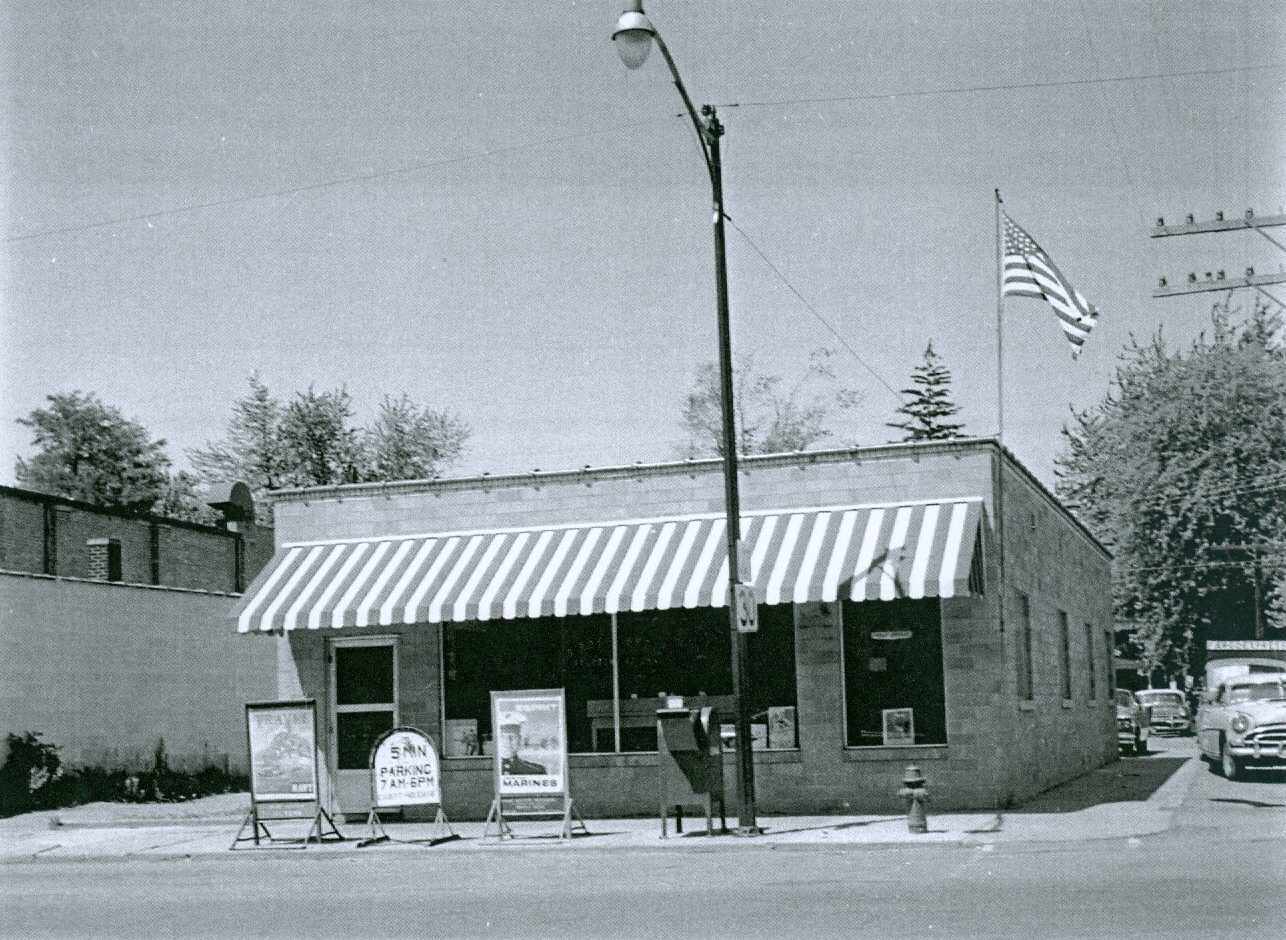
In 1951 a new Bourbon Post Office was built by Burt Construction Company and had about 1,600 square feet of floor space.  Due to the growing industries in Bourbon, a larger post office was needed, and the one pictured became the home of United Auto Supply.  The current Bourbon Post Office was dedicated in 1963.

The Bourbon Post Office in the 1950s and 1960s was located on the southwest corner of Main and North Streets.

Bremen Post Office

The Bremen Post Office was established in 1847 with George Pomeroy as the first postmaster.  The post office was made a money order office in 1877.  In 1905 Postmaster Ranstead built a new post office and leased it to the government for ten years. At that time, the post office supported six rural mail routes.  In May 1960, Sen. Homer Capehart was notified that an option had been taken on a new post office site at the corner of Center and North Streets.  

George Kipfer was a rural mail delivery man in Bremen.

Burr Oak Post Office

The Burr Oak Post Office was housed in Currens’ General Store for many years.  Goldie Currens was the postmistress for 40 years.  After the general store closed in 1984, the post office equipment was donated to the Marshall County Museum and can be seen there today.  The October 2, 1935 issue of the Culver Citizen reported that the store and post office were robbed of $15 and merchandise including cigarettes and food.  It was believed that the thieves were vagrants who were seen near Bass Lake carrying a sugar sack.  Police were notified but no further trace of the men was found. 

Culver Post Office

The Culver Post Office has had a number of different names.  It was believed that Onondaga (later known as Sligo) was the first post office to serve Culver.  Onondaga was the second post office established in the county.  Timothy Barber was the postmaster.  The post office existed for about four years.  About the time Onondaga closed, Benjamin F. Kendall established a post office known as the Yellow River Post Office which was located near Burr Oak.  This post office was discontinued circa 1856 and was succeeded by Union Town Post Office, later known as Marmont and then Culver in 1897.

The November 13, 1902 issue of the Argos Reflector reported that “burglars blew the post office safe at Culver and got away with $1,000 worth of stamps.  There were three explosions of dynamite and the safe door was blown through the side of the building.  The robbers escaped.”  The Culver City Herald reported that no clue to the robbery had been obtained as of November 14th.  “The desperadoes connected with the affair, did their work well and covered their trail completely.”  In January 1908 a new post office was opened in Culver in the new bank building.  The January 9th issue of the Culver Citizen gives a detailed description of the new facility.

Fletcher T. Strang became the postmaster in July of 1934.  He succeeded Clyde Shively who had served four years.  In August 1934, bids were submitted for a new post office to be located on the southeast corner of Jefferson and Ohio Streets. The  James I. Barnes Company of Culver won the contract.  The building was erected at a total cost of $37,466, which included $5,800 for the purchase of the land.  Postmaster Strang turned the first shovel of dirt on March 13, 1935.  The corner stone was laid on September 16thand Russell Easterday, manager of the Barnes Company, sent a notice of completion on November 5th.  The December 4th issue of the Culver Citizen gave a complete description of the post office. 

In 1938 Jessie Hull Mayer was commissioned to paint murals in the Culver Post Office through the Works Progress Administration.   Culver has the only WPA post office murals in Marshall County.

Donaldson Post Office

The Town of Donaldson was platted in 187, three years after George Uncapher built his store there.  Gideon Short was the first postmaster.  In November 1963, a new post office was dedicated with Mrs. Bradfield as postmistress.  The dedication was at Divine Heart Seminary with an open house following at the post office.

Fairmount Post Office

A post office was established at Fairmount in 1853.  Casper Fox was the postmaster.  The area was also known as Higby Corners. In January 1902, a post office was established in Hibbard at the crossing of the Vandalia and Nickel Plate Railroads.  Wm. Shepherd was the postmaster.  The post office at Lycurgus on the Leesburg Road was discontinued in 1853. 

Inwood Post Office

John Rush resigned the position of postmaster at Inwood after many years.  Mrs. Frank Listenfelt took his place but died a few months later.  Mrs. Warnacutt then assumed the duties until Mrs. Lawrence Davidson took over in 1941 and moved the office into the Davidson store.  Modern boxes and equipment were being sought at the time, as the present ones had been in service since 1854.  In 1966, Mrs. Don Davidson was named the new postmistress succeeding Mrs. Hallett who served as postmistress for almost eight years.

LaPaz Post Office

The LaPaz Post Office, which was located in Wiegand’s Store, was damaged by fire on October 29, 1946.  Postmaster Arthur Welch was able to save all the mail except for a few letters and papers placed in lock boxes.  Stamps were water soaked, and books and forms were completely destroyed. Firefighters from LaPaz, Bremen, Plymouth, Lakeville, Walkerton and North Liberty fought the blaze for over an hour. 

Linkville Post Office

The post office at Linkville was established in 1884.  In 1889, it was moved to Harris Station on the Vandalia Railroad.  Some of the residents were so upset, they ordered their mail to be sent to the Plymouth Post Office.  On December 1, 1903, the post office was discontinued and the town started getting its mail from the rural route #1 carrier.

Plymouth Post Office

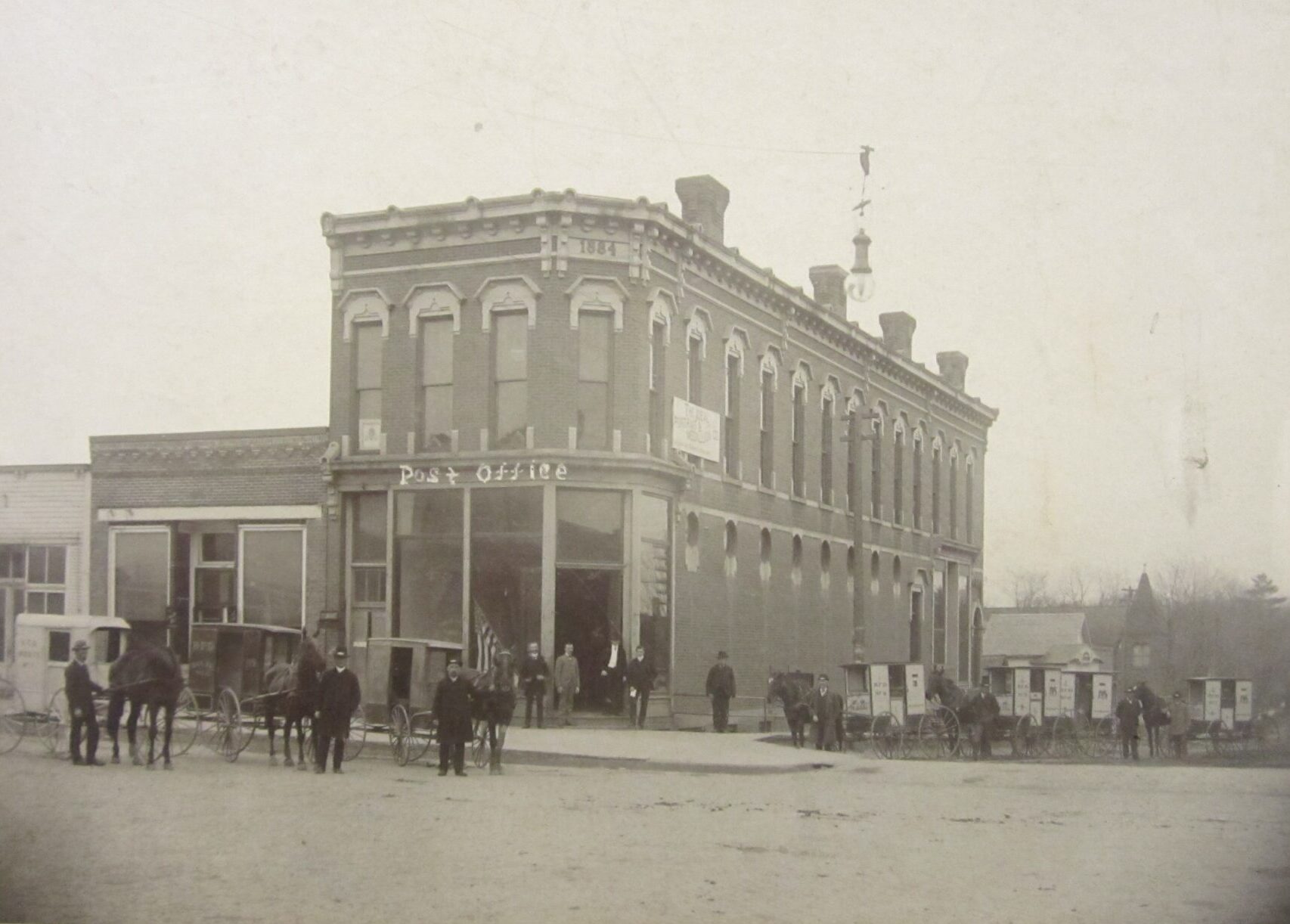
The Plymouth Post Office opened in October 1836, with Wm. G. Pomeroy as postmaster.  He served until January 3, 1838 and again from January 11, 1841 to December 1844.  The post office was opened in his father’s house, which was known as the Yellow River Hotel.  Each successor moved the post office to his place of business or in some other business establishment.  McDonald’s HISTORY OF MARSHALL COUNTY lists all the Plymouth postmasters from Mr. Pomeroy to J. A. Yockey in 1901. 

The Plymouth Post Office as it was on Michigan Street.

In 1909, Postmaster Yockey was able to institute city delivery.  The law requires that a post office must do $10,000 worth of business in order to qualify for city delivery.  The total business for fiscal year April 1908 to April 1909 was $12,189.

Robert Head, Hubert Tanner, and Walter Lindquist delivered the mail to the citizens of Plymouth for the first time on June 15th.  Raymond Glen Seybold was appointed substitute carrier.

With the start of city delivery, the entire post office force, with the exception of the postmaster, was placed under civil service.  In February 1912 the Post Office Department in Washington, D.C. leased a vacant room on LaPorte Street for a period of ten years from Bondurant and Stevens.  This new location was considered to be much better than the previous location.

The Plymouth Post Office in its LaPorte Street location.

In May 1913 an attempt was made to blow the post office safe.  When Louis Jones unlocked the front door and threw in the mail sack that came in on the Lake Erie Railroad, he thought he heard something but hesitated to call the postmaster.  He was convinced to make the call by Joseph Mead and Mitt McKinney.  They went back to the post office and discovered that the lighting wires had been cut.  The officers left Charley Glaub and Ralph Bowell to guard the back door while they checked the train station.  Glaub and Bowell were armed and saw a shadow approaching.  Glaub ordered him to put his hands up.  Although he claimed he acted alone, it was obvious that this was not true.  The safe’s iron door was blown open, the lock combinations and the inside lining of steel plate were blown to bits.  The inside door, which opened to the money and other valuables, had not been broken open so the loss was limited to the amount of money and stamps left there overnight.

Many improvements designed to aid the post office in handling Christmas rush were instituted in November 1929.  Included were a new safe with four interchangeable drawers for use at the General Delivery and a stamp window.   The incoming parcel post received for delivery the week before Christmas required more space than at any other time of the year.  The rural carriers had been moved up from the basement, which left that space available.   Parcel post was delivered to the rear door of the basement, sorted and then delivered by automobiles from the rear entrance.  Postmaster Tanner thought that this would improve the service.  Several sections of Plymouth did not have sidewalks, house numbers, street signs, or mail boxes on the house.  This made it impossible to receive city delivery.  Permission was obtained to permit those patrons to erect rural mail boxes on the line of travel of the carrier and receive mail. 

Sorenson-Gross Construction Co. of Flint, Michigan was awarded the contract in 1934 for the new Plymouth Post Office at a cost of $29,834.  The total, which includes the site, the building and some equipment, was $68,000.  Roy Treesh of Milford secured the sub-contract for the excavation needed for the basement of the building.

The May 28, 1935 issue of The Pilot carried an architect’s drawing of the planned building.  In September the cornerstone for the new Plymouth Post Office was laid.  The contents of the cornerstone included a copy of the Constitution of the United States, a Holy Bible, a copy of The Daily Pilot and Daily News of Sept. 12, 1935, and other documents containing the names and addresses of officers and members of various organizations in the city, city officers, and county officers.  The grand lodge officials of Free and Accepted Masons of Indiana were in charge of the ceremony.


The Plymouth Post Office on Garro Street before additions and remodeling.

In July 1964 a modernization and expansion of the Plymouth Post Office was planned.  The plans included adding 2,619 square feet to the workroom; 3,125 square feet to the platform; 8,448 square feet to the parking and maneuvering area; and 1,000 square feet for lobby space, mail vestibule and other employee facilities.  In addition, air conditioning was installed.  Omer Bixel was appointed Plymouth postmaster in August 1964.  The October 20, 1964 issue of The Plymouth Pilot reported that the architectural and engineering contract for the extension and remodeling of the post office was awarded to Maurer and Maurer, South Bend.  The drawings were completed by August 1965, and the estimated cost was $250,000. 

Rutland Post Office

The Plymouth Democrat carried the history of Rutland in its March 19, 1903 issue.  Once called Cross Lanes, the name was changed to Glendale and then to Cavender.  A post office was obtained around 1881, but it came with the name Rutland.  Rather than “fight city hall,” the name was accepted.  Frank Shepherd was postmaster until he was promoted to rural carrier for Plymouth.  It was assumed that Sol Cavender would succeed him.  The Rutland Post Office was discontinued December 14, 1917, as Plymouth Route #4 began covering the territory, with Frank Shepherd as carrier.

Teegarden Post Office

A post office was established at Teegarden in March 1874.  J.D. Johnson was appointed postmaster.   The office was in a combination of Mr. Johnson’s home and general store.  In the early 1920s the Plymouth, Walkerton and North Liberty rural routes were extended to serve other rural areas.  The Walkerton route went through Teegarden to serve people to the north and east.  This led to a decrease in the number of box holders.  Millard Lemert was postmaster at the time.  His father, C.A. Lemert, was postmaster for 20 years in connection with his general store.  Gideon Logan, Jesse Beldon, D.W. Titus, Andrew Peterson, J.O. Kessler, Richard Thompson, C. Robinson, Mrs. Loneta Aldrich Bowers, and Mrs. Carol Pontius were all postmasters.

Tippecanoe Post Office

The Tippecanoe Post Office has had many locations.  The first location in 1851 was in Old Tippecanoe Town on the Tippecanoe River one mile north of the present town.  The August 17, 1865 issue of The Plymouth Democrat reported that the post office at Tippecanoetown had been discontinued.  In 1884 the post office was established at the railroad station, then called Ilion.  The first postmaster at Ilion was W.A. Hardesty.  Other postmasters included Wilson Roberts, David Harrington and Dr. L.D. Eley.  During Dr. Eley’s time as postmaster, the name was changed to Tippecanoe.  Arnold Rhodes served as postmaster from 1923 until he retired in July 1958.

In December 1939 the post office building which had been moved from near the railroad to the center of town was destroyed by fire.   The post office was then moved into the property of Mrs. Callie Dawson.  In 1963 Postmaster Dale Blackford built a new post office about a block north of 18B Road on the east side of State Road 331.  The dedication of the post office was April 21, 1963.  Edwin Kain of Plymouth was the rural carrier.  Hours of operation were 7 a.m. to 5 p.m. and the lobby was open during the noon hour. 

Large group of people standing around statue of Chief Menominee

Attending the dedication of the Tippecanoe Post Office are (l-r) Phil Fretz, Ron Plank, Vance Hartke, John Brademas, and Postmaster Dale Blackford.

Twin Lakes Post Office

The November 10, 1887 issue of The Plymouth Democrat reported that a post office had been established at Twin Lakes on the Vandalia Railroad.  It was discontinued on January 2, 1907.  All mail after that date was to be addressed to Plymouth. 

Tyner Post Office

Consider Cushman was the first Tyner postmaster, starting September 11, 1856.  J.C. Cushman succeeded him in 1860.  Henry Falconbury succeeded him on March 9, 1861.  He only served until J.W. Falconbury took the position April 30, 1861.  In 1996 Tyner celebrated 140 years of service.  Over the years, the Tyner Post Office has moved several times.  It was located in Postmaster Alan Burkholder’s garage from December 3, 1977 until his retirement in March 2002.  The inside has been decorated with murals by Marge Burkholder.

Large group of people standing around statue of Chief Menominee

The Tyner Post Office was located in the Oddfellows Lodge.

If you were a resident of Tyner when Mr. Burkholder was postmaster, you could receive your mail by carrier from Plymouth, or you could pick it up at the post office.  If you opted for carrier, your address was Plymouth, and if you picked up your mail, your address was Tyner.  Your address could be Main Street, Plymouth but you lived in Tyner.  Most recently, the post office was located on Miller Street just north of French Street.  Christine M. Pinder succeeded Burkholder but resigned in June 2011.  Tyner folks lobbied to keep its post office and thought they’d held off the closing, but the Indianapolis Division opted to close it.

Large group of people standing around statue of Chief Menominee

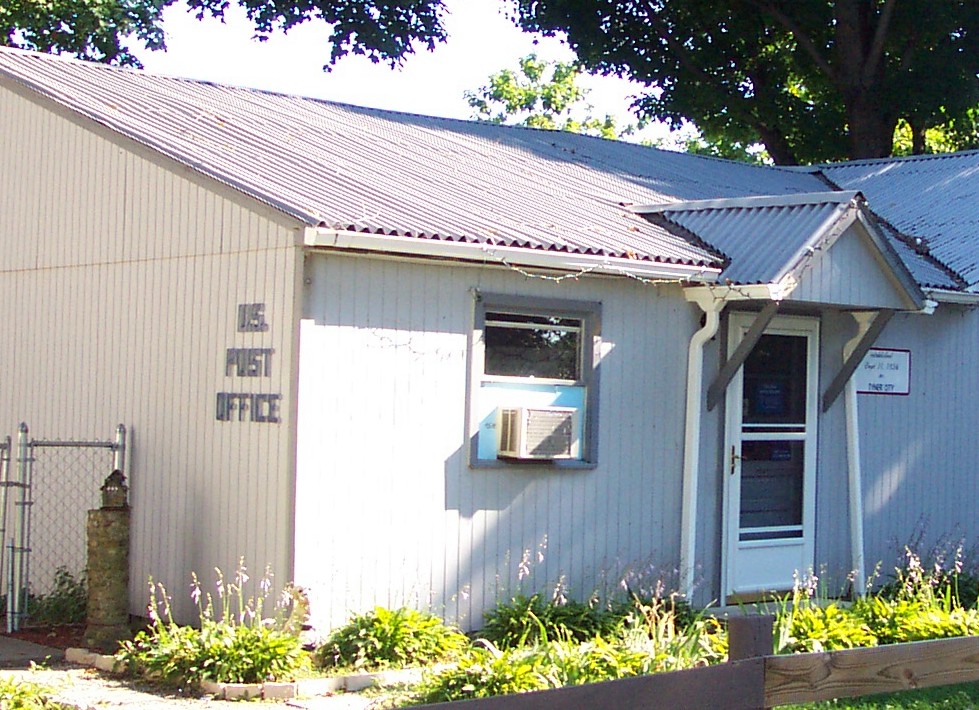
The last home of the Tyner Post Office was a converted garage.

Walnut Post Office

After more than forty years the post office in the town of Walnut in the south part of Walnut Township was ordered to be closed December 15, 1905.  Postmaster Alva Colwell, resigned and there was no applicant for the position.  It was reported that Argos Rural Route #11 went directly through Walnut and would probably serve the area, but residents of the town felt that they had not been dealt with fairly.  The December 14, 1905 issue of The Argos Reflector reported that the order to discontinue the Walnut post office had been rescinded.  A.B. Town was appointed and would take charge of the office.  The Plymouth Tribune of March 15, 1906 reported “The post office at Walnut will be closed March 15 by order of the post office department (sic).  Patrons of the office will get their mail from Argos by rural route.”