Marshall County’s Only Prize Fight

Marshall County’s Only Prize Fight

The story is told in McDonald’s History of Marshall County of the only prize fight held in Marshall County:

The prize fight was to take place at Baugherville, on the Lake Erie & Western Railroad, about nine miles northwest of Plymouth between Lou C. Allen of Chicago and H.C. Hanmer of Michigan City, middleweights, on the evening of April 30, 1891. That afternoon some of the local boys were told about the upcoming event. “The favored few who were let into the secret were on tiptoe of expectation, and preparation was made to pull out quietly by livery teams about 9 o’clock. The secret was to be kept from Sheriff Jarrell and from those who would likely give him a pointer in that direction.”

It was not easy to get there. “The night was dark and the corduroy road through the woods was more than ordinarily rough. Some of the drivers lost the direct road and went a considerable distance out of the way; others ran into ‘chuck holes’ breaking a spring or a single-tree or something of that kind, but where there is a prize at the end of the goal there is always a way found to reach it. On they went, helter-skelter.

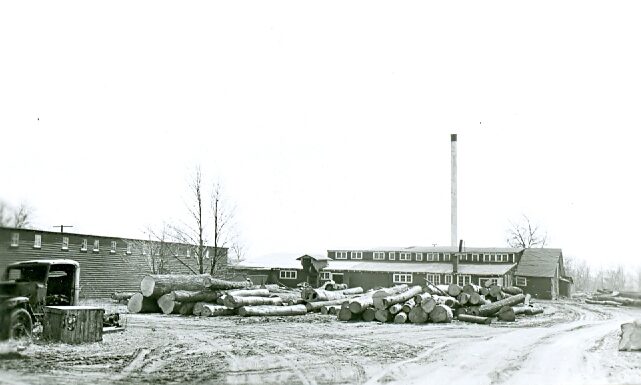
“The prize ring was in a large barn near a sawmill and a lumber yard near the Lake Erie & Western Railroad, a short distance northeast of Tyner. Lumber was piled up and scattered about everywhere, and there were acres of sawlogs and slabs and log wagons. There were no lights about to indicate that there was anything unusual going on, and those who were not familiar with the lay of the land had to feel their way in the dark.

“The Lake Erie fast train from the north arrived at 11 o’clock, bringing the pugilists and about 150 sports (fans) from Chicago, Michigan City and other points along the line, and it was but a short time until the preliminary arrangements had all been completed. A twenty-four-foot ring had been measured off, the building was gorgeously lighted, and in the glare of the kerosine the lamp of Aladdin would have cast but a faint glimmer. The 175 spectators who had each paid an admission fee of $5 were seated about the ring as conveniently as circumstances would permit, and the remainder were stowed away in the haymow, in balcony rows, one above another, from which elevated position they were enabled to look down upon the interesting spectacle before them through the large opening in the center.

“The gladiators were stripped to the skin and took their places in the ring, accompanied by their backers, trainers, seconds, umpires, spongers and assistants.” Also in attendance were a couple of Chicago newspaper reporters. “The doors of the barn were locked and guarded, and the doorkeeper was ordered not to admit anyone under any pretext whatever. Time was called and the pugilistic pounders came smilingly to the scratch. They knocked away at each other with all the strength they possessed. There was no doubt they meant business from the word ‘go.’ The first round was a success, and applause greeted the bruisers as they retired to their corners to be rubbed down.”

But when that many people know a secret, it is hard to keep. “It was late in the evening when Sheriff Jarrett was informed of what was going on. He and his deputies, Eugene Marshall and William Leonard, and Plymouth marshal William Klinger “pulled out from the county seat shortly after 9 o’clock and drove rapidly toward the seat of war. He had the misfortune to break his buggy, which delayed him, and he did not arrive until the first round had been fought.” The sheriff asked the doorkeeper to be admitted. “That distinguished dweller in the tents of iniquity informed them that under no circumstances could they be admitted, whereupon the sheriff jerked the latch off, opened the door, and he and his deputies rushed in upon the pugilists and their assistants, who were standing in the ring ready to commence the second round.

“Then ensued a scene of consternation which no pen can describe. There was a general stampede for the door and in the rush and confusion several were run over and knocked down. Some of the lights were turned out, and for a few minutes it seemed as if pandemonium had been turned loose. Both principals escaped the officers and got out of the building with only their thin fighting suits on. In the melee that ensued, trainer Ed Corey and seconds Con Cavanah and Dick Ford were captured. The remainder got away. Hanmer was so cold with only his tights on that he could not stand it and returned in search of his clothes. He was captured by the sheriff. Allen, the other principal, took the railroad track north as fast as he could run and never stopped until he reached Walkerton, where he boarded a freight trip for Michigan City and made good his escape.

“The spectators – well, they were panic-stricken and, if anything, were worse frightened than the fighters. When the sheriff and his party entered, the rapidity with which that audience dispersed has never been equaled in this part of the country. They did not stand on the order of their going, but they went at once. It was every fellow for himself, and the devil take the hindmost. As soon as they got out of the building they took to the woods as fast as their legs could carry them. They tumbled over one another, went head over heels over saw logs, log wagons and lumber piles, skinned their shins and bruised themselves up generally.

“Those who were in the hayloft, most of them Marshall County fellows, were all captured without an effort. They had climbed up on a ladder which had been removed when the fight began, and there they were, prisoners and unable to make a move for liberty. So, they scrambled back as far as they could and covered themselves with hay, except their feet, which stuck out in irregular sizes all around the first row, and waited further developments.

The suspense did not last long. One of them came near smothering in the hay and yelled out, ‘Put up that ladder. I can’t stand it with this d____d gang any longer.’ The ladder was put up and you would have just died laughing to have seen capitalists, merchants and businessmen, old men and young men, bald heads and gray heads, married men and single men, backing down that ladder with hayseed in their hair, and on their hats and all over their clothes. As they reached the floor, one of them remarked, ‘What in ____ would my wife say if she could see me in this fix?’”

There were probably many married men who would shortly find out what their wife would say.  “They were greatly relieved when Sheriff Jarrell informed them that he had no use for them, and they could go about their business.” The four who had been arrested were each fined $50, which was promptly paid. And thus ended the only prize fight ever witnessed in Marshall County.”

I would imagine that most of those married men suffered harsher punishment than the prisoners, don’t you?

It may not surprise anyone that Daniel McDonald was a newspaper owner and editor. His writing style is so highly entertaining. Come on in to read more from his History of Marshall County. The Museum is open 10 a.m. – 4 p.m. Tuesday through Saturday.

 

Skeleton Found in a Bourbon Barn

Skeleton Found in a Bourbon Barn

It is said that every family has a skeleton in their closet. One Bourbon family had a skeleton in their barn:

“After the body was accidentally discovered by a hired hand and became publicly known, an inquest was held. Witnesses were called, a jury summoned, and testimony was given on August 25, 1855, in S.M. Adams’ storeroom. The jurors examined the skeleton of a female body between fourteen to twenty years of age, about five feet two inches tall. The top part of the skull and the left side of the lower jaw were gone. The name of the person and the cause of her death were unknown. The body was found on the premises hidden in the barn of Grason Parks.

“Henry Strunk testified the body was found in Grayson Parks’ haymow in the northwest part of the barn. It appeared to be covered up and secreted. He helped remove the body from the barn by the order of the coroner. The body was removed on the evening of August 24, 1855, shortly after dark.

“Thomas Wilkins said he discovered the body. Grason Parks had sent him up in the hayloft after a piece of lumber. Wilkins saw a small corner of a box and supposed it to be the lumber he was sent for but upon taking hold of it, he discovered it to be a box. On August 20 Grason Parks had employed him to help haul in oats. Wilkens examined the box again and was led to suppose that it contained a human body. The box was in the same place and condition as it was when he had first seen it in Grayson Parks’ barn. Wilkins supposed the box to have been secreted in the hay with which was covered. Wilkins next saw the box on the evening of August 24 when he went up into the haymow by the order of the coroner to show where the box was. Wilkins saw the box opened in the barnyard. At that time, he discovered to a certainty for the first time that there was a human body in the box. Wilkins had no knowledge as to how the box came to be in the barn.

“Abraham Baker said he was frequently about the Parks barn the previous spring and summer. He often noticed that there was a bad smell in the barn. He said he was working for Grayson Parks in May, and while the cattle were eating at noon, Baker went up into the haymow and for the first time, he discovered the bad smell. Baker asked Grayson Parks’ son what smelled so bad. The boy replied that his father had killed a cat in the hay but had burned it the day before. Baker said that when he first discovered the box his brother was with him; he shook the box, and it gave a disagreeable smell and that he supposed it to contain a dead body.

“Dr. David Hazzard testified he had examined the body which had come from the barn of Grayson Parks and discovered no marks of violence. It was a female body. The upper part of the skull had been removed and the left under jaw was taken off. Dr. Hazard stated that Grayson Parks was not a physician or surgeon.

“Dr. J. E. Brooks also examined the body and saw no marks of violence. The skeleton was a female. Dr. Brooks supposed the subject to have been between fourteen and twenty years of age.  He thought the body had been fairly well prepared. There was as little smell about it as any he had ever seen which was so recently prepared.

“James O. Parks said he had seen the body many times. He saw it in Leesburg. He said it is the property of Dr. Edward Parks. It was prepared by Dr. Edward Parks and probably others. James Parks said he saw it before it was dry. He said it was brought from Michigan. He never learned the name of the person. James Parks said it was a young female; he did not know the age but said it was “hardly matured.” He identified the skeleton to be the property of Dr. Ed Parks from the fact of the removal of the upper part of the skull and the loss of part of the under jaw and teeth.

“James Parks stated he could not say that he ever heard Dr. Ed Parks say that the body was his property, but he saw the body in Dr. Ed Parks’ lecture room in Kosciusko County. James Parks had no knowledge of the body being at Grayson Parks.’ James Parks said he was invited into Dr. Ed Parks’ lecture room by some of the students and went afterward without an invitation because they made him welcome. He said that it was prepared over a year ago.

“Dr. John F. Parks said he did not recognize the skeleton for a certainty to be the one which he had once or twice seen in the room of Dr. Ed Parks. Dr. John Parks said he had no knowledge of the skeleton being at Grayson H. Parks.’ He believed the skeleton to be the property of Dr. Ed Parks. He had seen a skeleton in Dr. Edward Parks’ room over a year ago and supposed this was the same one. It was in much the same condition as it was at the inquest. Dr. John Parks had requested Dr. Ed Parks to send him a skeleton two months before. Dr. John Parks had passed by Grayson H. Parks’ place but had received no notice of a skeleton being there for him.”

Apparently, the body was an open secret in the Parks family because they all seemed to know about it. In the early days of the study of internal medicine, it was very common for a doctor to acquire a cadaver to study. Some doctors were known to pay someone to dig up a recently deceased body, as in Charles Dickens’ A Tale of Two Cities.

The jury found Grayson Parks guilty of unlawfully secreting the skeleton of a human body. Those involved in what happened to the skeleton are gone now, all buried properly under tombstones with their names on them. They received much better treatment after their decease than that which was given to the young girl, whose name is still known only to God.

Be sure to stop by the Museum! We are open from 10:00 until 4:00, Tuesday through Saturday at 123 N. Michigan St, Plymouth.

Prohibition and Marshall County

Prohibition and Marshall County

Years before the enactment of the 18th Amendment, many locals were involved in the temperance movement. The temperance movement promoted the ban of alcoholic beverages. There were even organizations dedicated to the cause, such as the Women’s Christian Temperance Union. Members would ask individuals to pledge to vote for anti-saloon politicians. They also called on ‘druggists’ to dole out alcohol by prescription only, visited saloon keepers to ask them to stop selling alcohol and prayed outside saloons.

Feelings were intense on both sides of the debate. On Thursday evening, August 27, 1891, a dynamite cartridge was exploded in the United Brethren Church in Bourbon. Straightaway, the Bourbon Mirror called for a temperance meeting to be held the next day. A large number assembled for the meeting, undeterred.

Tough On Alcohol

Eventually, in 1909, Marshall County voted to go dry, well before Indiana did. When the Wright “Bone Dry” Law in Indiana was passed in 1925, it became one of the toughest prohibition laws in the nation. During Prohibition, the United States Treasury Department authorized physicians to write prescriptions for medicinal alcohol. The “Bone Dry” Law outlawed the possession of all liquor – even by prescription for medicinal purposes, which was allowed under federal law.

Illicit Activity During Prohibition

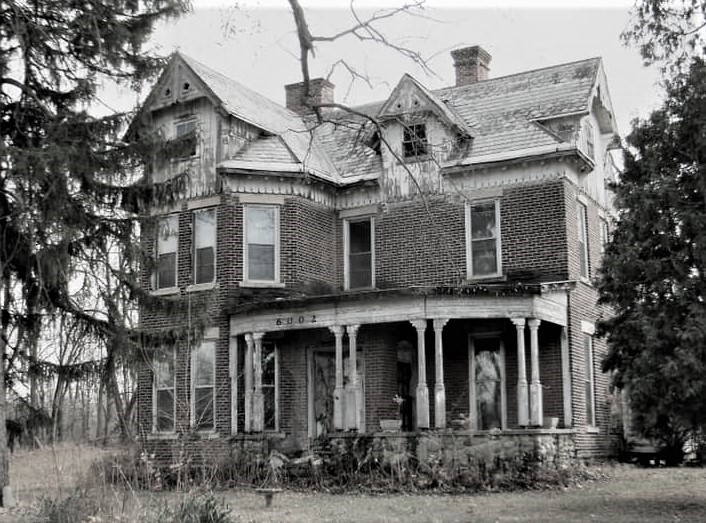
Even with the strict laws, Marshall County had its own speakeasy. A speakeasy was a secret establishment that sold alcohol illegally during Prohibition. The most notorious use of the Hoham-Klinghammer-Weckerle property in Plymouth occurred during Prohibition. In the 1920s the property was a roadhouse called the Pine Tree Inn. In 1928 officers led what was considered the county’s greatest raid on the roadhouse. Evidence was found that beer was being sold there. Two officers and three deputies went in just before midnight and took patrons by surprise. Officers found “Monte Carlo style gambling and free flowing liquor.” No one attempted to flee, and 35 violators were taken into custody, some from as far away as Ohio. Officers seized 38 cases of beer and found two slot machines.

Large headlines in the Plymouth Daily Pilot on July 30, 1928, read, “14 ARRESTED IN RAID ON LOCAL GAMBLING HOUSE,” with subtitles like “OFFICERS STAGE CLEANUP – MINORS BROUGHT TO COURT.” In large print the newspaper called the event the “COUNTY’S GREATEST RAID.”

One article stated that practically all of the boys and men arrested had brought girl friends with them to spend the evening. Many of the men involved were “prominent in their communities.” The house was leased by Bertha Bozarth from W.J. Hayes of Chicago. Hayes pled innocent of any knowledge of the use of the property. Bozarth was assisted by Robert Wolcotte; both were arrested and charged with operating gaming devices and the possession of intoxicating liquors.

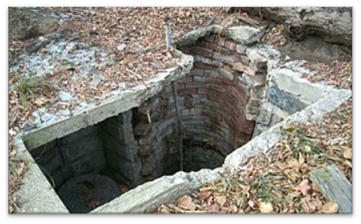
An underground brick vault used to ferment beer
One of two brick vaults at the house constructed underground and used to ferment beer.

The End of The Speakeasy

The paper reported that the business had grown until it became more publicly known, at which time the county prosecutor took steps to investigate. This would assume that the public knew of the illegal activites. Judge Albert B. Chipman of Marshall County then ordered the establishment padlocked for one year. The Plymouth Daily Pilot ran front-page headlines such as “PADLOCKS PINE TREE INN FOR ONE YEAR” and “CHIPMAN ENDS CAREER OF PRETTY LAKE ROADHOUSE.” They stated that the “Pine Tree Inn has come to the end of its short but hectic career.” The padlocking of the establishment included the “brick house and garage, all out buildings, the tunnels (vaults) and the frame house to the west of the brick (house).” A bond was placed on the property for $1,000 stating that only the owner, W. J. Hayes of Chicago, could use the property else.

Bozarth claimed under oath that she paid “protection” money to Justice of the Peace Walter A. Zeroll. After the raid Zeroll left the city in the middle of the night and a warrant was issued for his arrest. A month later Bozarth was found guilty. She was fined $150 and sentenced to 60 days at the Indiana Women’s Reformatory. That was the end of the speakeasy.

The Marshall County Historical Society Museum has an interesting display on Prohibition. Check out our west window on Garro Street to learn more!