
The Great Culver Bank Robbery of 1933

The Great Culver Bank Robbery of 1933

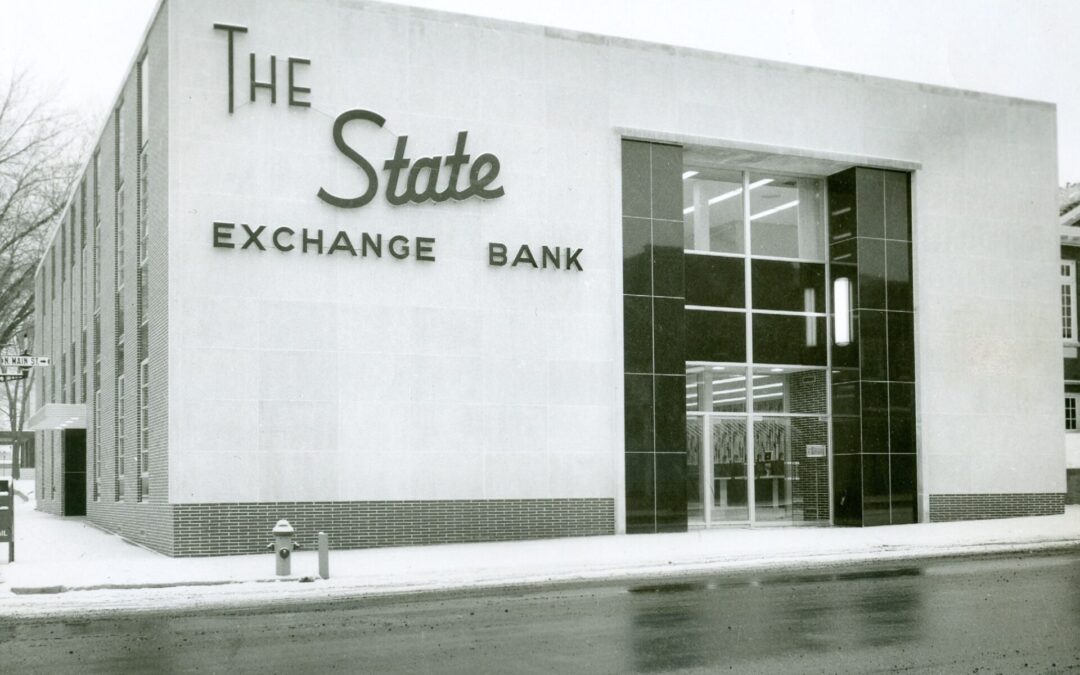
Culver State Exchange Bank, undated.

Edited by Sue Irwin

On May 29, 1933, at 9:05 a.m., the Culver State Exchange Bank was robbed. Seven men pulled up in front of the bank in a large Chrysler, later reported as being stolen. Six of the men got out of the Chrysler wearing masks and brandishing sawed-off shotguns and a machine gun. Five of them entered the bank, while another stayed outside as a lookout, and the seventh kept the car running.

Someone in the bank pressed the burglar alarm while a man across the street, seeing the action unfolding, leaned out of his second-floor window to alert all within earshot that the bank was being robbed. Col. H.C. Glascock, an officer at Culver Military Academy, was in town and alerted military personnel at CMA through the switchboard operator. Within minutes, Col. Robert Rossow, commandant of the academy, had an armed posse in two automobiles racing into town.

Oliver Shilling, the son of the bank president at the time, realized what was happening and took aim from a filling station across the street and fired two shots into the car, mortally wounding the driver. As the other five men and the lookout exited the bank a minute later, they took two bank employees to act as shields, shoved the dead driver aside and took off, forcing the hostages to ride on the running boards of the car until they reached the edge of town.

The hostages jumped off at the earliest opportunity, and the robbers headed west on Route 10, with a local doctor and another man giving chase. The driver of the Chrysler wasn’t familiar with the roads and didn’t get far before he wrecked the car. The pursuit car was forced to stop, and the robbers stole it, leaving the doctor and friend to tend to the dying driver. The robbers turned north, but again encountered trouble when the car got off the road and came to a stop in deep sand. They finally got the car moved only to get it wedged between two small trees, forcing them to leave the car and seek hiding places in the swamp and woods nearby to await darkness.

That didn’t work out, though, since the hastily gathered posse (including a couple of South Bend police officers who were in Culver attending a funeral) and the Culver Military personnel found the car and surrounded the area. Five bank robbers were apprehended – one of them was up a tree, two others lying on their backs in shallow water with just their noses sticking out and money floating all around them. One man claimed innocence, saying he was simply seining for minnows and had fallen in, startled by the commotion.

It took four and a half hours after the robbery to catch five of the six robbers. The sixth man was apprehended four months later in Chicago. The amount stolen was $12,645. Of that, $9,376 was recovered.

A few interesting details surfaced in the days and weeks following the robbery:

  • Four telephone operators were kept very busy handling about 180 long-distance and local calls pertaining to the robbery.
  • B. gun sales to young Culver boys rose considerably.
  • A farmer from Starke County was observed among the crowd at the swamp with an old muzzle loader, ramrod and powder horn.
  • Five U.S. Springfield rifles came up missing after the capture.
  • The muddy wet money found in the swamp was dried, cleaned and put back into circulation.
  • True Detective Magazine featured the story in the December 1933 edition.

Did you know that we have nearly all of the county newspapers in digital form? Stop in at the Museum for your research needs! We are open 10-4 on Tuesday through Saturday.
Prohibition and Marshall County

Prohibition and Marshall County

Years before the enactment of the 18th Amendment, many locals were involved in the temperance movement. The temperance movement promoted the ban of alcoholic beverages. There were even organizations dedicated to the cause, such as the Women’s Christian Temperance Union. Members would ask individuals to pledge to vote for anti-saloon politicians. They also called on ‘druggists’ to dole out alcohol by prescription only, visited saloon keepers to ask them to stop selling alcohol and prayed outside saloons.

Feelings were intense on both sides of the debate. On Thursday evening, August 27, 1891, a dynamite cartridge was exploded in the United Brethren Church in Bourbon. Straightaway, the Bourbon Mirror called for a temperance meeting to be held the next day. A large number assembled for the meeting, undeterred.

Tough On Alcohol

Eventually, in 1909, Marshall County voted to go dry, well before Indiana did. When the Wright “Bone Dry” Law in Indiana was passed in 1925, it became one of the toughest prohibition laws in the nation. During Prohibition, the United States Treasury Department authorized physicians to write prescriptions for medicinal alcohol. The “Bone Dry” Law outlawed the possession of all liquor – even by prescription for medicinal purposes, which was allowed under federal law.

Illicit Activity During Prohibition

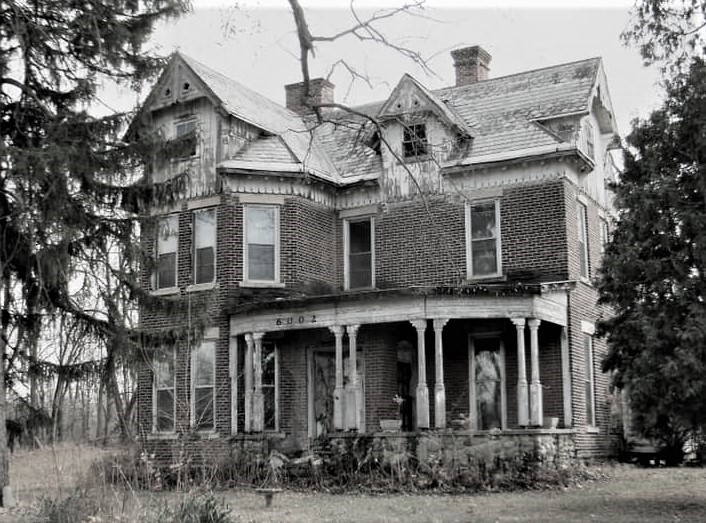
Even with the strict laws, Marshall County had its own speakeasy. A speakeasy was a secret establishment that sold alcohol illegally during Prohibition. The most notorious use of the Hoham-Klinghammer-Weckerle property in Plymouth occurred during Prohibition. In the 1920s the property was a roadhouse called the Pine Tree Inn. In 1928 officers led what was considered the county’s greatest raid on the roadhouse. Evidence was found that beer was being sold there. Two officers and three deputies went in just before midnight and took patrons by surprise. Officers found “Monte Carlo style gambling and free flowing liquor.” No one attempted to flee, and 35 violators were taken into custody, some from as far away as Ohio. Officers seized 38 cases of beer and found two slot machines.

Large headlines in the Plymouth Daily Pilot on July 30, 1928, read, “14 ARRESTED IN RAID ON LOCAL GAMBLING HOUSE,” with subtitles like “OFFICERS STAGE CLEANUP – MINORS BROUGHT TO COURT.” In large print the newspaper called the event the “COUNTY’S GREATEST RAID.”

One article stated that practically all of the boys and men arrested had brought girl friends with them to spend the evening. Many of the men involved were “prominent in their communities.” The house was leased by Bertha Bozarth from W.J. Hayes of Chicago. Hayes pled innocent of any knowledge of the use of the property. Bozarth was assisted by Robert Wolcotte; both were arrested and charged with operating gaming devices and the possession of intoxicating liquors.

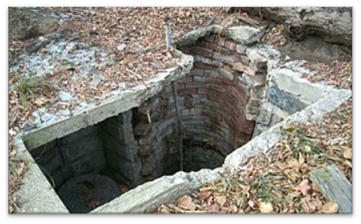
An underground brick vault used to ferment beer
One of two brick vaults at the house constructed underground and used to ferment beer.

The End of The Speakeasy

The paper reported that the business had grown until it became more publicly known, at which time the county prosecutor took steps to investigate. This would assume that the public knew of the illegal activites. Judge Albert B. Chipman of Marshall County then ordered the establishment padlocked for one year. The Plymouth Daily Pilot ran front-page headlines such as “PADLOCKS PINE TREE INN FOR ONE YEAR” and “CHIPMAN ENDS CAREER OF PRETTY LAKE ROADHOUSE.” They stated that the “Pine Tree Inn has come to the end of its short but hectic career.” The padlocking of the establishment included the “brick house and garage, all out buildings, the tunnels (vaults) and the frame house to the west of the brick (house).” A bond was placed on the property for $1,000 stating that only the owner, W. J. Hayes of Chicago, could use the property else.

Bozarth claimed under oath that she paid “protection” money to Justice of the Peace Walter A. Zeroll. After the raid Zeroll left the city in the middle of the night and a warrant was issued for his arrest. A month later Bozarth was found guilty. She was fined $150 and sentenced to 60 days at the Indiana Women’s Reformatory. That was the end of the speakeasy.

The Marshall County Historical Society Museum has an interesting display on Prohibition. Check out our west window on Garro Street to learn more!