Plymouth Was a Bicycle Manufacturing Hub
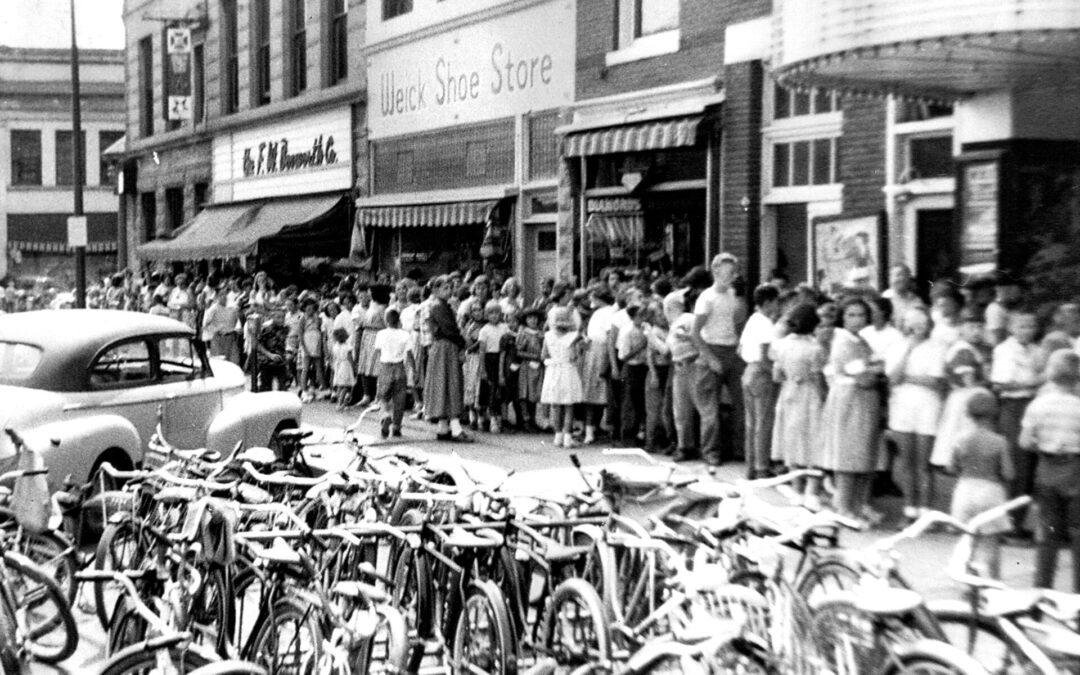
Feature Image. Rialto line to see Smiley Burnette, ca 1952.
By Dennis Gibson
During the 1890s, the U.S. was in the midst of its first bicycle craze. Bikes helped bridge the gap between horses and automobiles. The boom awakened an interest in good roads, furthered the cause of women’s liberation and was even linked to changes in social behavior. Improvements in bike technology fueled the fad. Once it was both safe and comfortable to ride, everyone wanted in. The average cost of a bike in the 1890s was $75 – that’s $2,625 today!
Plymouth Cashes In On Bikes
The attitude toward women riders was still very conservative during the 1890s. There were questions of whether women should ride, how they should ride, whom they should ride with and what their reputation would be if they did ride! The long, heavy skirts women commonly wore also made biking difficult. Bloomers and shorter skirts were an option but could draw scorn and unwanted attention. However, suffrage advocates praised the bicycle as means of giving women more freedom.
Marshall County cashed in. Bicycle parts made in Plymouth were sold to dealers throughout the United States. There were two bicycle factories located here, as well as one that manufactured handlebars.
Built in 1891, covering nearly 50,000 sq. ft., even featuring its own fire department, the Indiana Novelty Manufacturing Company was one. It was the largest factory in the world that made wooden rims for bikes, as well as mud and chain guards. In 1893, co-founder George W. Marble patented a method of making one-piece bicycle rims from ash that were both lighter and stronger than metal ones. Two carloads of lumber were used daily and by 1895, the plant was producing 700,000 rims a year, as well as 100,000 sets of guards. Indiana Novelty supplied nearly all the leading bicycle companies in the U.S. and had agents in most principal cities, as well as Toronto, London and Paris. They made more than half of the wooden rims used by bicycle manufacturers.
Plymouth Cycle Manufacturing Co.
Safety bikes were the alternative to high wheelers, or penny farthings, introduced in the 1880s. Some sources credit Marble with inventions linked to these and other early types of bikes. Marble also created most of the machinery used by Indiana Novelty in the manufacture of its wooden rims. In 1892, he and several other founding members of Indiana Novelty formed the Marble Cycle Manufacturing Company, with the addition of W.D. Smalley, who also had years of experience in the bike trade, and was the namesake for their bike, the Smalley.
In 1894, the company was sold and became the Plymouth Cycle Manufacturing Company.
“It is estimated that the company made approximately 700 bikes a year for the first two years. The output was increased to 4,500 bikes in 1895, with hopes of making 6,000 for 1896. It was reported in the Plymouth Republican that ‘Plymouth Cycle had been operating for months at 13 hours per day. The factory was limited to 5,000 bicycles but now has orders for 2,000 more.’”
However, the country was in recession, and large orders that had been placed were never paid for. Plymouth Cycle was taken over by creditors Bass and McDonald. They reopened the factory in 1897 as the Elektron Cycle Company, but work was halted in 1898 and a judgment secured by former employees for wages due. The company’s machinery and materials were sold to the Shelby Manufacturing Company and moved to Ohio. The bicycle business that had boomed in the early 1890s became a thing of the past. According to the Department of Transportation, bike sales nationwide plunged 79 percent from 1897 to 1904. The craze was over.
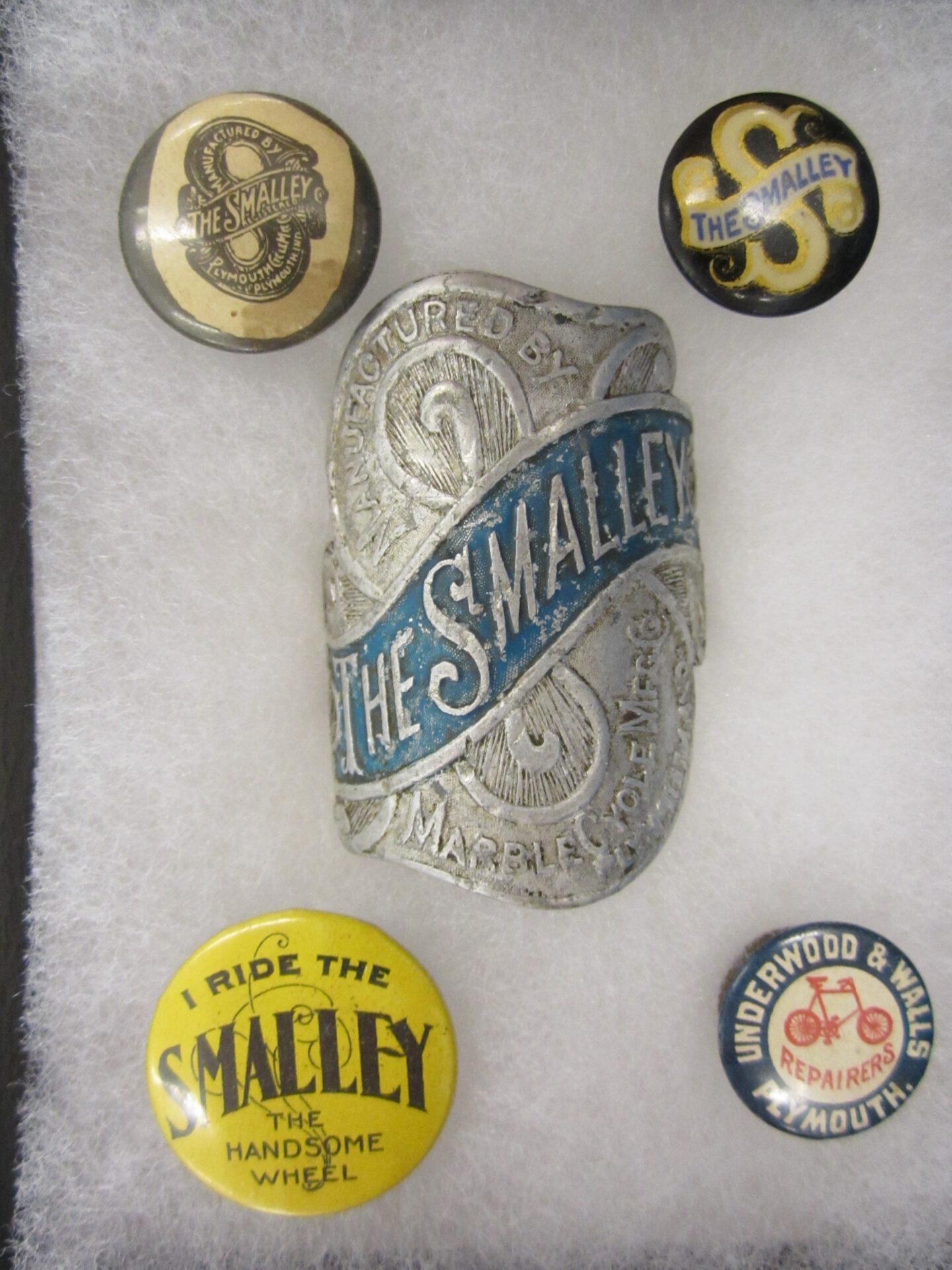
Smalley pins.
Unfortunately, the MCHS Museum does not currently have a Smalley or Elektron bicycle to display, but we do have more good information on display in our transportation room. We always welcome donations of any items made by any Marshall County manufacturer! Our Museum is open Tuesday to Saturday from 10:00 am to 4:00 pm.