The Famous Fairs of Bourbon
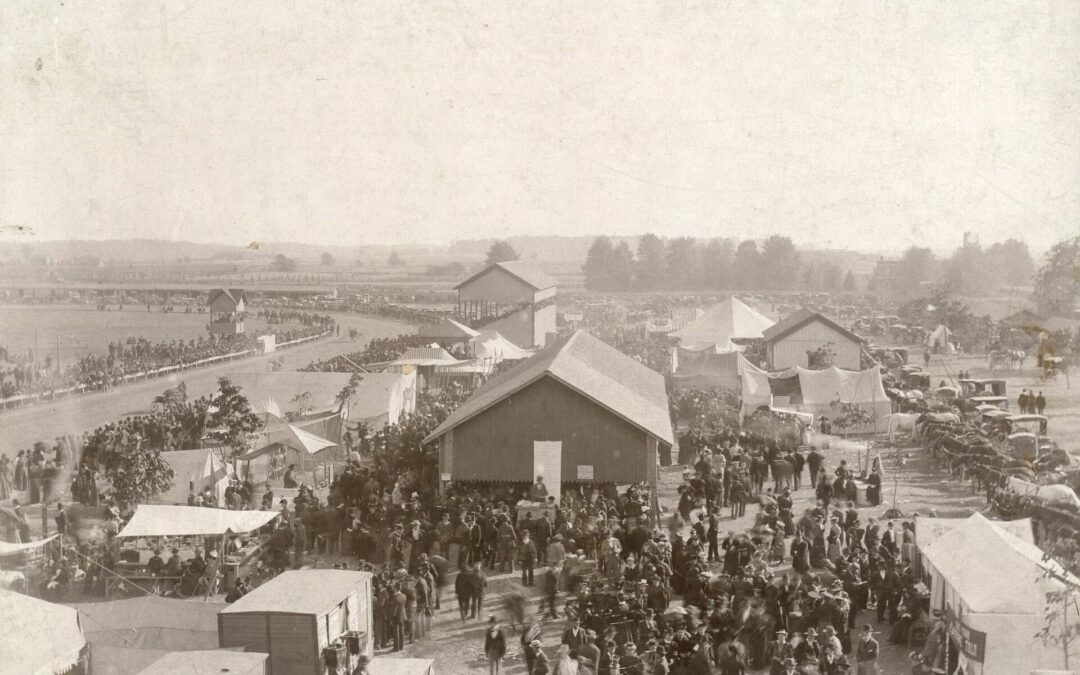
Feature Image. Undated birds-eye-view of fair.
The Town of Bourbon 1872 fair was the first one established in the county. It took place in a schoolhouse 1½ miles east of Bourbon. The fair was discontinued for a few years and started again in 1891, as an 1892 ticket listed it as the Second Annual Fair. Some days the crowds were as large as 10,000 to 14,000 visitors. They usually took place in late September or early October, and often school would be dismissed so students could attend.
The Purpose of the Bourbon Fair
Among the Bourbon fair’s goals was to improve livestock breeding, to promote the area’s agricultural, mechanical and industrial interests and to provide good clean entertainment. They erected several permanent buildings: a grandstand with a half mile track, an art hall, stables and fenced-in animal pens.
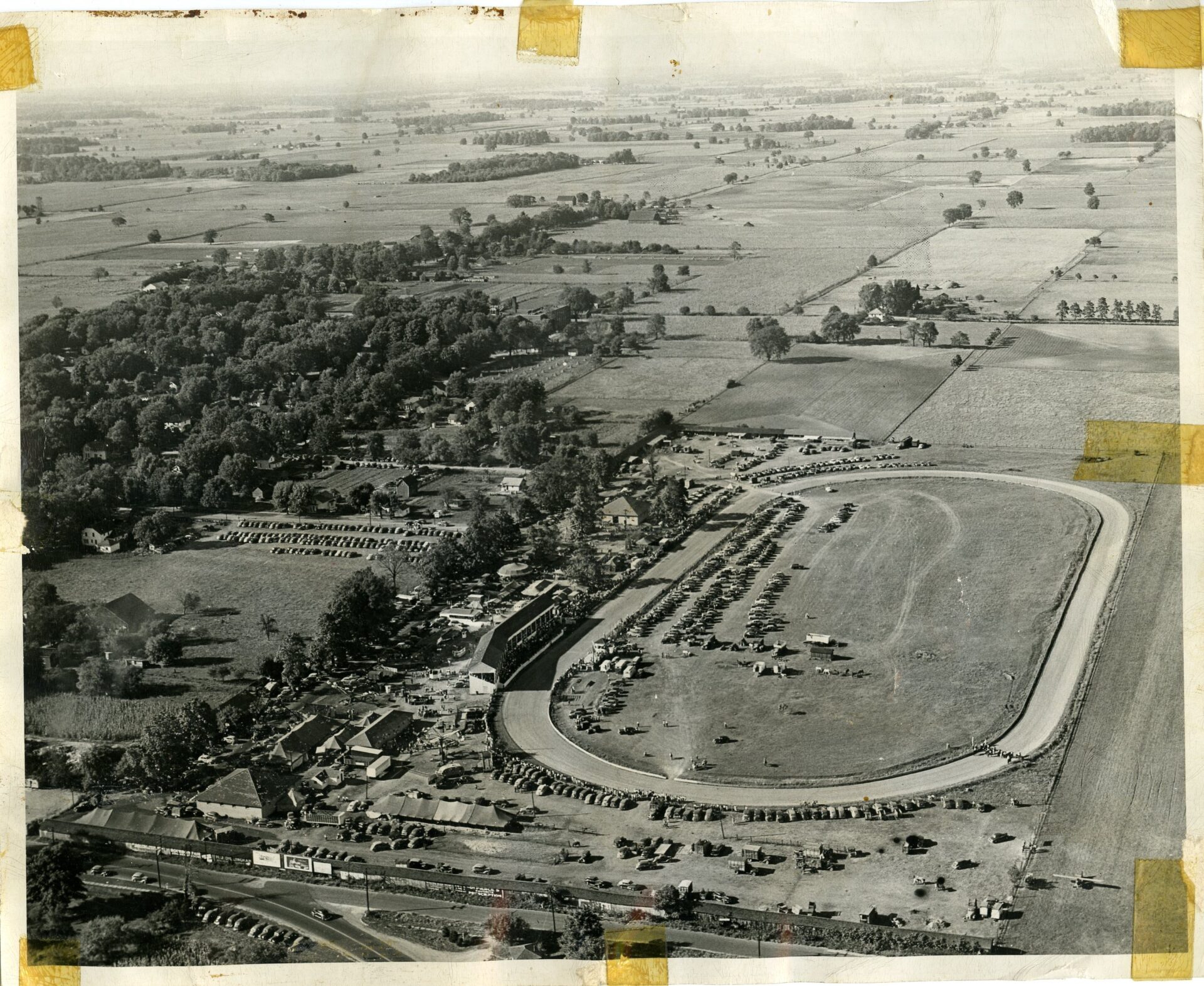
Race track looking north.
Each year a brochure was printed showing everything that was going to be happening at the fair. The catalog also provided plenty of opportunities for local businesses to advertise. As a sample of the fair offerings, the 1933 catalog listed various cattle, sheep, swine, poultry, turkeys, waterfowl, and pet stock (eagle with cage, pea fowl, guineas, pigeons, rabbits, cage of squirrels, largest cat, ferret, pair of silver foxes). Also to be shown in all categories imaginable were grains and seeds, vegetables and roots, apples, pears, peaches, plums, persimmons, chestnuts, quinces and grapes, cut flowers, shrubs and flowers. The table luxuries category included canned fruits and vegetables, jellies, breads, cakes, cookies, fudge and candy.
The art hall contained “ladies fancy work” of coverlets, quilts, spreads, pillows, knitted goods -including socks, mittens and clothing – and every kind of rug. Embroidery and needlework included dresser scarves and handkerchiefs, pillowcases and tablecloths. All sorts of collections were featured, including coins, stamps, curiosities of any kind, shells, marbles, etc. Fine arts covered clay molding, landscapes, drawings in oil, pen, pencil, crayon and charcoal, baskets and “miscellaneous article not otherwise entered.”
And we cannot forget the most exciting activity, the Speed Program – horse races in trot or pace, pulling contests and mule races. Any mule winning the race two years in a row was barred. Straw and stalls were free for all horses entering the race. Horse racing was the big attraction and took place throughout the years to the last fair.
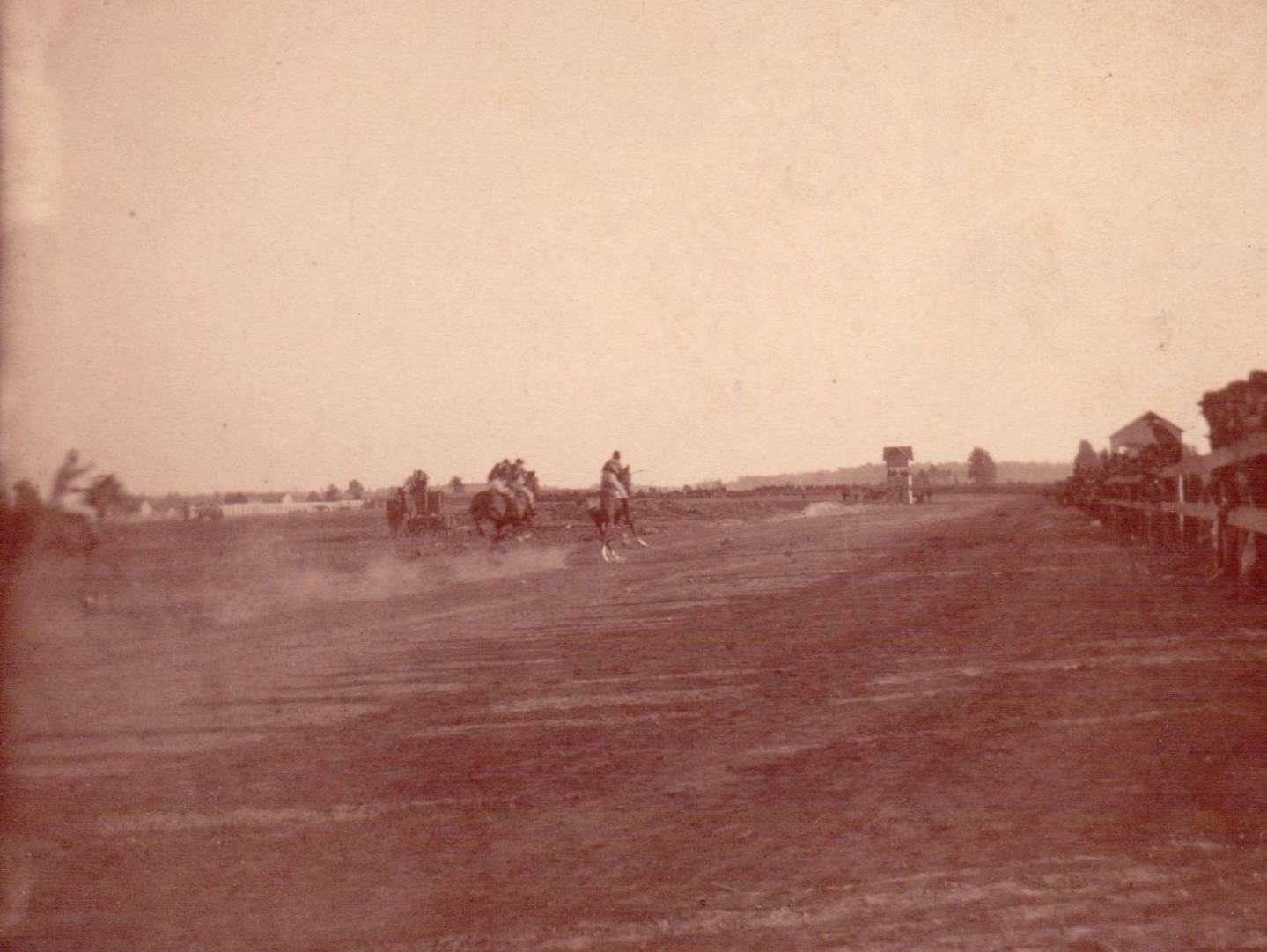
Horses on racetrack.
Other activities through the years included a firemen’s tournament, a band contest, bicycle races, trick bicycle riders and ball games. There were large pumpkin contests. In 1927 a “calling cows” contest was planned. The champion caller was to be rewarded with a handsome old-fashioned cow bell. In 1941 they added an amateur night.
The Bremen Enquirer: October 23, 1891
“About sixteen or seventeen years ago Bourbon began to have fairs…. The excellence of these fairs gave them a great reputation, far and wide, and everybody who attended spoke in the most flattering terms of them. One of the strong features of these fairs was the splendid exhibit of stock of all kinds, and to them is due much of the advancement in stock breeding in and around Bourbon which for many years could boast of being far in advance of any other section of country in this part of the state….
“Last Friday found us at the Bourbon fair…. We were agreeably astonished at the very excellent buildings they have erected, and which were just finished during the fair. The sound of the saw and hammer was mingled with the cry of the fakir and the music of the merry-go-round and the hum of human voices.
“It will be impossible in the limits of this article to describe in detail the many attractive features of Bourbon’s fair. The exhibits in stock were fine and quite large…and the parade was something that would make the heart of the fellows who have been raising ‘scrub’ stock chock full of envy at the progressive farmers who believe in keeping up with the march of progress.
“The agricultural department was well filled with the choicest products of a rich soil and a propitious season and elicited words of praise from all who viewed it.
“The poultry department contained many fine specimens of thoroughbred fowls that would delight the eyes of any poultry fancier on earth.
“The implement department contained the regulation wares in the way of necessary and labor-saving machinery that is necessary for the systematic tickling of the productive soil.
“The floral and art hall contained a wonderful collection of fine fabrics wrought into articles of usefulness and beauty by the nimble fingers of the ladies. Stepping into this art hall is like stepping out of this old prosaic world into a fairy land, an elysian bower of beauty and whose radiance dazzles the eye and beauty charms the soul. So different from what we meet in our everyday life that one forgets that he is on this mundane sphere but thinks rather that he has been transported to a new world where all the beauty, loveliness and grandeur of nature and art has been gathered, combined and blended together in a manner to mystify our temporal senses and induce the belief that by some means we have caught a brief glimpse of Paradise.
“Without question the most remarkable thing about the entire grounds is the fine race track that the association has succeeded in building. It is constructed on the most approved plan and the very fact that it is only a few weeks old as yet and has had such splendid time made upon it shows conclusively that it is destined to be one of the best in the state. . ..”
The Bremen Enquirer: A Few Years Later
“Bourbon has a very fine race track and up to the Bremen fair this year the best time ever made on a track in Marshall County was made over the Bourbon track, 2:21 by Billy the Kid (presumably a horse, not the outlaw). This time was cut down to 2:19¼ at the Bremen fair last week and now the managers of the Bourbon fair say that the time will be again lowered over the Bourbon track next week, therefore you may look for some very fast going. Do not miss it. You may regret it if you do.”
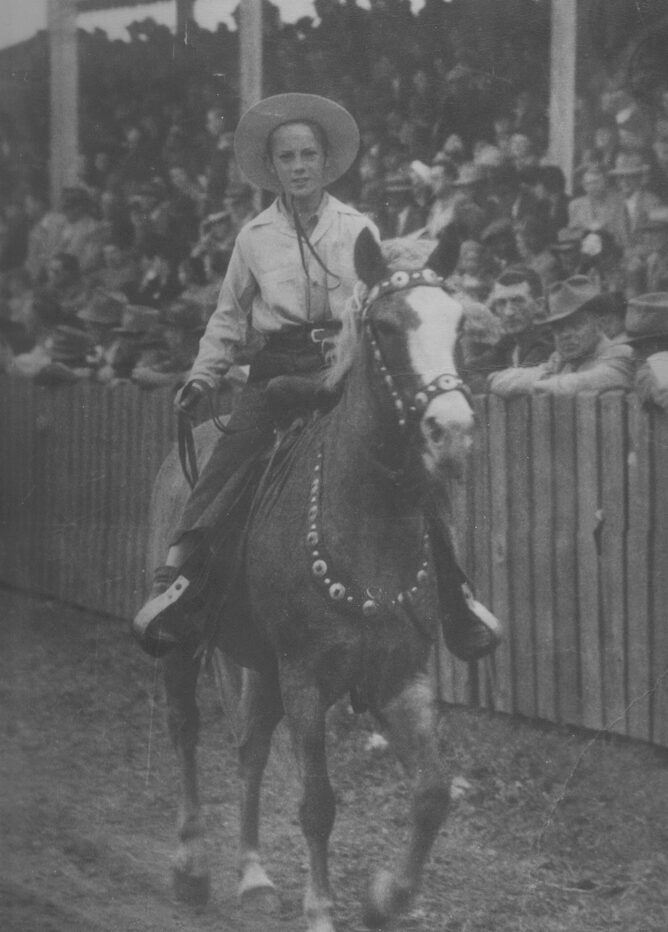
Jim Bates Sr. on horse.
The Bremen Enquirer: October 12, 1894
“A correspondent from Bourbon to Wednesday’s Chicago Times says a prize of $200 is to be awarded at the Bourbon fair on Thursday to the man who drinks the most whiskey. It is a foregone conclusion that the $200 will remain in Bourbon.” (Perhaps the residents felt they should live up to the name of the town.)
The Argos Reflector: October 11, 1900
“The crowd on Wednesday was . . . larger than expected by the management. But on Thursday the vast throngs of people simply overwhelmed the officers in charge. The number of single tickets sold on this day was 6,400. This does not include children, holders of season tickets, exhibitors, caretakers of exhibits, race horses, nor stock holders. The treasurer of the association informed our reporter that he could not be far wrong in saying there were more than 10,000 people in the grounds on Thursday. On Friday the attendance was not so large but was larger than expected.
Other Bourbon Fair Stories
There was not always a happy ending at the fair. Dolphus was a magnificent Shropshire ram of fine proportions, good weight and clean heavy fleece of high quality. He was exhibited at the Bremen fair in 1895 and then later entered at the Bourbon fair. While on exhibition he was seized with an illness and died. Another time a horse tied up with a rope fell, choked and died.
There was snow at the Bourbon fair in 1906. October 10 saw the area receive ten inches of snow. Tents fell beneath the weight of the snow, tree limbs were snapped and bushes were bent to the snow. People came to the fair in boots to see the snow. The next couple of days the weather was very mild.
As the automobile became more popular, accidents involving them began to take the place of accidents with horses, wagons and buggies. In 1910 Dr. Nichols broke his arm while cranking his “machine” when leaving the fair. The next day another doctor did the very same thing. The Bremen Enquirer concluded that “Automobiles appear to have a special grudge against doctors just at present.”
More difficulty with doctors and automobiles. In 1915 Dr. and Mrs. Hammon Imus were thrown out of their buggy, and it was smashed when it was struck by an automobile on their way home from the fair.
In 1935 Ida Helmlinger of Bremen, the founder and president of the Old Maids Association of the World, was invited to visit the Bourbon fair. “We’ll find a place for you somewhere,” she was told, “even if we have to put you with the chickens.” She still went and met hundreds of people, after which she went to the Warsaw fair.
By the 1940s and 50s the fair featured four days of racing. Besides the usual races, there were pony races, farmers’ running races, and farmers’ cart races. Modern times brought tractor pulling contests.
Eventually, as interest in harness racing waned, and the county fair grew and became more popular, the Bourbon fair ceased to be. In 1963 the fairgrounds were sold to Triton School Corporation, and sadly, one of Marshall County’s most beloved institutions passed into history. The last fair was said to have been in 1962, though there are a couple of newspaper items mentioning people attending the fair in 1964.
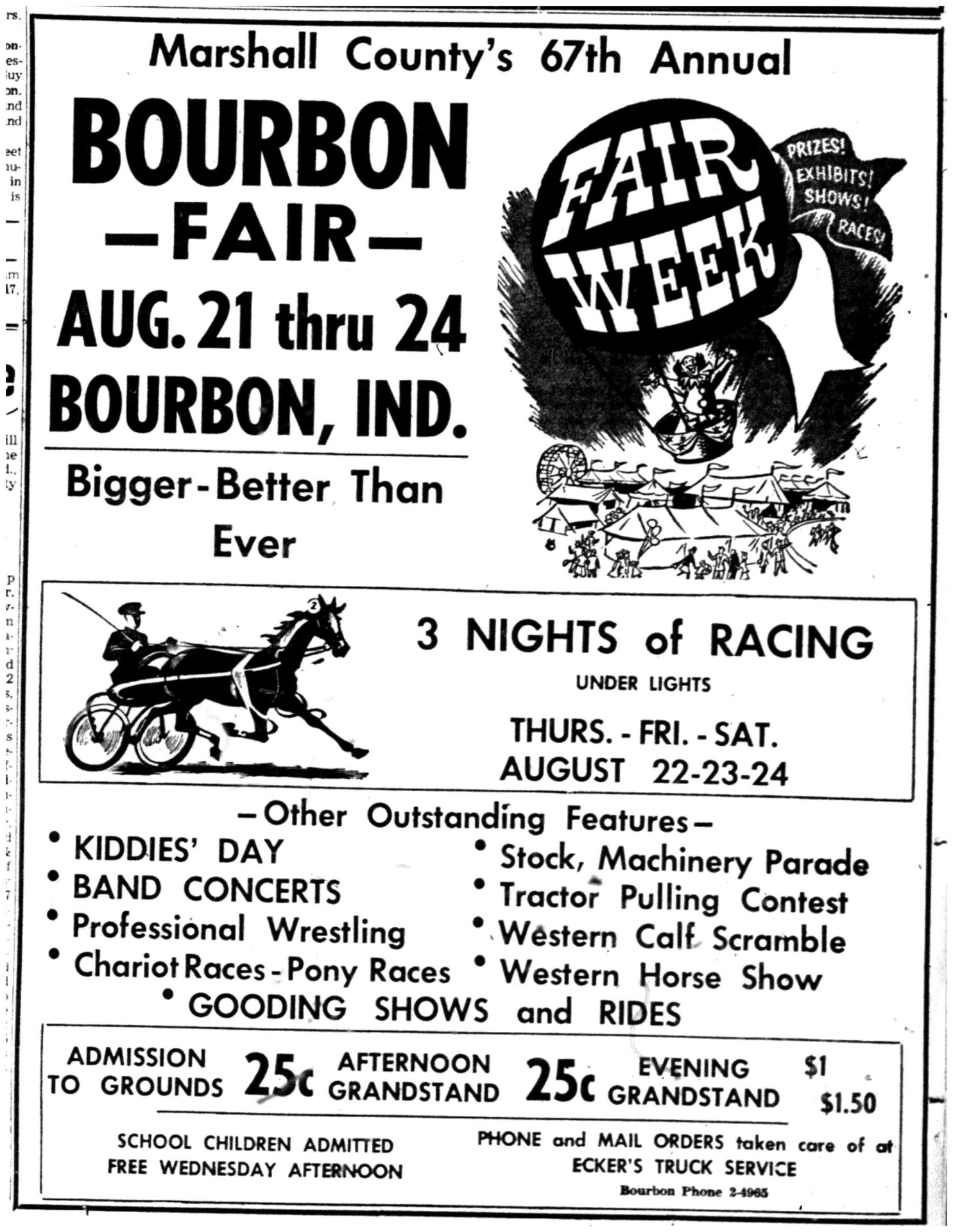
Bourbon Fair, 67th Annual poster.
The Museum is open from 10 until 4 from Tuesday through Saturday at 123 N. Michigan St., Plymouth. For more information, call 574-936-2306.