Entertainment in the Good Old Days

Entertainment in the Good Old Days

Long before the entertainment overload of today, Marshall County youth had some interesting ways of creating their own fun. They did have theaters, but much of the time, they relied on simple things dictated by what was at hand, our location and the weather. The following collection is from oral histories in our archives.

Performing Arts

“The Orpheum Theater cost a nickel. It was on, oh, just a little way north of Washington Street on Michigan, where the old Orpheum was. They’d have Saturday afternoon matinees for a nickel.  And there were shows, there were some outside shows, tent shows, down on, in the area where the fire station parking lot is now, on the corner of LaPorte and Center Street, just a block south of the library.”  Stanley Brown

Large group of children posing for image on snowy day

The Orpheum Theatre in Plymouth, Indiana.

“About playing piano for the silent movies in Plymouth – When I played, I played for the big sum of $3.00 a week, and six nights a week, 7:00 to 10:00 on the weekdays. On Saturday nights it was seven ‘til 11:00, and it was nickel shows, you know, every night, and we had songs. They used to have sing-a-song, you know, and the words, and the little ball would bounce up. And I’d play for that, and that song came along with the film. We had a girl or boy, a singer, and that was all they done, was sing that song at every show.”  Etta Steiner

 “We had travelling stage shows quite often. They would come and book a week’s time at the opera house.”  Beatrice Pickerl

Seasonal Fun

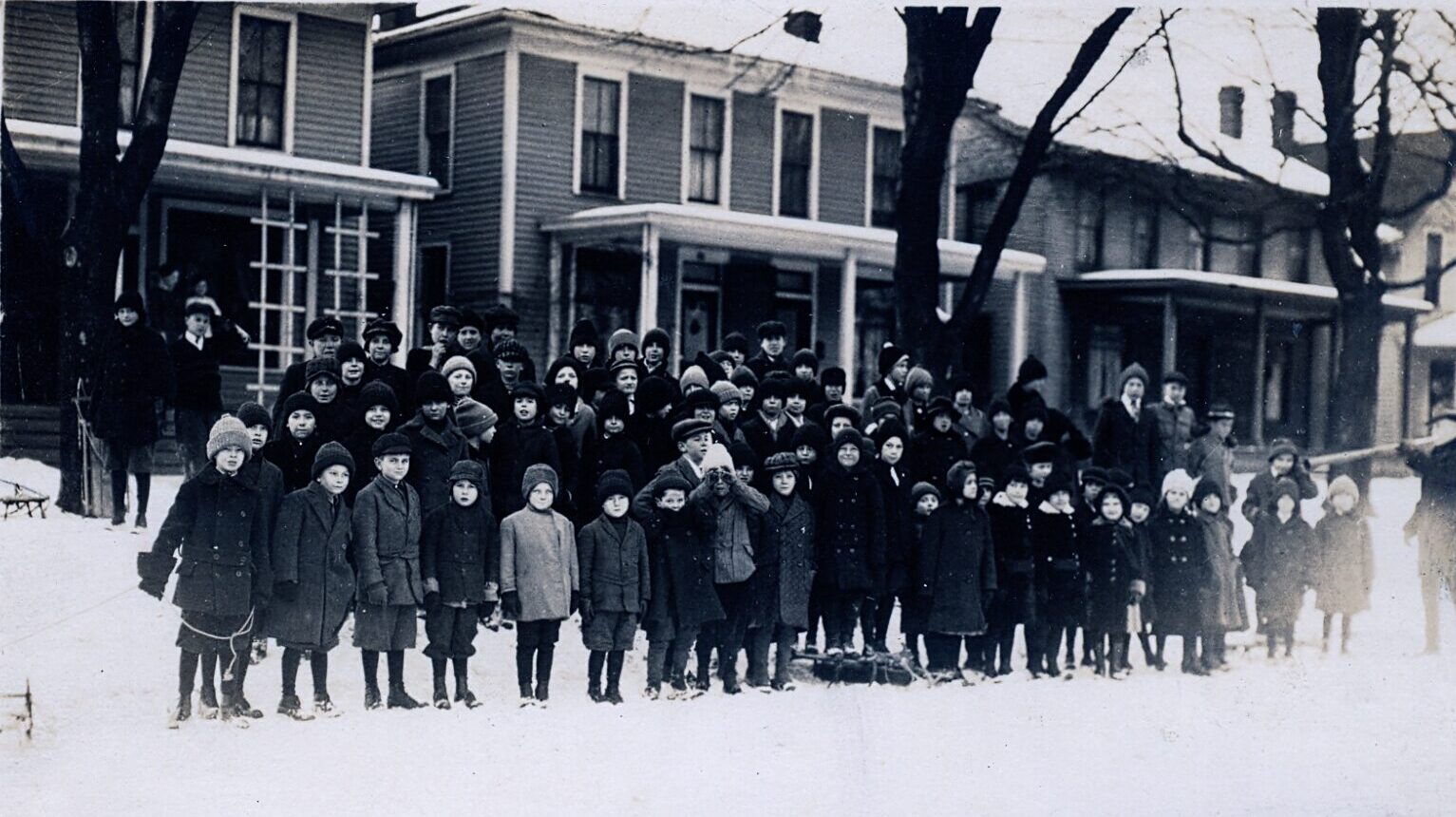
“We had sleigh ride parties and bobsled parties.  And on the bobsled parties whenever you went under a streetlight, you got to kiss the girl that you were with.  There were not very many streetlights in those days.”  Morris Cressner
Large group of children posing for image on snowy day

Sleighing party for city kids, 1916.

“You’d listen the first morning of cold weather, the first snowy, icy morning, see if you could hear Uncle J. T.’s sleigh bells. Uncle J. lived north of town (Argos), probably a mile and a half, might be two miles. And Uncle J. always had his sleigh out first, and he was the only person that the children of the town, that I knew best, could go riding with without running home and asking their parents. But if Uncle J. had his sleigh, we would go with him, and he’d take us a very nice fast ride down to the Nickel Plate Railroad.”  Beatrice Pickerl

The Joy In the Everyday

“Used to be a train come in and my brother and different ones would walk over to Tyner to see it come in, and I believe every Friday or Saturday night from South Bend. That was a big thing.  It was called the Cannonball. It would come in at 10:00.  And the depot was right below our house here. That was their entertainment, was to come and watch the Cannonball.”  Ray Jacobson

“They had the old [gas] street lights in Plymouth, and a man had to go around with a long pole and pull them down and light them by hand. He’d put a match to them and put them back up.  Kids at night, after they got that light lit – one of our forms of fun was catching bats. There used to be a lot of bats around. They’d fly around those lights. We’d throw our caps up and every once in a while, we’d get a bat in them.”  Stanley Brown

Black and white image of street corner with three story building and a few people walking by. In the forefront, there is a gas lamp hanging from a wire.

Bourbon street scene with gas street light.

Social Get-Togethers

“What progressed into hockey we called shinny. We used sticks and tin cans.”  Homer Riddle

“We used to have spelling bees at the school house. And we’d spell, and the old people as well as the young would be in that, don’t you know. They’d all stand up and then when you missed a word, you sit down, and then the last one that stayed up got a prize.”  Alta Listenberger

“We used to have box socials. The girls would take a box of food and then they’d auction it off and the boy that bought it, he wouldn’t know whose he’s buying, don’t you know, because they’d decorate these boxes up beautiful. And then the boy that bought them would eat with the girl. He wouldn’t know ‘til he got the box unless she’d tell him or, you know, the girl he liked would tell him which was her box. But otherwise they kept that a secret. Sometimes you’d eat with an old man. I’ve ate with old men, you know, some old farmer, instead of eating with the boy I wanted to eat with because he paid the most for the box.”  Alta Listenberger

Learn more about everyday life in Marshall County by visiting our Museum!
Travelers on the Orphan Train

Travelers on the Orphan Train

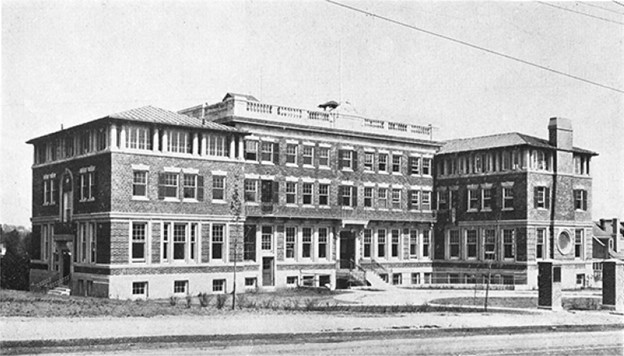
In 1892, Plymouth was a stop for an “orphan train” that transported thousands of children. They came from the streets of New York and New England to new homes in the Midwest. From 1854-1929, nearly 4,000 orphans, ranging from ages 1 to 12 were brought to Indiana. All together almost 250,000 “little waifs” climbed aboard the orphan trains and headed west in search of a family. They got off the train with name cards pinned to their clothing. Many were orphaned not only by the death of a parent, but because of poverty and neglect, and would have died on the streets. The image above features the New England Home for Little Wanderers of Boston. Rev. H.S. Kimball, an agent of the home, preaches at the M.E. Church in Argos.

Who Took In Travelers from the Orphan Train?

Children from the orphan trains were placed in homes depending on the needs of prospective adoptive parents. Sometimes their own child had died and they were seeking to expand their family. Some older couples needed someone to look after them, or a farm family needed an extra pair of hands to help with the chores. Some of the agricultural families believed the abandoned children should work to “earn their keep.” Sadly, some siblings went to different homes. The orphans were at the mercy of their adoptive families.

Locally, 26 orphans found permanent homes in Marshall County from the New England Orphan’s Home, although the supply didn’t meet the demand for these kids. “The children were the objects of considerable attention,” according to an edition of the June 1892 Plymouth Democrat. The orphans, gathered at the Methodist church in Plymouth, hoped to win the hearts of a new family. The would-be foster parents could specify exactly what they wanted. For instance, a blue-eyed blonde female, or a sturdy red-headed male. Some orphans were luckier than others. Many were placed loving homes with caring families, but others lived a life of hard farm labor. It seemed a bit callous, but “beggars couldn’t be choosers.” Although every situation was unique, adoption was perceived as better than life on the streets.  

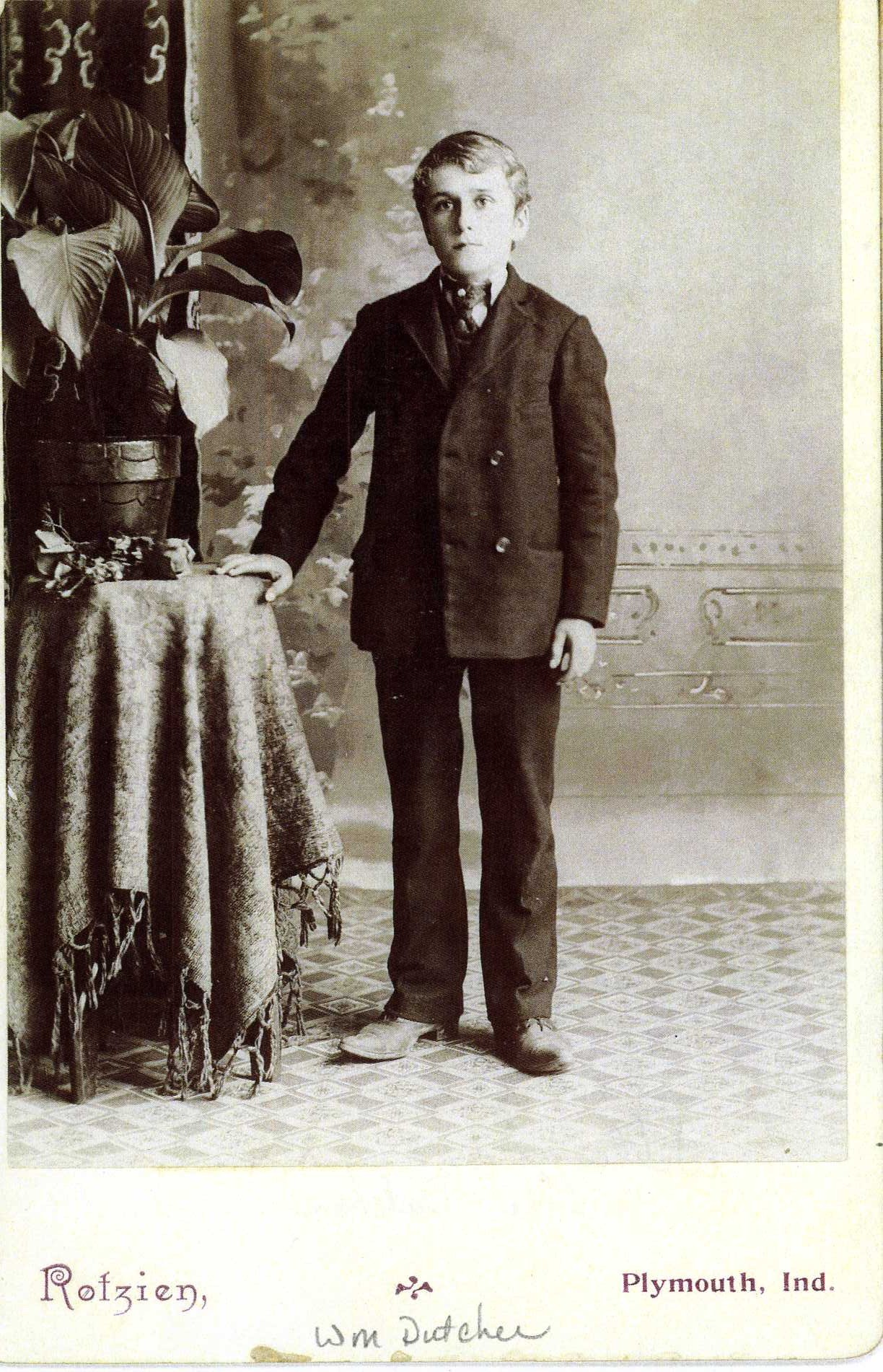
Young boy posing for image with hand on table

The Good and the Bad of Adoption

One of the grown-up orphans that made her home in another state, Jesse Martin, said that being an orphan train rider taught her to have more understanding of people’s pain. She never felt like she fit in. She said the children at school would say, “No one cares for you, not even your own mother!” She says she simply became grateful for the kind people along the way.

Not all these little wanderers had such an unhappy experience. Many found good homes and received the best of care. One particular child caught the eye of a new parent that was grieving from the loss of their own. According to an article from the 1990 Herald Banner, (Greenville, Texas) Helen Hale Vaughn said that her mother would become very angry at anyone who referred to her as their “adoptive” daughter. Whenever Helen would come home broken-hearted, her mother would embrace her and say, “You just remember, we chose you, and they were born to their parents, so they had to have ’em!”  

The Legacy of the Orphan Train and Its Travelers

Some of the orphans given an opportunity for a new life prospered and flourished in their new environment. Many orphan train children went on to live long productive lives and were able to enjoy their grandchildren, and many times great-grandchildren. They weren’t looking for fame and fortune, but a better life and “to love and be loved!” The orphan train provided a means for these children to have the will to go on and made survivors out of them.

For more specific information on the local impact of the orphan train, visit the Marshall County Museum and enjoy the research done by Christopher Chalko who spent time collecting data, newspaper articles and personal letters of people that actually rode the orphan train. It’s interesting reading material that is a part of our history in Marshall County and across the United States.