Culver Man Remembers Pearl Harbor

Culver Man Remembers Pearl Harbor

By: Bill Freyburg, P-N Staff Writer

December 5, 2024

This article was originally published 30 years ago in 1994. The story of Rinesmith’s stint in the Navy during World War II is interesting, especially as so few people are alive today who lived through that time.

Jim Rinesmith of Culver served on three U.S. destroyers during a 20-year career as a torpedoman in the U.S. Navy. He was blown off the side of one of them, thanks to a kamikaze. The bow of another was practically sheared off  by a destroyer in the U.S. fleet and from a third, Rinesmith loaded shells into a five-inch gun, firing at Japanese planes during the attack on Pearl Harbor.

By now, not as much is made of “Pearl Harbor Day” – December 7, 1941. The 53rd anniversary of the “day that will live in infamy” in the words of President Franklin D. Roosevelt, passed rather quietly this week.

But Rinesmith remembers it vividly. He was a 23-year-old and serving aboard the USS Bagley at Berth 22, across Pearl Harbor from “Battleship Row,” that Sunday morning in the Hawaiian Islands. The Bagley was in for repairs of a keel; it was receiving electricity, steam and fresh water from the dock.

Rinesmith had finished breakfast in the mess hall and was going back to his bunk when he looked out a porthole and saw an airplane strafing the area and dropping a torpedo. “I woke the guys up in the bunks and shouted, ‘There’s a war going on!’,” Rinesmith said in an interview from his home at 423 State St. this week.

“I saw the Oklahoma get hit. We started firing. I was on the five-inch gun, loading shells. I don’t know if we hit anything, but the ship got credit for five torpedo bombers.” The attack came in at 7:50 Honolulu time, and it ushered the United States into World War II.

It took a little over an hour for the Bagley to build up its own steam and get underway. She was not damaged. The crew was relieved to find the Pacific Ocean free of Japanese war ships once the ship cleared the harbor.

During the next 18 months that Rinesmith was aboard, the Bagley provided cover screening for larger ships and participated in a number of big operations including the American landings at Tulagi and at Guadalcanal in the Solomon Islands.

“We never got a scratch in all that time,” despite numerous battle actions, the Culver man said. One of those came in February 1942 as the Bagley helped escort two convoys on their way from the Panama Canal into the Southwest Pacific.

After a foray against the enemy stronghold of Rabaul was aborted when the U.S. task force was discovered, Japanese planes attacked the Americans. The Bagley fired away and as she did so, crew members including Rinesmith watched as one daring U.S. fighter pilot darted about the sky shooting at  and hitting the attackers.

He was Lt. Edward “Butch” O’Hare, and he downed five enemy bombers in four minutes of action, becoming the first U.S. Ace of the war and winning the Congressional Medal of Honor. O’Hare International Airport is named for him.

Rinesmith left the Bagley on May 31, 1943, to attend torpedo schooling in the States. He had served on the ship since October 20, 1940. During part of that period, his brother was also a torpedoman on the ship. Robert D. Rinesmith was a member of the original crew when the Bagley was commissioned in 1937 and served until October 13, 1941. “He left just in time,” said the 76-year -old Jim of his 78-year-old brother, who lives in Phoenix.

In Septembr1943, Rinesmith was assigned to the USS Haraden, another of the hundreds of sleek, fast destroyers that protected larger ships and hunted submarines. He was a crew member until 1946 when the ship was decommissioned. The Haraden saw considerable action, including island landings in the Marshall and Gilbert islands in the Pacific. She wasn’t as lucky as the Bagley. On Friday, the 13th of December, 1944, the Haraden was in a task force that came under attack in the Marshalls. Rinesmith was at his battle station in the No. 1 torpedo mount when a Japanese plane came through a barrage of anti-aircraft fire heading straight for the ship. “We were one of the first ships in the war to be hit by a kamikaze (suicide plane),” said Rinesmith.

The wing of the plane swept the starboard side of the Haraden, and the body of the plane plunged into a smokestack near Rinesmith. “The chief (torpedoman) on the other side of the mount was killed,” Rinesmith said. “I was blown over the side into the water. I looked around for another ship, and there came an aircraft carrier right at me.”

“At the last minute, she did a hard right and threw a lift raft, but I couldn’t get to it. There was a kid with me. We looked around for sharks, but didn’t see any, but we had seen sharks before the battle. We were in the water for about an hour when another destroyer picked us up. We found out later that 14 were killed, and 67 were wounded on the Haraden.”

Rinesmith was hit by some shrapnel and had minor burns. He spent Christmas of 1944 in a Navy hospital on Manus Island, got out on December 26 and rejoined the Haraden. The ship was repaired at Bremerton Navy Yard in Washington state and served out the war in the Pacific.

After the Haraden was decommissioned, Rinesmith was assigned to his third destroyer, the USS Higbee. He said the ship was the only one at the time named for a female, Lena Higbee, a Navy nurse.

It was peacetime, but Rinesmith’s adventures weren’t quite over. The Higbee was bound for China in 1946 when another destroyer cut across her bow. “Three days later, the bow fell off, and we backed 900 miles to Pearl,” he said.

Rinesmith has the Navy to thank for his marriage. He met his wife of 51 years when he was attending torpedo school in Newport, RI, in 1941. She was a civilian payroll clerk there. They corresponded after he returned to ship duty. When he was sent to Newport for more schooling in 1943, he popped the question, and she gave the right answer. They were married on September 14, 1943, with a crewmate as his best man.

Rinesmith attended the reunion of the Haraden in Twin Mountain, ME, last July (1993). Forty-three men of the 325-man crew were there. He says he recognized only two or three of them at first look but remembered many of them by name.

The Marshall County Historical Society & Museum’s volunteers work to preserve articles such as these about local people. Our archives are full of fascinating stories like this one. We are open from 10:00 until 4:00, Tuesday through Saturday, at 123 N. Michigan St., Plymouth. Call us at 574-936-2306. Stop in anytime.

Accomplishments of WPA in Marshall County

Accomplishments of WPA in Marshall County

In our U.S. history classes most of us gained a passing acquaintance with President Franklin Delano Roosevelt and his Works Progress Administration program that helped Depression-era workers get back to earning a paycheck. The projects were wide ranging geographically as well as in type. Everything from buildings to bridges were constructed or improved. WPA workers built roads, dams and hatcheries, just to name a few. Below is an article published in the June 5, 1940, edition of the Culver Citizen about the impact the WPA had on Marshall County. It has been lightly edited to improve readability.

The Works Progress Administration constructed eight new buildings, reconstructed or improved five others and paved or improved 78.5 miles of highways, roads and streets, according to a survey released today by John K. Jennings, state administrator. Jennings said the survey was the first all-inclusive one to be made of WPA accomplishments in Marshall County. It includes all major projects since the start of the work-relief agency in August 1935. The survey said that a total of 729 Marshall County men and women who lost their jobs in private industry have been given WPA work-relief at one time or another.

Almost all the WPA roadwork centered on improving farm-to-market roads, of which 71.8 miles were bettered. In city street and alley work, the WPA improved a total of 4.1 miles. Of that, it laid new paving on 2.3 miles.

The WPA constructed a new warehouse for the Plymouth City Hall, a bathhouse at Culver, a hatchery clubhouse (Isaac Walton Leaugue), a barn at Magnetic Park in Plymouth and one other building at the same park (Conservation Clubhouse). In reconstruction and improvement work, the WPA bettered the Marshall County Courthouse, highway garage, jail and infirmary (Shady Rest Home). It improved the school at Inwood, Lincoln High School Athletic Field, Culver Park, Bremen Cemetery, and Huff Cemetery in German Township.

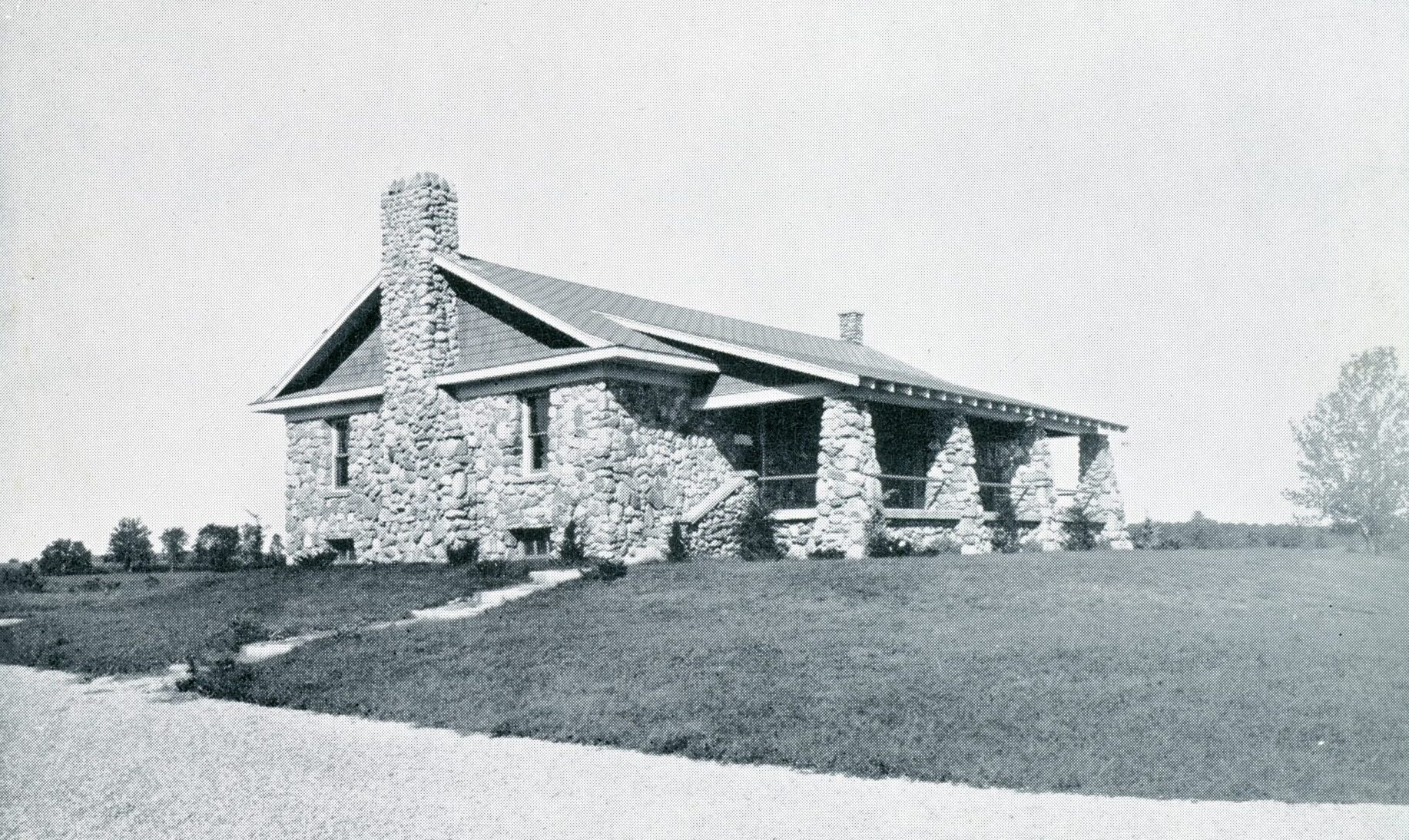
Isaac Walton League Clubhouse in Argos, IN.


In miscellaneous construction work, WPA employees built a dam at Plymouth having a storage of 300 acre-feet, the Magnetic Park fish hatchery which now has a capacity of 10,000 fingerlings, and the Argos Fish Hatchery with a capacity of 375,000 fingerlings annually. Magnetic Park, 17 acres, and Centennial Park, 35-acres, both in Plymouth, also received improvements.

Throughout Marshall County, WPA workers reconstructed or improved 26 steel bridges measuring 2,356 feet, improved 352 miles of roadside drainage, paved 4.8 miles of sidewalks and paths, laid 7.7 miles of curbs and seven-tenths of a mile of gutters.

In the utilities and sanitation field, the WPA laid 2.2 miles of water mains, aqueducts, and distribution lines, installed 5.8 miles of storm and sanitary sewers, made 19 sewerage connections and dug 221 manholes and catch basins. Nearly 1,200 sanitary privies were erected by the WPA. (These privies had concrete slabs and vaults and were considered more sanitary. They were nicknamed “Eleanors” due to Eleanor Roosevelt’s support for the program.)

More than 2,300 feet of retaining walls and revetments were constructed. One new airplane landing field was built on which runways totaling 5,280 feet were laid. In the professional and service division, WPA workers renovated 2,232 books, turned out 15,183 garments from sewing projects, and completed 5,490 items other than garments such as mattresses, quilts, etc. The sewing products were given to the needy.

The impact of the Works Progress Administration on Marshall County and its residents can hardly be overstated. If you want to know more about the WPA in Marshall County, come into the Marshall County Historical Society. Our research specialists will be happy to help! We are open from 10 a.m. to 4 p.m. Tuesday through Saturday.

The First Soccer Game in Marshall County

The First Soccer Game in Marshall County

During October, thousands of students will be playing on soccer fields around Indiana, looking to capture a sectional title. Parents and grandparents will bring folding chairs, classmates will fill the stands and everyone will cheer for their favorite team.

62 years ago, the Dragons traveled 9.6 miles down State Road 10 to play CMA in the first high school match in Indiana.

Introducing Soccer to Indiana

In 1963, Argos athletic director/basketball coach Ralph Powell was looking for a fall sport to use as conditioning for his team. He had visited Culver Military Academy earlier to watch its intramural soccer program.

“Not only is soccer a good conditioner for basketball because of its bursts of speed and stop-and-go motions, but many of the defensive moves are the same in both sports,” Powell told the Culver Alumnus magazine. “I’m willing to give up an hour and 15 minutes of basketball practice in October in order to play soccer. After 5 p.m., we play basketball.”

That led Powell and CMA athletic director Chester Marshall, who was also the basketball coach, to agree to a five-game series in September and October. Those became the first interscholastic soccer matches in state history.

Local Media Coverage

In building up to the historic event, the September 18 issue of the Argos Reflector ran a team photo and an article giving a brief description of soccer for the uninitiated:

“Soccer, the most widely played of all international team sports, is a game in which the ball is moved up and down a field and scoring is accomplished by manipulating the ball with the feet. Use of hands is prohibited except for the goalkeeper. Soccer is a prominent sport in many parts of the United States. However, it has never been promoted in Indiana.”

Some familiar last names pop out of the caption that accompanies the photo: Hagan, Rice, Snyder, Hand, Umbaugh, VanDerWeele, Nifong, Weidner and Kline – to name a few.

Playing the Game

To help grow the game, Powell and Marshall also conducted a joint meeting at Argos to talk with other high school officials who might be interested in playing soccer. When Argos and CMA squared off in the last game of the season two days later, The Vedette (CMA’s student newspaper) said three area coaches were present to watch. CMA won, 1-0, in what CMA coach Eric Anderson called “the best of all year.”

The series ended with CMA winning four and one game finishing in a draw. CMA did have the upper hand, having offered an intramural program since 1927, thanks to its international student population. The team that played Argos was comprised of all-stars from that program. And, according to an autumn 1963 article in the Culver Alumnus, since many of the CMA players were from Mexico or Latin America, they shouted instructions to each other in Spanish to confuse the Argos players.

The Impact of Soccer

As more schools added soccer to their fall sports list, Argos and CMA continued to play a home-and-home series. They were also founding members of the Northern Indiana Soccer Conference. And the CMA vs. Argos game still gets circled on everyone’s calendar. The rivalry is still that intense 60 years later. This year’s game is September 28 at Argos.

Now, there is a three-class IHSAA soccer tournament with more than 318 boys teams and 280 girls teams participating each season.

And, to think, it all started with a short bus ride down State Road 10 in 1963.


Jan Garrison has covered his fair share of Argos-CMA soccer matches while at The Pilot-News from 1977-1987 and as Culver Academies assistant director of publications from 2000-2021. A big research assist was offered by Jeff Kenney, the director of the Culver Academies Museum & Gift Shop.

Culver’s African American History

Culver’s African American History

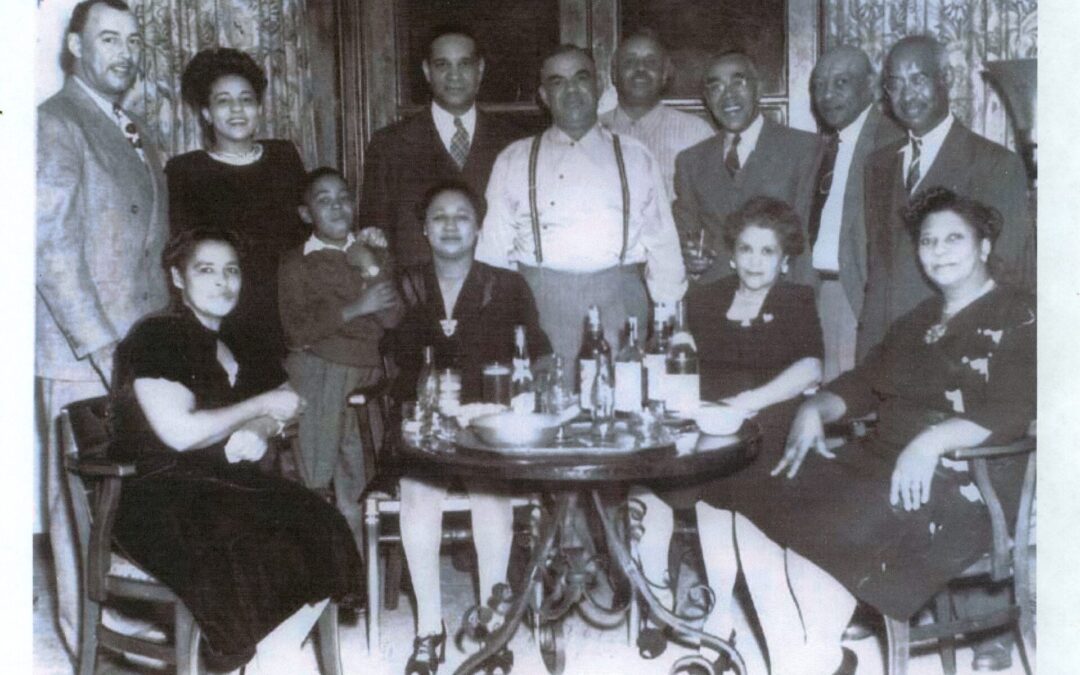
Above: fascinating photo of Culver’s “Cafe Society” pictured in the 1940s. The group was an African American social club which gathered in various homes. Pictured, from left: (seated) Thelma Hodges, LaVeda Pierce, Elsie Byrd and Adelaide Weaver, and standing, unidentified couple, Morsell (Bob) Hodges, Smoke Pierce from Michigan, Charlie Weaver, Ace Byrd, Roy Scott, and Roy Lear. The youth is unidentified. Photo courtesy Thelma Moorehead.

Culver’s history includes a rather unique presence and influence from its African American populace. A glance at early 20th century Culver High School yearbooks reveals a black populace integrated into Culver’s public schools and a part of the community of Culver, a somewhat unusual set of circumstances for a small Indiana town at that time.

Culver’s African American community had its roots in the origins of the Culver Academy, founded by H.H. Culver in 1894. When the only moderately successful school boosted its attendance by merging with students from a St. Louis military school that burned to the ground, there followed a contingency of black employees to Culver from the same St. Louis school. Being the era that it was, African Americans were primarily employed in service roles: domestics, waiters, custodians and the like, and Culver was no exception.

The heyday of Culver’s African American community was primarily between the 1920s and 1960s, after which older residents — retiring and with no reasonable jobs to replace the fading domestic and service jobs that had attracted black workers for decades — remained or were moved away by grown children who had found employment elsewhere. According to many residents of the day, Culver’s African American populace, which tended to be more middle class and educated, were fairly integrated into the community at large.

The Culver Military Academy, nearly from its outset, employed black help on its grounds. Perhaps most visible was its ongoing group of African American waiters. Today’s Academy students are accustomed to a cafeteria-style buffet dining experience, but until the late 1950s, meals were served to cadets by African American waiters, the leaders of whom became well known and beloved to many students and faculty over the years.

Some of these individuals become iconic members of the community, particularly the Academy community. Roy “Sheep” Scott held court at Culver Academy for decades in a number of roles, including overseeing the janitorial staff. He also became an unofficial “counselor” to students, many of whom adopted him as a beloved confidant and sounding board for any number of personal and academic problems. Scott, as was true of many of the long-term African American staff at CMA, was a resident of Culver for years, living on the south end of town. His daughter Thelma returned from a teaching career with her husband Bob Hodges and became one of Culver’s more prominent citizens until her death in 1990.

Thelma, an antiques collector, became manager of Country Cousins Antiques on the west side of Main Street in downtown Culver and taught antiques classes at Ancilla College. She was also active in local politics and real estate, and was a member of Wesley United Methodist Church, where her funeral was held in 1990.