Remembering the Argos Boy Scouts: A 1950s Story
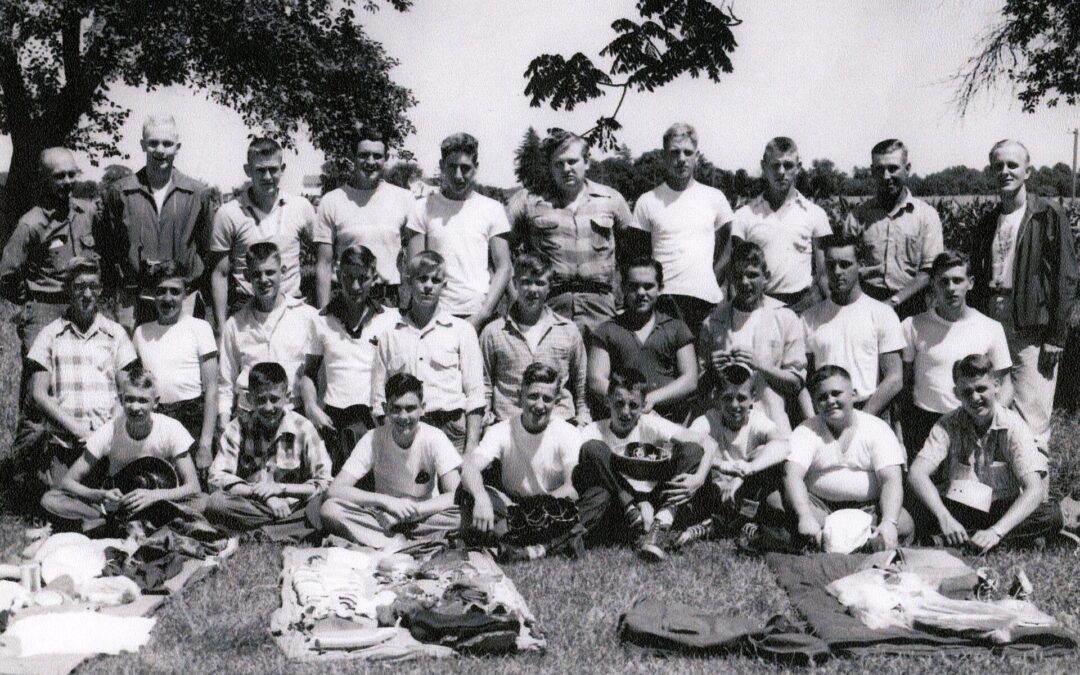
Feature Image. Argos Explorer Scouts two weeks before their canoe trip in Wisconsin, ca 1954.
First Row (Sitting L-R):Mark Dunlap, Gene Good, Jim Free, Robert Kepler, Eugene Snyder, Maurice Hagan, Steve Gonce, Art Redinger, Larry Gordon.
Second Row (Kneeling L-R): John Drapalik, Jim Herrin, Sonny Kepler, George Stults, Ted Hooker, Terry Gonce, Ross Mackey, Walter Gordon, Robert Grossman.
Third Row (Standing, L-R): Edwin Pearson, post committeeman; Bob Brooks, write for Boys’ Life Magazine; Jack Overmyer, Dick Shunk, Ed Hill, Nick Kring, Warren Davis, Jarrell Hagan, Henry Kepler, post committeeman, and Bruce Van Der Weele, post advisor.
By Kerri Langdon-Martin and Jon VanDerWeele
In the 1950s, scouting was woven into the fabric of American life. Troops gathered weekly in church basements or school gyms, boys wore their uniforms with pride, and weekends often meant pitching tents in nearby woods, cooking over open fires, and learning skills that built confidence as much as character. For many small towns, including Argos, the local Boy Scout troop was a source of pride, shaping young men into leaders while giving them a sense of adventure and belonging.
An Argos Troop Goes National
For the Argos troop, one of those campouts would become much more than a local memory. What began as an ordinary weekend in Wisconsin turned into a moment of national recognition when their camping adventure was captured on Walter Cronkite’s CBS radio program You Are There and later profiled in Boys’ Life magazine. Suddenly, the values lived out by a handful of boys from Argos were being shared with audiences across the country.
At the time, You Are There was a groundbreaking program that invited viewers to “experience” stories through the lens of radio journalism. For Cronkite, turning the attention on a troop of scouts from Indiana was a way to illustrate the deeper values behind America’s youth movements: teamwork, outdoor education, and civic responsibility.
The segment features the Argos Scouts from the 1950s. National attention was drawn to the Argos Scout troop because what may have felt like a one-of-a-kind campout for the boys quickly became an extraordinary camping adventure. Families from coast to coast saw the Argos troop as a living example of what scouting represented in the 1950s.
Plymouth Cycle Manufacturing Co.
At the same time, Boys’ Life, the official magazine of the Boy Scouts of America blending real-life adventure with educational content, carried their story into print, offering readers across the country a closer look at the Argos scouts. The publication, read by millions of boys and their families, amplified the troop’s recognition and cemented Argos as part of scouting history.
Decades later, as part of a commemorative project spearheaded by the Marshall County Historical Society, video interviews were conducted with George Stults and Gene Snyder, two individuals who led the Argos troop. Museum staff were able to stitch together portions of the interviews with photos from the era, the Walter Cronkite program and clippings from the Boy’s Life article to produce a video. Stults reflected warmly on the values that scouting had instilled – teamwork, perseverance, and a commitment to service. He recalled how being in Boys Scouts instilled connection with community and gave the scouts of Argos a sense of pride and recognition beyond their small community.
Snyder, whose family also has deep roots in Argos, shared his perspective of how leadership, pride, and service instilled intergenerational bonds with scouting – how fathers, uncles, and local leaders all played roles in guiding the boys and building a community. Together, their interviews preserve the memory of a unique cultural moment while affirming the timeless values of scouting.
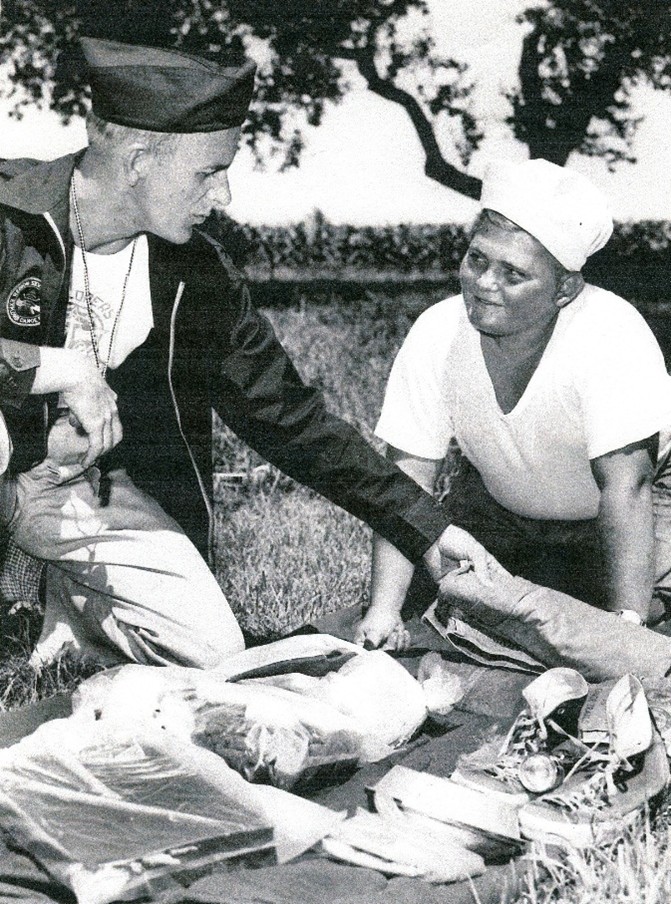
A 14-year-old Steve Gonce receives packing advice from Explorer advisor Bruce VanDerWeele before their 1954 wilderness trip.
The Argos troop’s national recognition may have been unique, but the spirit it represented was shared by thousands of troops across the country. In the mid-20th century, scouting stood as one of the most influential youth programs in America. Its focus on character, citizenship, and outdoor skills connected to the era’s emphasis on building strong families and strong communities.
In Argos, as in many towns, the Boy Scouts were more than a pastime. They were part of the community’s identity, a place where boys grew into men who would carry forward values of service and leadership.
The MCHS Museum has many artifacts dedicated to the history of scouts in our Boy Scouts Room upstairs. Our Museum is open Tuesday to Saturday from 10:00 am to 4:00 pm.