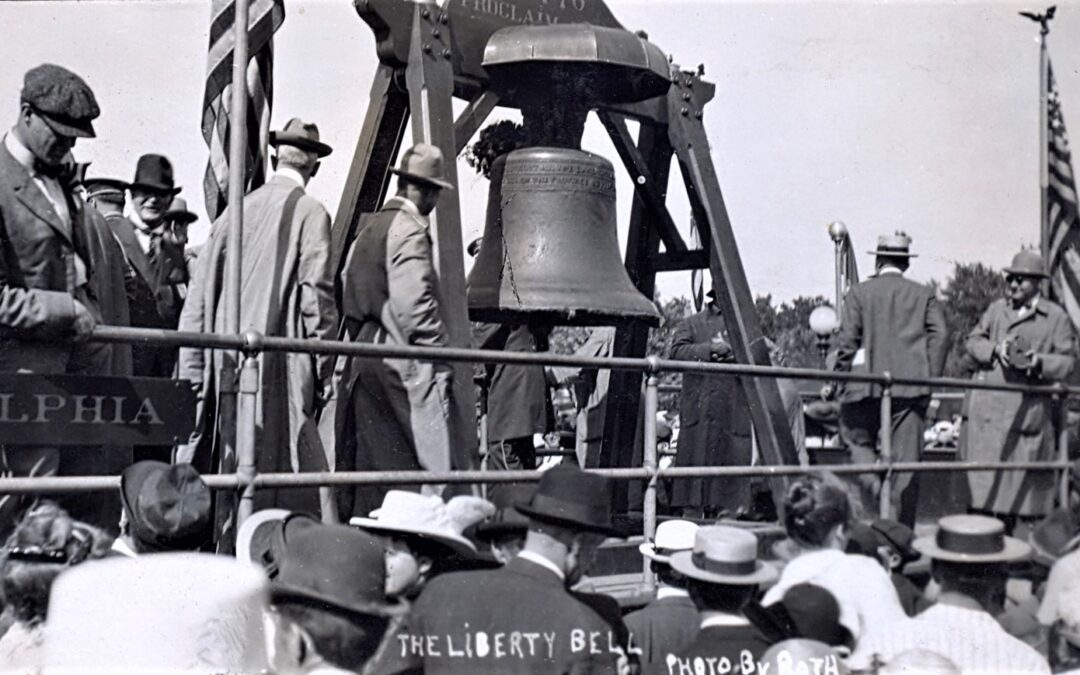
We can’t show you the Liberty Bell, but don’t miss the opportunity to stop in at the Marshall County Museum between October 14 – 25 to visit The American Revolution Experience, a special exhibit sponsored by the National Society Daughters of the American Revolution and the American Battlefield Trust. Stop in any time from 10 a.m. to 4 p.m.
A Tour Around the Country
Most Americans love the icons that represent our country. The Washington Monument, the Lincoln Memorial, the Statue of Liberty – and the Liberty Bell. Many of those famous symbols cannot come to visit us, but the Liberty Bell could and did!
The Liberty Bell had always been popular, but its national tour around the country in the summer of 1915 really vaulted it into the consciousness of the American people. In 1915 the United States was on the verge of entering World War I and the powers that be in Washington, D.C. felt that some symbol to unite the country was needed before they announced any decision about entering the war.
The Panama-Pacific International Exposition in San Francisco was being planned to celebrate the completion of the Panama Canal. It would be the first World’s Fair to be held on the West Coast. San Francisco’s mayor, James “Sunny Jim” Rolph, got the idea to have the Liberty Bell brought out to San Francisco for the fair. He was joined by many others, including publisher William Randolph Hearst. The Liberty Bell had been exhibited from time to time in various places, including the 1893 Columbian Exhibition (World’s Fair) in Chicago, but had never been west of St. Louis.
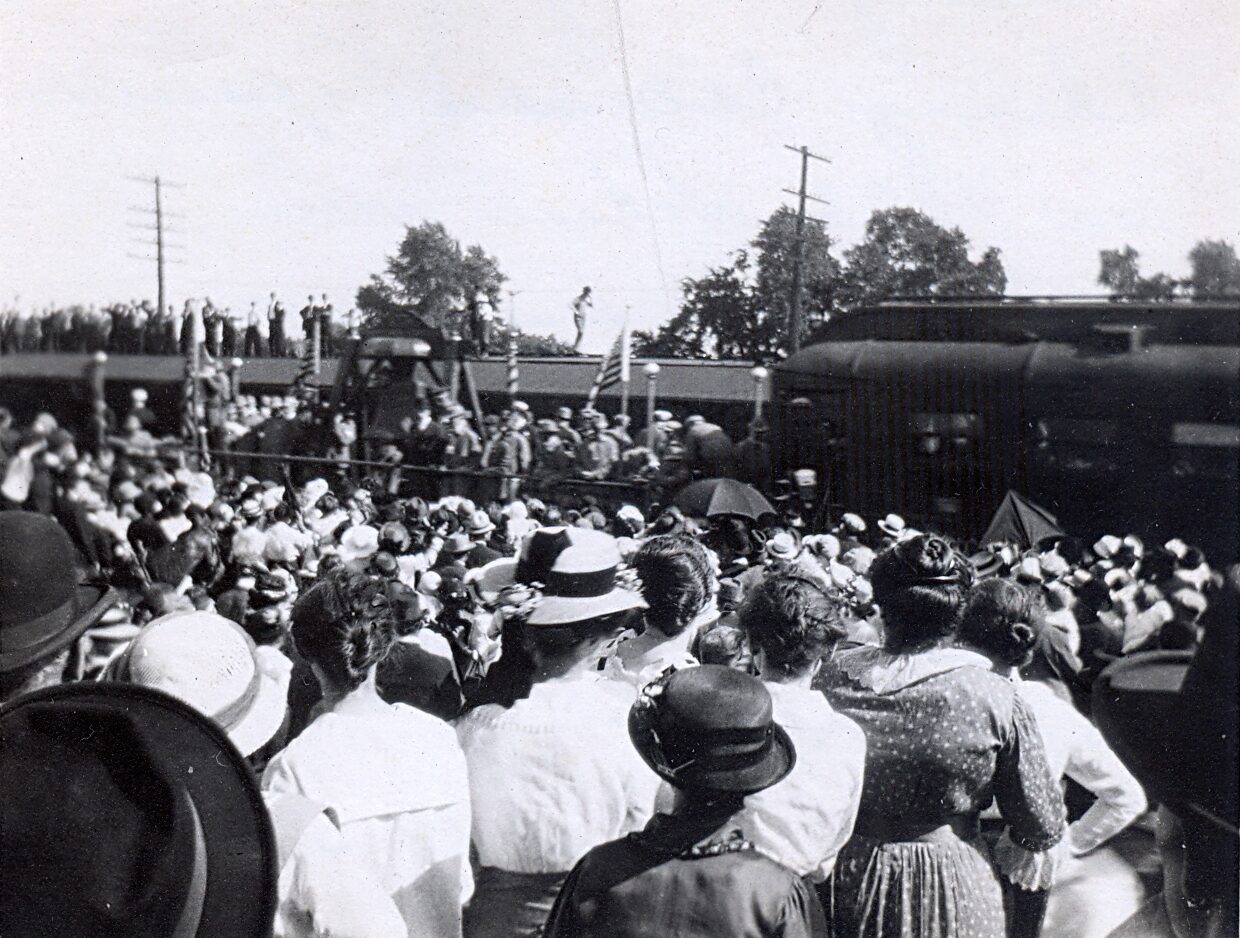
Liberty Bell as it rolls into Chicago ca. 1893.
The idea was that if the Liberty Bell came to California, it would help connect the newer western part of the United States with the older eastern area and help westerners identify with their country’s early colonial history. When the idea was first proposed, Philadelphia mayor Rudolph Blankenburg was all for it, but it was opposed by other politicians. However, when the ship Lusitania was sunk on May 7, 1915, with the loss of 128 American lives before we even entered the war, the resulting cry of outrage helped the City of Philadelphia decide not only to let the Liberty Bell go to San Francisco, but also to make a whistle stop tour of America.
The Pennsylvania Railroad put together a designated train for the tour, the Liberty Bell Special. The railroad constructed the best cushioned rail car in history with the biggest springs ever used. On July 5, 1915, after a local celebration at Independence Hall, the train pulled out of Philadelphia with the Liberty Bell riding on its custom car.
Getting the Bell to Plymouth
Plymouth Mayor Whitsell and Col. Thomas Twomey persuaded Philadelphia’s Mayor Blankenburg to rearrange the tour schedule to include a stop in Plymouth. Col. Twomey showed Mayor Blankenburg that Plymouth was the central point between the Fort Wayne and Gary stops and convinced him that the train could stop in Plymouth and break its long run across the state.
Among the places the Liberty Bell would visit on its northern route to San Francisco were Pittsburgh, Chicago, Kansas City, Denver, Seattle and, of course, Plymouth. Coming back to Philadelphia, its southern route went through Los Angeles, Tucson, Fort Worth, Dallas, New Orleans, Memphis, Louisville, Cincinnati and Cleveland. The train encountered a huge number of people at every stop. They were thrilled and excited, and they wanted to see and touch the Liberty Bell. One man in Kansas City who touched it was a former slave, now 100 years old.
The Liberty Bell arrived in San Francisco on July 17 and was on exhibit for four months at the fair, displayed on a 400-year-old Persian carpet. Each evening, guards removed it from the platform and placed it in an earthquake-proof vault. It was the biggest draw at the fair and actually made the San Francisco fair a success. Politically, the Liberty Bell also united the American people behind the resolve to enter World War I.
The Liberty Bell arrived in Plymouth on July 6, 1915, at 2:53 p.m. for five minutes, moving on at 2:58 p.m. And what a five minutes it was. More than 4,000 people came to see the bell at the Plymouth Pennsylvania station. The crowd was orderly, and everyone got a good view of the railroad car and the bell, including the famous crack. A local newspaper said, “It was history reanimated into life.” The Bremen town band was playing when the train pulled into the station and gave a concert in the evening.
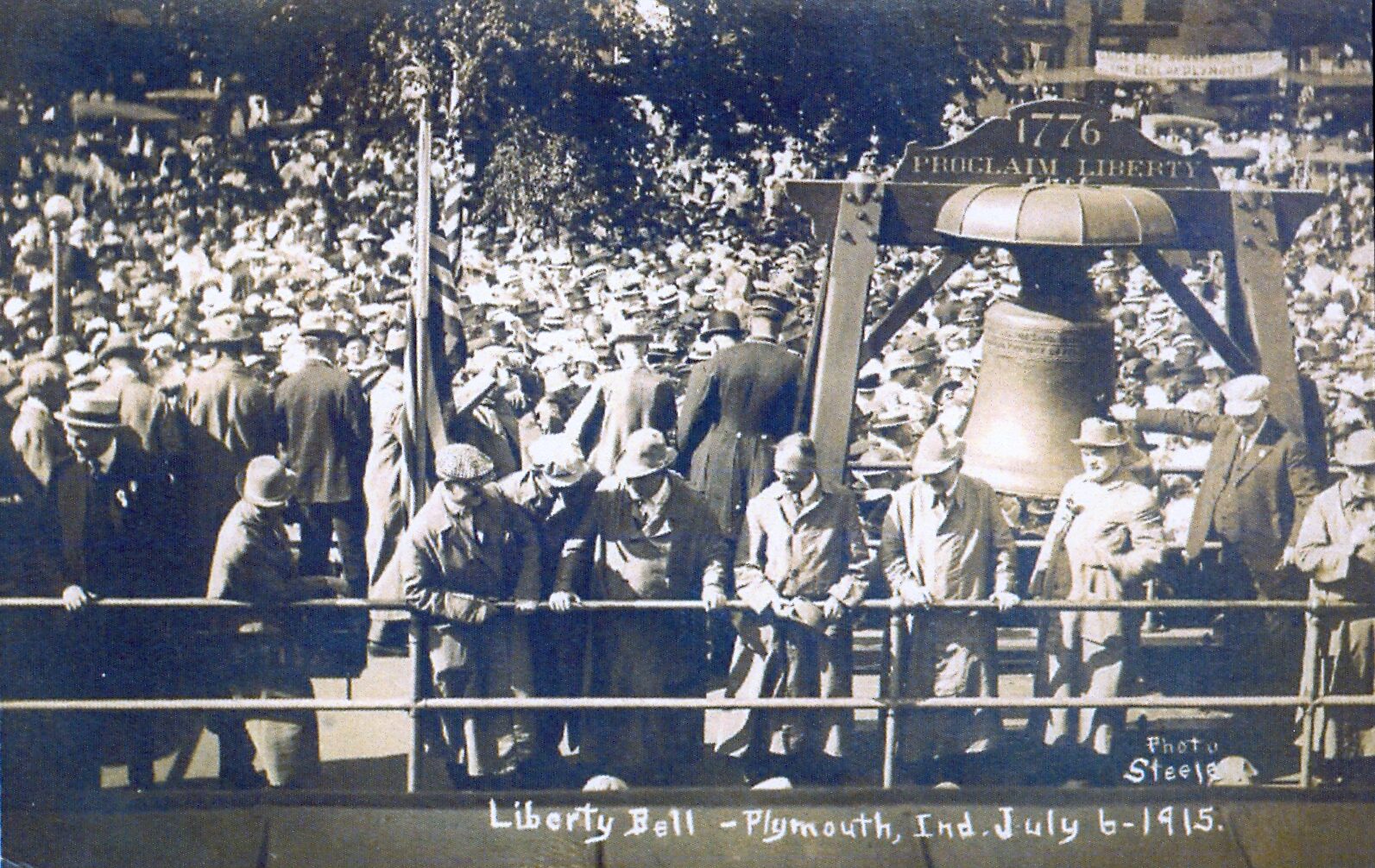
Liberty Bell in Plymouth, 1915.