
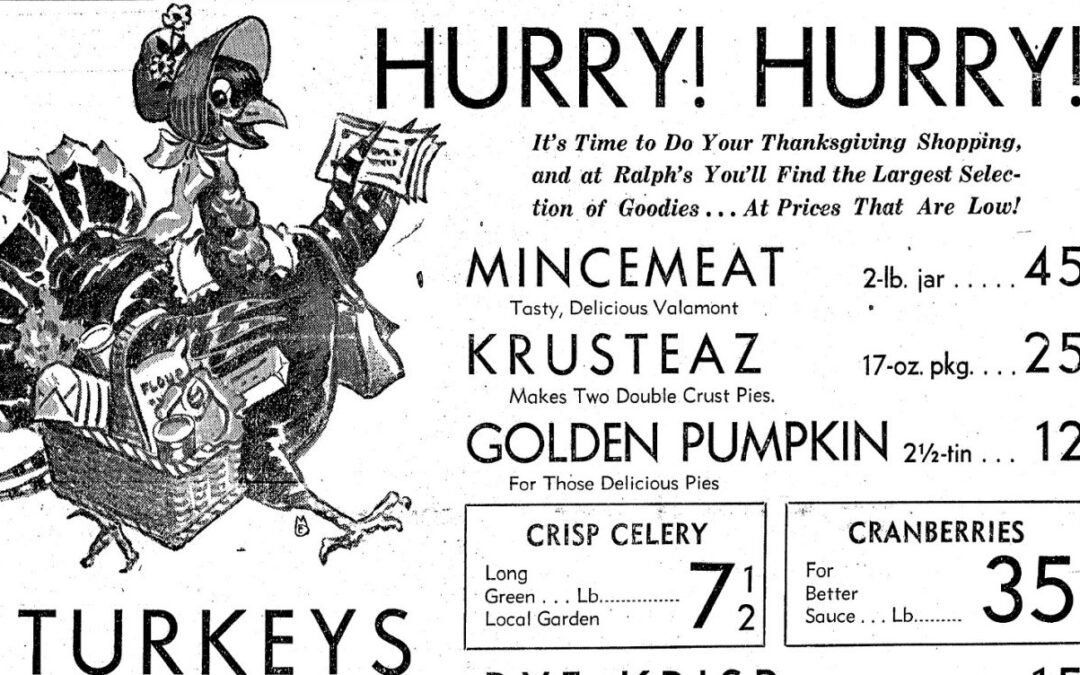
After celebrating Veteran’s Day, and as we get ready to celebrate Thanksgiving, it’s a good time to look back to wartime holiday celebrations, particularly during World War II. So many of the things we take for granted were adversely affected by Word War II, even the emotions of Americans. In 1944, Thanksgiving headlines were “50,000 Nazis Trapped on Rhine” and “Germans Fire Rocket Bombs at U.S. Army.”
Not all Americans celebrated Thanksgiving on the same day either. In 1941, federal legislation changed the date from the fourth Thursday of November to the third, but a few states were still celebrating on the later date. Favorite holiday traditions were suspended during the war. The famous Macy’s Thanksgiving Parade had not been held since 1941, as the company donated the rubber used in their balloons to the war effort. The Detroit Lions, who had hosted an annual Thanksgiving game since 1934, put this tradition on hold from 1939-1944.
Kindness & Gratitude During Thanksgiving
Many hospitable families filled empty spaces at their own Thanksgiving tables with servicemen and women stationed nearby. Because of the ongoing war effort, many people were employed in defense- related industries. Production never stopped, so families had to schedule family time around shift schedules. Travel was difficult because of gas and tire rationing. Americans were encouraged to leave empty bus or train seats available for servicemen and women on furlough.
The war directly influenced food choices, again due to rationing. Imported foods like coffee and sugar, foods that needed to be shipped long distance, processed foods like cheese, butter, margarine and canned fruit were rationed. By 1944, there was great reason to be thankful though, because red meat was available again.
Planning Ahead During WWII
Rationing required a lot of advance planning. People saved rations for the big day! Newspapers published rationing calendars that listed which rationing stamps could be used and when for what products. Cooks could save their stamps to purchase food when available. Families that kept Victory Gardens generally had canned and preserved food to serve.
Newspapers also published articles about the local availability of items for Thanksgiving during World War II. The adverse effect of gas rationing affected trucking, with government demand for turkeys for troops, made even this dinner centerpiece unavailable in many areas. There was a black market for rationed or rare items if one wanted something bad enough. By 1944, lard, shortening, processed foods and coffee were no longer rationed in the U.S.
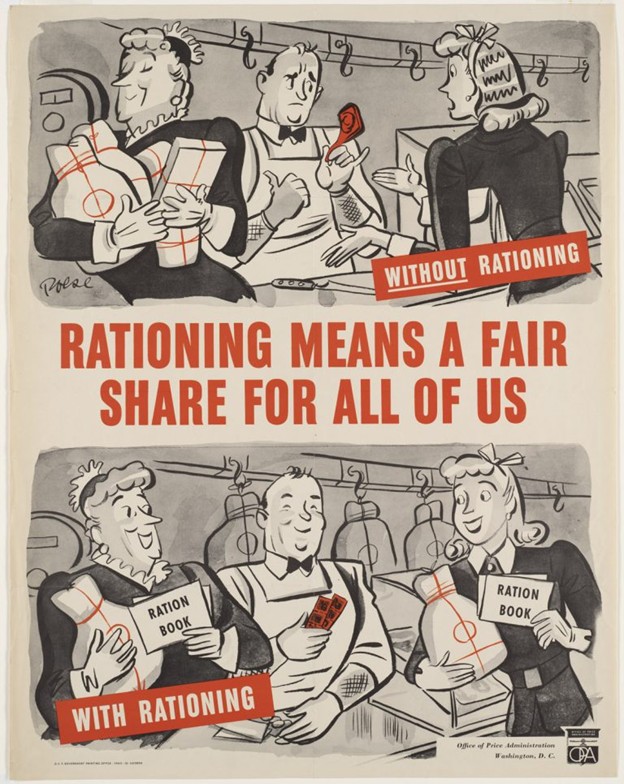
Rations ad during World War II.
Even with hardships, people were generally willing to sacrifice for the war effort, but by 1944, the end of World War II could not come fast enough!