Researching your Family History

Researching your Family History

Sometimes a memory sparks the desire to find out more about a person, place or an event. Did you know that your Marshall County Historical Museum is an incredible research facility? Not only do we house the historical records, but we offer capable researchers to guide your journey.

Our research staff enjoys the challenge of digging out information.  For example, we were asked for help to find a woman who had owned a local flower shop. Unfortunately, we didn’t have her name. In a situation like this, we still have other options to research.  We can look in business listings for flower shops.  We can narrow the search by general location first and then focus on a specific address or building. Over the years, our VIV, Very Important Volunteers, have created categorized records that make it easier for us to tackle any question from more than one direction. Here are a few tips that will set the stage for you to be successful in your search.

Helpful Information to Bring

Tell us briefly what you know about your research topic. For instance, a man brought in a picture of a large group of people taken in front of a building. He thought it was a reunion of factory workers. We noticed that the front row was entirely children, which we suspected might mean a family reunion instead. He commented that his uncle was in the back row. “What is your uncle’s name?” That one piece of information led to our family files and an identical photo with details on the date and place of the reunion. From there, we were able to find more information for him about his family.

It is helpful to have an idea of the time frame you are interested in. If the family lived in Marshall County for only twenty years, the names would appear on a census, marriage, birth, or death records only during that period. Valuable research time is wasted searching earlier or later records.

Image of census document

Gathering Your Research

Ask for copies of pertinent documents. For a small charge, we can provide copies of the information we find. This allows you to digest it slowly at home. Information may be available on members of the extended family that might not be relevant right now but prove invaluable later as your research expands. Especially when researching far from home, simplify the process by having copies made of everything you find.

Have an open mind about the spelling of your family name. It is common to find alternative spellings in historical records. Names may have been misspelled by a census taker, clerk, or newspaper editor. Names were shortened and “Americanized” at entry points like Ellis Island, or by choice, as immigrants came to a new land. Follow those leads long enough to either confirm or disprove a connection. 

In addition to the research library, the MCHS Museum hosts the Marshall County Genealogical Society meetings on the first Tuesday of every month. If you are just beginning to research your family, check our calendar for specific events, visit our community room to get some tips, or simply give us a call!

Researching Divorce Records

Researching Divorce Records

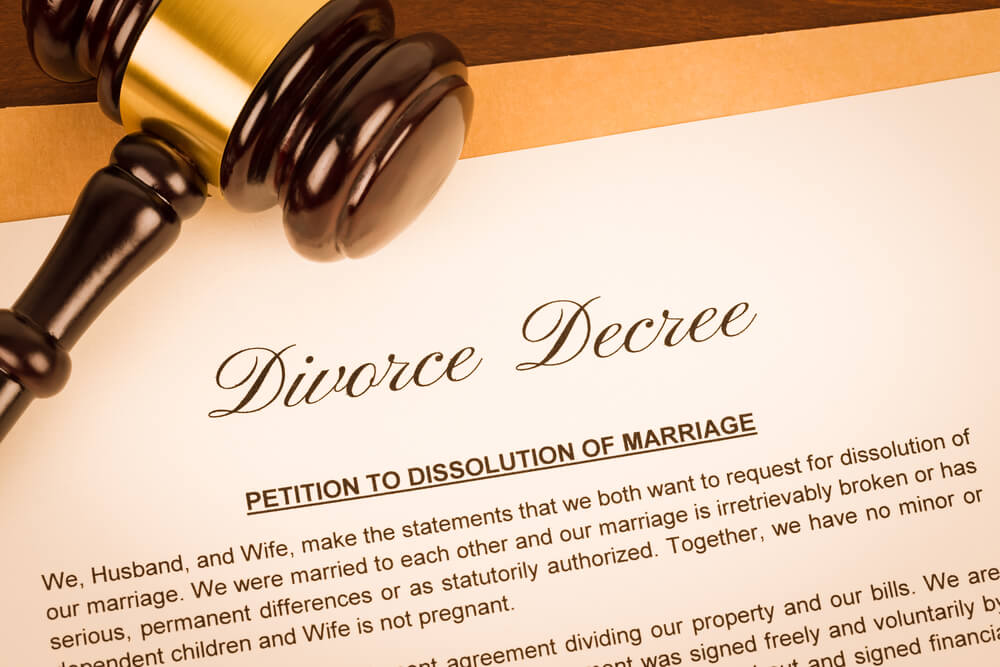
We talk a lot about marriage records, the different types and how to locate them.  But when working on genealogy, sometimes we find the other side to marriage, divorce.  

Divorce records are not as plentiful as marriage records and not as easily accessible on the internet, though more records are being added every day.  The records do exist, and they can yield genealogical information that cannot be obtained elsewhere.  

“But there weren’t any divorces in days gone by.”  Oh, yes, there were, and more than we would think. The Marshall County Museum has one four-drawer file cabinet of divorce records before 1900, and 15 shelves of records after that date. More modern divorce records are located at the courthouse. 

Regarding genealogy, the older divorce files are going to be the spiciest, as, not being concerned with political correctness, details were not censored. Divorce records now usually do not contain salacious details. 

The Louisville Courier-Journal dated May 26, 1856, gives a harsh picture of my ancestor B. H. Cruzan, a teacher in Floyd County, IN.  He asked for a divorce from his wife.  The judge decided that he was not entitled to a divorce, but that his wife was, on the grounds of assault and battery, neglect of his family, and general moroseness and unkindness.  The judge’s censure upon him as a teacher in the public schools was “cutting and severe.”  His ex-wife moved to New Orleans and was thereafter listed as a widow on the census records.  He later married again, and it lasted for the rest of their lives.  Hopefully he was a better husband the second time around.  

A cousin of my grandfather’s stated in her divorce petition that her husband would leave the house and be gone for days, coming back in a drunken condition.  He went away from home every Saturday night.  He associated with women of “evil name and bad repute.”  He was arrested with a woman at a hotel and was prosecuted and tried in the police court on the charge of fornication (it should have been adultery).  He abandoned his expectant wife when their child was ill and said that their coming baby was not his.  They were divorced.  But there’s no accounting for human nature.  Two years later she married him again, and they stayed married for the rest of their lives, celebrating their 50th wedding anniversary.  (But it was really only their 48th.)  

These examples from my own family show the man to be at fault, but both partners can instigate a divorce. Of course, sometimes a person didn’t bother to end one marriage before going on to the next one.  I recently did some research like that for someone.  First Husband and First Wife were married for a few years.  By the time First Husband filed for divorce, First Wife had been married to Second Husband for three years, and First Husband himself had been married to Second Wife for a year.  First Husband used both of First Wife’s married names in his petition for dissolution, saying she was living with Second Husband as his wife.  First husband then married his Second Wife again after the divorce and went on to marry two more times.  First Wife later married a third time.  The researcher was from First Wife’s second marriage and was looking for a divorce record for her parents.  But though there was a marriage record for the second marriage, there may not have had to be a divorce if she was still married to her First Husband.  Luckily, I didn’t have to sort that family out, only just copy the records and wonder.  

What can a divorce file do for us in a genealogical way?  It can confirm a lot of things.  The petition for dissolution contains the date of the marriage and often the place.  It will list any minor children, and sometimes may mention older children, or state that there were no children of the marriage.  It may say that a child in the home is a child of one spouse, but not the other.  If there is any real property involved, it will state where that property is located, which leads to deed records.  If there has been an earlier marriage or marriages, and an earlier divorce or death of a previous spouse, especially if there are children, it will sort out who came from whom.  

An obituary I came across listed the second wife and all the children.  But which child came from which marriage?  The divorce record from his first marriage listed the children from that marriage, and with that I was able to clarify the “his, hers and theirs” for the children.  

Where are we going to find divorce records? To end a marriage, one had to go through the court so there are court records, located in the county where the divorce was granted.  It may or may not be the same county where the marriage took place. 

 Early divorce actions can be found in dockets, minutes and case files of the county, circuit or district court.  Sometimes they were in chancery, common pleas, domestic, probate, superior or supreme judicial courts.  The clerk of the court is the holder of the records. 

 Very often older records are transferred to an archive.  I found one of the above divorce files in the St. Joseph County archives and one here at the Museum.  Sometimes they may be transferred to a regional or state archives or library. 

 Generally, divorce records are considered part of the public record.  But most states limit access to them because they may contain personal or sensitive information. 

 Applicant forms for a subsequent marriage may have information as to whether the person has been married before, and how many times.  I have traced a couple of relatives to marriages across the country based on their subsequent marriage applications.  A warning:  sometimes the person conveniently “forgets” how many times they have been married and gives a lesser number.  But you know that it is not true, because you found additional marriages for them.

 Newspapers mention legal notices.  In the past they would sometimes give accounts of the divorce or mention a separation of a married couple.  The story about my ancestor came from the newspaper for all the world to see and for his great-great-granddaughters to find. 

There are personal accounts and stories of family scandals whispered about in the family that you have heard, partially factual and maybe not.  But if there is a rumor, there might be evidence somewhere of a painful event in the family which contains genealogical information.  And that’s what we want.  We are not scandalmongers.  We just want to know about our families.  We all have faults, and so did our ancestors, including B. H. Cruzan. 

 Come into the Museum library and get help to research your genealogy and history questions. We are available Tuesday through Saturday from 10:00 until 4:00, at 123 N. Michigan St., Plymouth.  Call us anytime at 574-936-2306, or access help through our website at www.mchistoricalsociety.org.