Marshall County’s Only Prize Fight

Marshall County’s Only Prize Fight

The story is told in McDonald’s History of Marshall County of the only prize fight held in Marshall County:

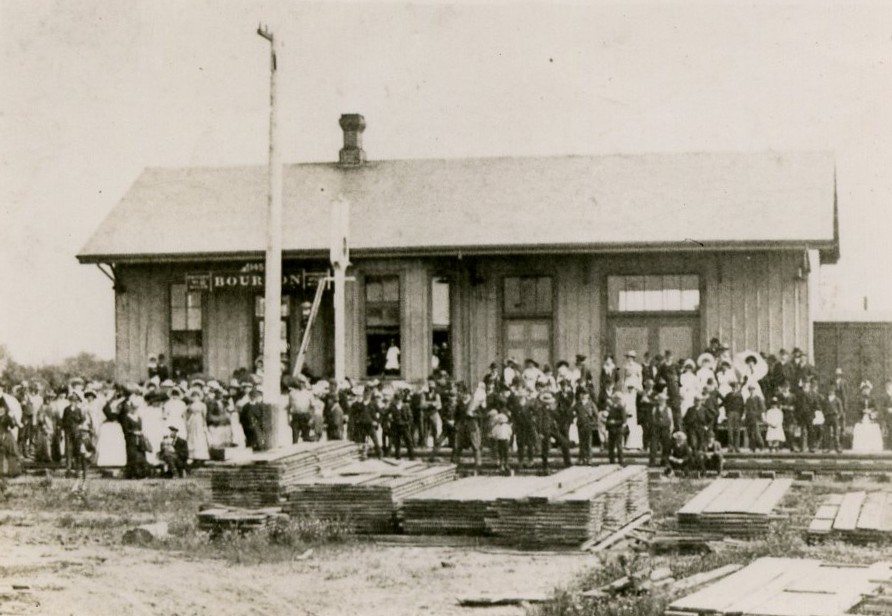
The prize fight was to take place at Baugherville, on the Lake Erie & Western Railroad, about nine miles northwest of Plymouth between Lou C. Allen of Chicago and H.C. Hanmer of Michigan City, middleweights, on the evening of April 30, 1891. That afternoon some of the local boys were told about the upcoming event. “The favored few who were let into the secret were on tiptoe of expectation, and preparation was made to pull out quietly by livery teams about 9 o’clock. The secret was to be kept from Sheriff Jarrell and from those who would likely give him a pointer in that direction.”

It was not easy to get there. “The night was dark and the corduroy road through the woods was more than ordinarily rough. Some of the drivers lost the direct road and went a considerable distance out of the way; others ran into ‘chuck holes’ breaking a spring or a single-tree or something of that kind, but where there is a prize at the end of the goal there is always a way found to reach it. On they went, helter-skelter.

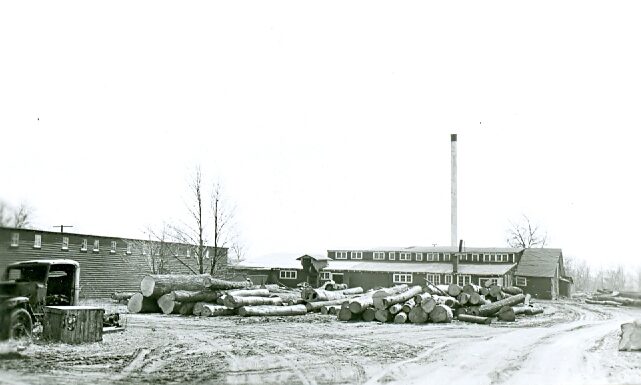
“The prize ring was in a large barn near a sawmill and a lumber yard near the Lake Erie & Western Railroad, a short distance northeast of Tyner. Lumber was piled up and scattered about everywhere, and there were acres of sawlogs and slabs and log wagons. There were no lights about to indicate that there was anything unusual going on, and those who were not familiar with the lay of the land had to feel their way in the dark.

“The Lake Erie fast train from the north arrived at 11 o’clock, bringing the pugilists and about 150 sports (fans) from Chicago, Michigan City and other points along the line, and it was but a short time until the preliminary arrangements had all been completed. A twenty-four-foot ring had been measured off, the building was gorgeously lighted, and in the glare of the kerosine the lamp of Aladdin would have cast but a faint glimmer. The 175 spectators who had each paid an admission fee of $5 were seated about the ring as conveniently as circumstances would permit, and the remainder were stowed away in the haymow, in balcony rows, one above another, from which elevated position they were enabled to look down upon the interesting spectacle before them through the large opening in the center.

“The gladiators were stripped to the skin and took their places in the ring, accompanied by their backers, trainers, seconds, umpires, spongers and assistants.” Also in attendance were a couple of Chicago newspaper reporters. “The doors of the barn were locked and guarded, and the doorkeeper was ordered not to admit anyone under any pretext whatever. Time was called and the pugilistic pounders came smilingly to the scratch. They knocked away at each other with all the strength they possessed. There was no doubt they meant business from the word ‘go.’ The first round was a success, and applause greeted the bruisers as they retired to their corners to be rubbed down.”

But when that many people know a secret, it is hard to keep. “It was late in the evening when Sheriff Jarrett was informed of what was going on. He and his deputies, Eugene Marshall and William Leonard, and Plymouth marshal William Klinger “pulled out from the county seat shortly after 9 o’clock and drove rapidly toward the seat of war. He had the misfortune to break his buggy, which delayed him, and he did not arrive until the first round had been fought.” The sheriff asked the doorkeeper to be admitted. “That distinguished dweller in the tents of iniquity informed them that under no circumstances could they be admitted, whereupon the sheriff jerked the latch off, opened the door, and he and his deputies rushed in upon the pugilists and their assistants, who were standing in the ring ready to commence the second round.

“Then ensued a scene of consternation which no pen can describe. There was a general stampede for the door and in the rush and confusion several were run over and knocked down. Some of the lights were turned out, and for a few minutes it seemed as if pandemonium had been turned loose. Both principals escaped the officers and got out of the building with only their thin fighting suits on. In the melee that ensued, trainer Ed Corey and seconds Con Cavanah and Dick Ford were captured. The remainder got away. Hanmer was so cold with only his tights on that he could not stand it and returned in search of his clothes. He was captured by the sheriff. Allen, the other principal, took the railroad track north as fast as he could run and never stopped until he reached Walkerton, where he boarded a freight trip for Michigan City and made good his escape.

“The spectators – well, they were panic-stricken and, if anything, were worse frightened than the fighters. When the sheriff and his party entered, the rapidity with which that audience dispersed has never been equaled in this part of the country. They did not stand on the order of their going, but they went at once. It was every fellow for himself, and the devil take the hindmost. As soon as they got out of the building they took to the woods as fast as their legs could carry them. They tumbled over one another, went head over heels over saw logs, log wagons and lumber piles, skinned their shins and bruised themselves up generally.

“Those who were in the hayloft, most of them Marshall County fellows, were all captured without an effort. They had climbed up on a ladder which had been removed when the fight began, and there they were, prisoners and unable to make a move for liberty. So, they scrambled back as far as they could and covered themselves with hay, except their feet, which stuck out in irregular sizes all around the first row, and waited further developments.

The suspense did not last long. One of them came near smothering in the hay and yelled out, ‘Put up that ladder. I can’t stand it with this d____d gang any longer.’ The ladder was put up and you would have just died laughing to have seen capitalists, merchants and businessmen, old men and young men, bald heads and gray heads, married men and single men, backing down that ladder with hayseed in their hair, and on their hats and all over their clothes. As they reached the floor, one of them remarked, ‘What in ____ would my wife say if she could see me in this fix?’”

There were probably many married men who would shortly find out what their wife would say.  “They were greatly relieved when Sheriff Jarrell informed them that he had no use for them, and they could go about their business.” The four who had been arrested were each fined $50, which was promptly paid. And thus ended the only prize fight ever witnessed in Marshall County.”

I would imagine that most of those married men suffered harsher punishment than the prisoners, don’t you?

It may not surprise anyone that Daniel McDonald was a newspaper owner and editor. His writing style is so highly entertaining. Come on in to read more from his History of Marshall County. The Museum is open 10 a.m. – 4 p.m. Tuesday through Saturday.


Skeleton Found in a Bourbon Barn

Skeleton Found in a Bourbon Barn

It is said that every family has a skeleton in their closet. One Bourbon family had a skeleton in their barn:

“After the body was accidentally discovered by a hired hand and became publicly known, an inquest was held. Witnesses were called, a jury summoned, and testimony was given on August 25, 1855, in S.M. Adams’ storeroom. The jurors examined the skeleton of a female body between fourteen to twenty years of age, about five feet two inches tall. The top part of the skull and the left side of the lower jaw were gone. The name of the person and the cause of her death were unknown. The body was found on the premises hidden in the barn of Grason Parks.

“Henry Strunk testified the body was found in Grayson Parks’ haymow in the northwest part of the barn. It appeared to be covered up and secreted. He helped remove the body from the barn by the order of the coroner. The body was removed on the evening of August 24, 1855, shortly after dark.

“Thomas Wilkins said he discovered the body. Grason Parks had sent him up in the hayloft after a piece of lumber. Wilkins saw a small corner of a box and supposed it to be the lumber he was sent for but upon taking hold of it, he discovered it to be a box. On August 20 Grason Parks had employed him to help haul in oats. Wilkens examined the box again and was led to suppose that it contained a human body. The box was in the same place and condition as it was when he had first seen it in Grayson Parks’ barn. Wilkins supposed the box to have been secreted in the hay with which was covered. Wilkins next saw the box on the evening of August 24 when he went up into the haymow by the order of the coroner to show where the box was. Wilkins saw the box opened in the barnyard. At that time, he discovered to a certainty for the first time that there was a human body in the box. Wilkins had no knowledge as to how the box came to be in the barn.

“Abraham Baker said he was frequently about the Parks barn the previous spring and summer. He often noticed that there was a bad smell in the barn. He said he was working for Grayson Parks in May, and while the cattle were eating at noon, Baker went up into the haymow and for the first time, he discovered the bad smell. Baker asked Grayson Parks’ son what smelled so bad. The boy replied that his father had killed a cat in the hay but had burned it the day before. Baker said that when he first discovered the box his brother was with him; he shook the box, and it gave a disagreeable smell and that he supposed it to contain a dead body.

“Dr. David Hazzard testified he had examined the body which had come from the barn of Grayson Parks and discovered no marks of violence. It was a female body. The upper part of the skull had been removed and the left under jaw was taken off. Dr. Hazard stated that Grayson Parks was not a physician or surgeon.

“Dr. J. E. Brooks also examined the body and saw no marks of violence. The skeleton was a female. Dr. Brooks supposed the subject to have been between fourteen and twenty years of age.  He thought the body had been fairly well prepared. There was as little smell about it as any he had ever seen which was so recently prepared.

“James O. Parks said he had seen the body many times. He saw it in Leesburg. He said it is the property of Dr. Edward Parks. It was prepared by Dr. Edward Parks and probably others. James Parks said he saw it before it was dry. He said it was brought from Michigan. He never learned the name of the person. James Parks said it was a young female; he did not know the age but said it was “hardly matured.” He identified the skeleton to be the property of Dr. Ed Parks from the fact of the removal of the upper part of the skull and the loss of part of the under jaw and teeth.

“James Parks stated he could not say that he ever heard Dr. Ed Parks say that the body was his property, but he saw the body in Dr. Ed Parks’ lecture room in Kosciusko County. James Parks had no knowledge of the body being at Grayson Parks.’ James Parks said he was invited into Dr. Ed Parks’ lecture room by some of the students and went afterward without an invitation because they made him welcome. He said that it was prepared over a year ago.

“Dr. John F. Parks said he did not recognize the skeleton for a certainty to be the one which he had once or twice seen in the room of Dr. Ed Parks. Dr. John Parks said he had no knowledge of the skeleton being at Grayson H. Parks.’ He believed the skeleton to be the property of Dr. Ed Parks. He had seen a skeleton in Dr. Edward Parks’ room over a year ago and supposed this was the same one. It was in much the same condition as it was at the inquest. Dr. John Parks had requested Dr. Ed Parks to send him a skeleton two months before. Dr. John Parks had passed by Grayson H. Parks’ place but had received no notice of a skeleton being there for him.”

Apparently, the body was an open secret in the Parks family because they all seemed to know about it. In the early days of the study of internal medicine, it was very common for a doctor to acquire a cadaver to study. Some doctors were known to pay someone to dig up a recently deceased body, as in Charles Dickens’ A Tale of Two Cities.

The jury found Grayson Parks guilty of unlawfully secreting the skeleton of a human body. Those involved in what happened to the skeleton are gone now, all buried properly under tombstones with their names on them. They received much better treatment after their decease than that which was given to the young girl, whose name is still known only to God.

Be sure to stop by the Museum! We are open from 10:00 until 4:00, Tuesday through Saturday at 123 N. Michigan St, Plymouth.

Inwood High School

Inwood High School

As with other towns in Marshall County, at one time Inwood had its own high school.

The Inwood neighborhood may have been small, but it was spunky. Some indication of that was seen in the Marshall County Independent in April 1899 when Trustee McCrory decided to transfer graduates of the eighth grade in Center Township to Inwood High School instead of Plymouth High School, as was the custom. In 1906, Inwood graduated five scholars, eight in 1907, thirteen in 1908 and nine in 1909.

The Weekly Chronicle in November 1908 reported, “The Inwood schools are making good progress this year under the direction of Prof. Fry and an efficient corps of teachers. A visit to the schools gave the impression of a thorough system and of excellent deportment of pupils. The greater number of pupils are from the country and are transported to and from school in wagons. There are two classrooms upstairs and three on the first floor and a basement. The basement has a cement floor and is supplied with water from a reservoir. There is a large water basin, cups and towels. It is entered both from the inside and the outside.

“The basement room presents a lively and busy scene at noon time. Three long tables are arranged, with tablecloths and benches, and at these tables the pupils eat dinner. Their dinners are brought from home and are spread out in inviting shape. The manner in which the pupils perform this exercise of the day is not slow. The janitor, Jr. Gerrard, remains with them at the noon hour to assist them and to preserve order.”

In 1911 the Weekly Republican stated, “Rev. Arlington Singer gave the baccalaureate address to the four graduates of the Inwood High School Sunday night at the Methodist church of that place. His theme was class motto Labor Omnia Vincit, and by illustration and argument he showed how labor did conquer, as well as how necessary it was that we all work with all our might. The sermon and the quartet song, ‘Why Stand Ye Here Idle,’ came in so nicely together that it pleased all…. After the baccalaureate exercises, a banquet was given by the members of the senior class to the singers and the two ministers and their wives.”

But that August tragedy struck at the Inwood school. As reported in the Bremen Enquirer and the Weekly Republican, Hueston C. Kramer fell two full stories while putting a tin roof on the school. He landed on his head on the cement walk. Drs. Kaszer and Loring were immediately summoned. He had suffered a broken shoulder blade, in addition to more serious injuries. There was little hope of recovery, and he passed away three hours later without regaining consciousness. Kramer, a single 28-year-old, had come from Wabash just three weeks before to open a tin shop under the Marshall County Trust & Savings Bank at Plymouth.

In December 1914 the Bremen Enquirer reported that a large number of northern Indiana towns were having contagious and infectious diseases, mostly smallpox. The Inwood school was closed for at least ten days because of diphtheria.

In 1915 the Inwood school was remodeled and an addition on the south doubled its size. It contained two classrooms and two cloakrooms on the first floor. The spacious auditorium on the second floor was for both school and community activities.

On December 19, 1918, the Enquirer reported that the Inwood school was closed until after the holidays because of a case of scarlet fever.

Things began to get wild and crazy in the 1920s. And it wasn’t just the students, either. Plenty of adults got into the act, including the principal.

During the winter of 1923, a student “snowballed” principal Rose’s wife. Evidently it bothered her husband. As reported in the Bremen Enquirer, Rose went to the residence of Otto Ames and complained that Ames’ son had snowballed Mrs. Rose. Rose demanded that the boy apologize. “In the fight that followed his demand, Ames’ leg was fractured. Rose was said to have flourished a gun in the fracas, though there was no shooting, and the gun incident, if a gun was flourished, appears to have cut no figure in the trial at Plymouth, as a result of which Rose was fined $10 and costs, aggregating $30, for assault and battery.”

The newspaper editorialized, “Many people believe that lack of proper discipline is a common fault of country schools, but Mr. Rose appears to have gone to the other extreme and attempted to cover too much territory.”

But Mr. Rose stayed on the job and in April 1924, as reported in the Bremen Enquirer, “Flaming youth had its little flare at Inwood Thursday, when eight pupils of the Inwood school, feeling the urge of spring and to vent their surplus pep, ‘borrowed’ an automobile, took it for a joy ride and came to a sudden and unhappy stop in the ditch at Johnson’s Corners, two miles north of Bourbon. Two of them were injured and all of them should have been spanked, according to the older heads thereabout.

“The pupils had just finished their examinations at school and felt the need of air. Harry McCullough, son of Mr. and Mrs. Charles McCullough, who live two and a half miles north of Inwood, had driven his father’s car to school. He was still at work on his examinations when the pepful eight conceived the notion of the joy ride. They asked him for the key to the car, but he refused to give it to them.

“One ingenious member of the joy seekers used a knife to turn the switch to start the car. Maxine Kizer took the wheel and seven others piled in – Eloise Shoda, Evalyn Shoda, Thelma Sands, Shed Cramer, Vernon Apple, George Daniels and Leota Thompson.

“The party proceeded to Bourbon and then north on the paved road. In making the turn at Johnson’s Corners, the car left the road and went into the ditch. Daniels was cut in the arm and side and had a bump on the head. Cramer was also injured. The others were bruised and shocked but not badly hurt. The car was almost a complete wreck, it is said.

“On Saturday principal O.B. Rose of the Inwood school called the parents of all the boys and girls together with the owner of the car, and the parents agreed to share the expense of settlement for the damage to the car. Mr. McCullough, owner of the wrecked machine, is just recovering from injuries received last fall when his car was struck by another machine. His son Harry, while driving a horse and buggy last winter, was also struck by a car. This is the third accident for the family this year.”

Mr. Brock, living near Johnson’s Corners, gathered up the “joyless joy riders” and took them to Bourbon for medical attention. George Daniels, son of Mr. and Mrs. Wm. Daniels, was brought to Kelly Hospital in Argos, where several stitches were taken in his arm. He remained in the hospital a couple of days before he could be removed to his home.

But nothing shook Harry McCullough as he pursued his education. The Bremen Enquirer of April 24, 1924, reported that the Inwood High School commencement took place in the high school auditorium. Two graduates, Gertrude Forbes and Harry McCullough, were awarded diplomas.

That October, Inwood High School was used as an example in the Argos Reflector when discussing whether Walnut Township should have a high school, “The Inwood High School will perhaps throw some light on the subject. About a year ago a warm meeting of protest regarding closing their high school was held. It was a pretty warm affair. One of the protesting patrons got his leg broke by the superintendent. The meeting ended with ‘weak-minded men carrying out the babies, and strong-minded women carrying out the stoves.’ That incident closed the high school of Inwood, and the pupils are now being transported to Plymouth at a savings of $2,000 a year to the taxpayers of Center Township.”

And the South Bend Tribune concluded on July 15, 1991, “…the brick Inwood School that housed students for 57 years was built in two parts with the north half erected in 1908…. The north section had no lights and no indoor plumbing. The south addition, built in 1915 and which faced the railroad track, brought electricity and water into the school…. Three teachers instructed the primary grades and three teachers taught all of the high school courses…. High school classes were taken to Plymouth in 1924 (when Lincoln High School opened), Harry McCollough, 83, of Bourbon was a member of that last graduating class at Inwood. At age 16, he was the youngest person to ever graduate from Inwood High School.”

 

Magnetic Park

Magnetic Park

Plymouth’s Magnetic Park should be a top stop on a tour of Marshall County. Located along the Yellow River, Magnetic Park has a fascinating history.

Creating the Well

Magnetic Park gets its name from the flowing well of magnetic water. It is 11 inches in diameter and 38 feet deep, with a pipe that is 12 inches in diameter.

The well was driven in 1875 by Bailey & Capron, the owners of the Plymouth Water Mills. A horsepower tread was used to operate the drive hammer. The well was dug with the idea that an underground river would be found, into which the water from the mill race could be drained, giving more power to the water turbine. Instead, a gushing stream of water spouted eight feet high above the top of the well.  Mr. Bailey commented, “Of all the wells I’ve driven this is the first one I wanted the water to run into and here the water is running out.”

A Magnetic Discovery

In 1876 Holland’s City Directory was talking about how clear and cold the water was. At first no one knew about the well’s magnetic properties, but it was shortly to be discovered. The directory stated that recent tests showed that the water was highly charged with magnetism and was possessed of medicinal and curative properties in an eminent degree. It stated, “It is without doubt the largest and finest flow of magnetic water in the world!”

Magnetic wells appear in area where the ground has a lot of iron. Soil can also be slightly magnetic. This is true of Marshall County. At one time, we had a place called Sligo where bog iron was processed. We will share an article about Sligo soon. To be fair, some believe that a magnetic water is not possible, but that the iron oxide that gathered around the mouth of the well dictated the name “magnetic” at that time.

Magnetic Well flowing into drain.

Healing Properties and Pastimes

The writer of the article in the directory said the volume of water discharged was enormous, 500 gallons per minute, or 30,000 gallons per hour, and 720 gallons a day. It said that people suffering with rheumatic and dyspeptic complaints greatly benefitted by drinking the water, even before they imagined it was anything more than pure spring water. It was thought that Plymouth could become the Bethesda of the west. The reference was to the pool of Bethesda in Jerusalem, where Jesus healed the paralyzed man. After the removal of the old dam, the flow of water was decreased considerably.

The alleged healing properties were not the only reason people came to the well. A popular pastime was to suspend a metallic object into the well and let it remain for several hours.  Due to the unique properties of the water, the object would become magnetized. Knives, shears, scissors, hooks and small bars of steel became magnetized by being placed in the water. A compass was said to be under its control at a distance of two feet.

Community Renovations

An 1878 newspaper article said that a movement was underway to improve the grounds at the flowing well. The place was called “Magnetic Park” in quotations. They planned to build a bridge across the race and an arbor over the “magnetic flowing well” and to clear and beautify the grounds.  Bailey & Capron agreed to allow the free use of the grounds for the benefit of the public.

In 1914 a postcard pictured a small wooden shelter around the well, with two ladies in front of it.  Later it was rebuilt with stone and has two identical markers on opposite sides of the structure.  The markers are metal, one foot x two feet. Both markers read: “This shelter house – made possible – by the donations of – Mr. and Mrs. Jacob Price – of – ‘Price’s Steak House’ – erected in 1937 – for the public.”

Two women at the “Old Flowing Well” ca. 1908.

Additional historical markers are located at the park, which is at 700 N. Water St. in Plymouth. Try to find them when you walk through this gem of a park along the Yellow River!

Curious Findings

A 1935 newspaper article discussed the articles found when the WPA cleaned out what was then called the “Old Flowing Well.” The workers reached the bottom of the well and the “relics” were recovered were put on display in the show window of the Eagle building, one door north of the Ball Store, which was at 116 N. Michigan Street.

There were more than 200 items. Among them was a bayonet from an old army musket, thought to be used on a gun during the War of 1812. There are War of 1812 soldiers buried in Marshall County, among them Benjamin Cruzan. Other articles included a gold locket, a silver spoon engraved E.M.E., an unbroken glass goblet and a boy’s pewter whistle which still blew loudly. Of course, there were the usual items like old whiskey bottles. A drive shaft of an automobile was recovered.

The Trail of Death

The Trail of Death

Marshall County has the dubious distinction of being the starting point of the Trail of Death in 1838. The Trail of Death was the forced removal of 859 Potawatomi Indians from Indiana to Kansas. The Trail of Death is not the same as the Trail of Tears, which was the removal of the Cherokee Indians in the southeast United States. Both removals took place the same year in response to the passage of the Indian Removal Act of 1830, which provided legal authority to exchange Indian lands for lands west of the Mississippi River.

A series of three treaties were negotiated with the Potawatomi at the Tippecanoe River on October 26, 1832. Potawatomi land in Illinois, part of Michigan and most of their remaining lands in northwestern and north central Indiana were relinquished to the federal government. In exchange, the bands received small reservation lands for tribal use. This included a joint grant of 22 sections (14,080 acres) of reservation land in the Yellow River area in Marshall County. 

The land was given to four Indian chiefs, No-taw-kah, Pep-i-na-wah, Mac-ka-tah-moah, and Menominee. In the spring of 1836, a treaty was negotiated with the first three chiefs for the sale of their land, but Menominee refused to sell. He said the treaty was fraudulent since the reservation land had originally been awarded to all four chiefs.

Before and After Settlements

The land prior to the organization of the county belonged to the Potawatomi Indians. In 1832 there was a Menominee reservation near Twin Lakes. There were also several other reservations in this part of the country. During that year, the government began offering some of the land they had obtained from the Indians. White settlers began coming in and buying these lands. It was not long until these settlers insisted that the Indians be taken out of the county.

Treaties and Negotiations

The Treaty of Yellow River was made on August 5, 1836 and ultimately led to the forced removal of Menominee’s band from Twin Lakes. Under its terms the Potawatomi ceded all the reservation land that was granted to them under the Treaty of Tippecanoe to the federal government. The Potawatomi who signed the Yellow River treaty also agreed to remove west of the Mississippi River within two years. Menominee and 17 of the Yellow River band did not take part in the negotiations and refused to recognize the treaty’s authority over their land.

On February 11, 1837, the signers reconfirmed the Potawatomi land cessions in Indiana from the treaties of August and September of 1836. They agreed to remove to reservation land on the Osage River, southwest of the Missouri River in present-day Kansas. Again, Menominee refused to sign.

When the August 5, 1838 deadline arrived for the removal of Menominee and his band from Indiana, most of the Potawatomi had already left. Menominee’s group still refused to leave their village. On August 6, the day after the deadline for removal, the Potawatomi were told that they had relinquished their land in Indiana under treaties previously signed and ratified by the United States Senate. The Potawatomi were given no option. The land now belonged to the federal government and the Potawatomi had to remove.

Forced Removal

Indiana governor David Wallace authorized General John Tipton to mobilize a local militia of 100 volunteers to forcibly remove the Potawatomi from their reservation lands. On August 29, 1838 General Tipton and his militia surrounded the village at Twin Lakes. A meeting was called at the village chapel, where the militia took Menominee and the other Potawatomi chiefs into custody. Between August 30 and September 3, Tipton and his men gathered the Potawatomi still living on reservation lands and began preparations for their removal from Indiana.

Huts and wigwams were destroyed. Indians were brought to the village from northern Indiana and southern Michigan to be removed. Soldiers burned crops and destroyed approximately 100 structures to discourage the Potawatomi from returning. The last thing they were permitted to do was to visit the graves of their people, a short distance north of the village.

On September 4, 1838, soldiers started moving the entire band south along the Michigan Road and then west. The forced march became known as the Potawatomi Trail of Death, the single largest Indian removal in the state.  A few people were placed in wagons and those who had ponies were allowed to ride, but most walked, often hustled along by the soldiers. Menominee’s Yellow River band were among those who were force marched from Twin Lakes to Osawatomie, Kansas. Six chiefs, including Menominee, were treated as prisoners and forced to ride in a wagon under armed guard.

Wigwam replica on display in the Marshall County Museum. It is 3/4 size of a true wigwam.

The Trail of Death

The Trail of Death ran from Marshall County near through Rochester, down the Wabash River, and out of the state south of Covington.

The difficult journey covered 665 miles over 61 days in unseasonably hot weather. The caravan included 286 horses and 26 wagons. Water was scarce along much of the trail. The quality of the food supplied was so poor that the volunteer militia refused to eat it and demanded funds to buy their own rations. Of the 859 who began the journey, 756 Potawatomi survived (including Menominee); 42 were recorded as having died, 28 of them children, and the remainder escaped. The Indians were left on a barren plain west of the Mississippi. 

Not all the Potawatomi from Indiana removed to the western United States. Many Potawatomi found ways to remain, primarily those in Michigan. Some remained in the east, while others fled to Michigan, where they became part of the Huron and Pokagon Potawatomi bands. A small group joined an estimated 2,500 Potawatomi in Canada. Others fled to their Odawa neighbors. Anthony Nigo was allowed to stay in Marshall County because his mother was a Miami Indian.  By tribal custom a child belonged to his mother’s tribe, and so, even though his father was a Potawatomi, Anthony did not have to go on the Trail of Death. He became known as the “last Indian in Marshall County.” He lived the rest of his life here and is buried in St. Michael’s Cemetery.

New Treaties

In 1861 the Potawatomi of the Woods Mission Band were offered a new treaty which gave them land in Oklahoma. Those who signed the treaty became the Citizen Band Potawatomi because they were given U.S. citizenship. Their headquarters today are in Shawnee, Oklahoma. After the Civil War, the Potawatomi scattered; many moved to other reservations in Kansas and Oklahoma. A reservation for the Prairie Band Potawatomi is located in Mayetta, Kansas.

Historical Marker for Trail of Death.

A Lucky Find

A state historical marker was erected on 12th Road at the intersection of State Road 17. It is located a couple of miles away from Twin Lakes where the Indians were assembled for the Trail of Death march. The marker was erected by the Indiana Historical Society in 1949. The marker is metal, mounted on a metal pole, and reads:

“Trail of Death. Two miles east, on north bank of Twin Lakes, some 800 Potawatomi Indians were collected in August 1838 and forced to begin their long march to new homes in the west. Many perished on the way. 1949.”

In May 1973 it was discovered that the marker had been stolen. The following April it was found in a vacant apartment in Chicago. It was returned through the efforts of Bertha Stalbaum, curator of the Porter County Museum. Her uncle, John Wohlenberg, had found the plaque as he was cleaning the apartment. It was thought that tenants had moved out, leaving behind evidence of some vandalism sprees, including the marker. The marker was returned to its spot and rededicated on September 16, 1974. Both John Wohlenberg and Bertha Stalbaum were present at that rededication ceremony, along with Paul Hamilton, great-great grandson of Chief Leopold Pokagan.

The marker, as well as the statue of Chief Menominee, can be seen today south of Plymouth. To learn more, you can visit the Museum and see our Historic Crossroads Center.


Large group of people standing around statue of Chief Menominee

Unveiling monument of Chief Menominee with his granddaughter present.