
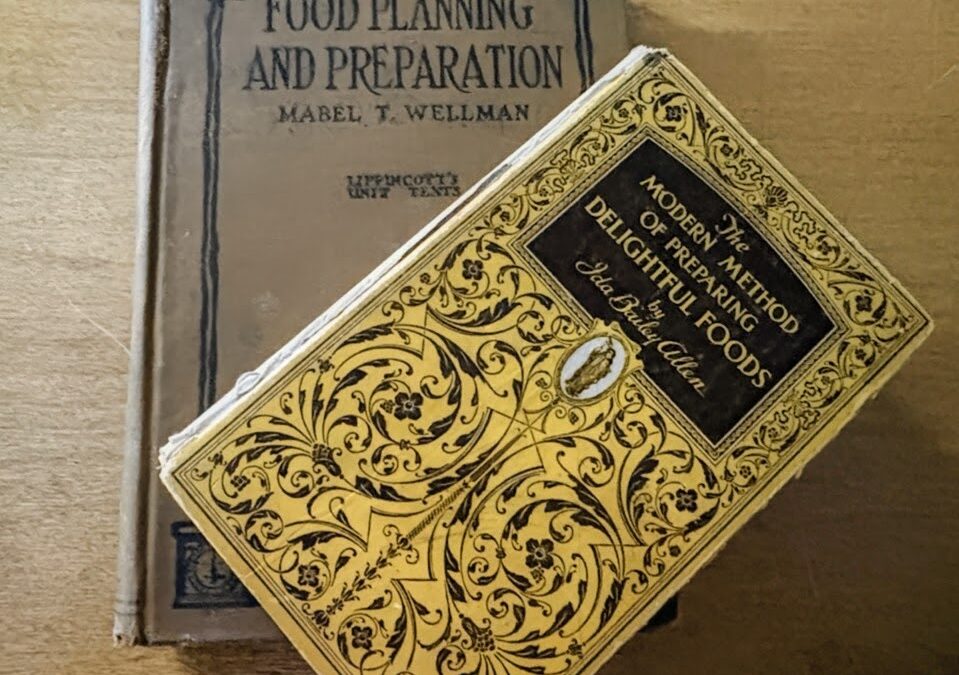
Food planning and preparation books.
Meat preservation involves methods to retain the taste, texture and safety of meats. Artificial refrigeration began in the 1750s, and developed more fully in the early 1800s, but it wasn’t until the 1930s that refrigerators became popular in the U.S. Before this, knowing how to preserve food without refrigeration was vital for families!
Read this excerpt from the memories of John R. Jacoby, born in Center Township in 1859, on his days-long process of preserving meat. Jacoby was a lifelong Marshall County farmer and secretary of the Jacoby Church and Cemetery in Plymouth, which his grandfather co-founded. The article has been edited for clarity.
How to Preserve Meat by John R. Jacoby
“First to do is to rub saltpeter over the meat. Then, put salt in the kettle, enough to cover the hams and shoulders good. Get the salt good and hot so it smokes.
Take a hoe and dig a hole in the salt, then drop a ham in and cover it completely. Leave in for two minutes and then take it out and turn it over. Leave in salt for two minutes more, or a little longer according to the size of the hams.
Then wash the meat again with Borax and hang the meat up. Let it drip for a couple of days, then smoke the meat all it needs. Then take down the meat and wrap in paper and put in sacks. Then it is ready to put away.”
The MCHS and Museum is currently renovating its Dairy and Ice Room which tells all about the history of refrigeration and ice harvesting in Marshall County. Stay tuned for its grand reopening later this year! The Museum is open Tuesday through Saturday from 10 am-4 pm at 123 N. Michigan St. Call us at 574-936-2306 for more information.